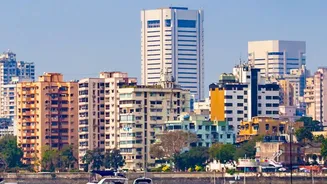








The Big Picture: Resilient Demand Meets Rising Prices
The headline numbers for Mumbai's property market paint a picture of robust health. In August 2026, the city recorded 12,503 property registrations, an impressive 11% increase compared to the same month last year. This marks the strongest August for property deals
in over 14 years, confirming that buyer interest remains high. The state government's stamp duty collections also rose by 12% year-on-year to ₹1,123 crore, suggesting that properties are not only selling but are also commanding higher values. However, there was a slight dip of 10% in registrations compared to the previous month, July 2026, indicating a market that is active but not overheating. Meanwhile, average residential prices in the first half of 2026 saw a moderate increase of about 4% year-on-year. This combination of high sales volume and steady price appreciation points to a market driven by genuine end-user demand rather than pure speculation.
For Home Buyers: A Market of Careful Choices
If you're looking to buy a home in Mumbai, the current environment presents both challenges and opportunities. The good news is that the market is mature, with steady demand indicating long-term stability. However, rising prices mean affordability remains a key concern. The market is becoming more selective, and buyers are no longer rushing into decisions. The data shows a clear preference for homes in the ₹1 crore to ₹5 crore bracket, with the share of these segments growing. Homes under 1,000 sq. ft. continue to dominate sales, reflecting a pragmatic approach to space in the city. For buyers, this means doing your homework is more critical than ever. Newly developed infrastructure, like expanded metro lines, is making peripheral suburbs in the Central and Western corridors and Navi Mumbai more attractive and accessible. Rather than chasing a city-wide average, focus on micro-markets where connectivity, amenities, and developer reputation align with your long-term needs.
For Sellers: A Good Time to Transact
For property owners thinking of selling, the current market dynamics are largely favourable. The sustained high volume of registrations shows there is a healthy pool of active buyers. The 11% year-on-year growth in sales and the corresponding rise in stamp duty revenue confirm that buyers are willing to close deals at current valuations. Properties in well-connected areas with quality infrastructure are particularly sought after. However, sellers should also note that buyers are becoming more discerning. While demand is strong, it is not indiscriminate. Pricing your property competitively and ensuring it is well-maintained will be key to attracting the right interest. The market is not what it was during the post-pandemic frenzy; today's buyers are well-researched and value-conscious. Highlighting a property's access to new transport links or its location within a self-sufficient neighbourhood ecosystem can be a significant advantage.
For Investors: Look Beyond Simple Appreciation
Investors watching the Mumbai market need to adopt a nuanced strategy. While average prices are climbing steadily, the days of uniform, rapid appreciation across the board may be over. The market is shifting towards premiumisation, with a noticeable increase in transactions in the luxury segment above ₹5 crore. However, for most investors, the key to success lies in rental yields and long-term value, not just short-term price jumps. The most active housing corridors remain the Peripheral Central Suburbs, Peripheral Western Suburbs, and Navi Mumbai, which together account for nearly two-thirds of sales. These areas offer a balance of more accessible entry prices and strong rental demand, driven by an expanding employment base and better connectivity. Instead of simply betting on price growth, savvy investors should calculate net returns after factoring in maintenance, taxes, and potential rental income. The mantra for 2026 is to invest in locations with solid, tangible demand drivers.