




The Planet’s Cooling System is Breaking
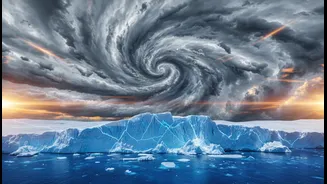
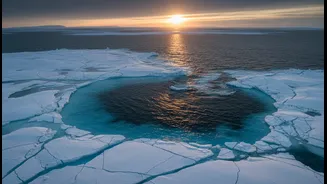
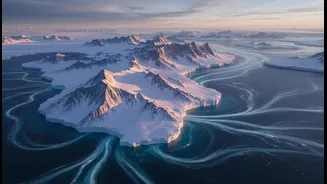
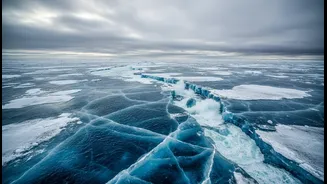
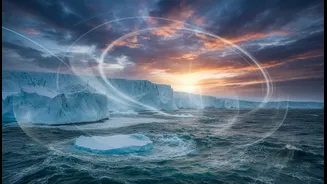
Think of Earth’s polar regions as its giant, natural air conditioners. The vast, bright white sheets of sea ice reflect a huge amount of solar energy back into space. This phenomenon, known as the albedo effect, plays a critical role in keeping the planet
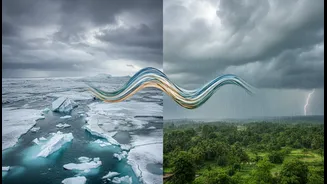
cool. However, the Arctic is now warming about twice as fast as the rest of the Northern Hemisphere in a process called Arctic Amplification. As sea ice melts, it exposes the darker ocean water beneath. This dark surface absorbs more sunlight instead of reflecting it, creating a feedback loop that accelerates warming and melts even more ice. This fundamental change is not just a problem for polar bears; it destabilises the entire global climate system.
A Wavier, More Unruly Jet Stream
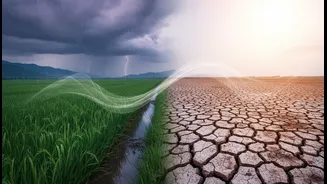
The massive temperature difference between the frigid Arctic and the warmer tropics is the engine that drives the jet stream—a fast-moving river of air high in the atmosphere that steers weather systems around the globe. But as the Arctic warms, this temperature contrast weakens. A weaker temperature gradient results in a slower, more meandering jet stream. Instead of a relatively straight, predictable path, the jet stream is developing deeper, wavier troughs and ridges. This waviness causes weather patterns to become stuck in place for longer periods, leading to prolonged and more intense extreme weather events like heatwaves, droughts, and floods in mid-latitude regions.
The Polar Vortex Escapes
The term 'polar vortex' often brings to mind images of extreme cold. It is a large area of low pressure and cold air that typically remains spinning over the pole, held in place by the strong jet stream. However, a weaker, wavier jet stream acts like a broken fence, allowing frigid polar air to spill southwards. Studies have linked the loss of sea ice, particularly in the Barents-Kara seas near Russia, to a weakening of the stratospheric polar vortex. This allows for more frequent and persistent cold snaps to plunge into North America, Europe, and parts of Asia, bringing Arctic temperatures to regions unaccustomed to such severe cold.
Ripples Across the Indian Monsoon
The connection between the poles and India's weather may seem distant, but research increasingly shows a tangible link. Scientists have found that a decline in Arctic sea ice can influence the Indian Summer Monsoon. Changes in Arctic conditions can alter large-scale atmospheric circulation patterns, including Rossby waves, which are giant meanders in high-altitude winds. Some studies indicate that less sea ice in the central Arctic and Barents-Kara Sea region can lead to shifts in rainfall, with some parts of India experiencing heavier rain while others become drier. For instance, research from the Indian Institute of Tropical Meteorology suggests a link between lower Arctic sea ice in the early summer and a westward shift of heavier monsoon rains in August and September.
The Antarctic Wild Card
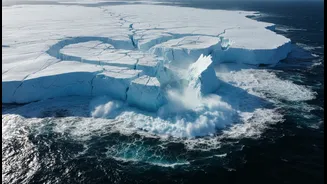
While the Arctic has been losing ice for decades, Antarctica's sea ice has recently seen a dramatic and baffling decline, reaching record lows. In 2023, the continent was missing an area of sea ice larger than two million square kilometres. The impacts are still being understood, but this massive loss affects how much heat the Southern Ocean absorbs. Less ice means a warmer ocean, which can disrupt deep ocean currents and fuel more powerful storms. Some research suggests that ice loss at both poles can create wind patterns that warm the surface of the Pacific Ocean, potentially influencing El Niño patterns and triggering further shifts in global weather.
A New Era for Weather Forecasting
These profound changes mean that historical weather patterns are no longer a reliable guide for the future. The connections, or 'teleconnections', between the poles and the rest of the world are becoming more pronounced and, in some cases, more erratic. Climate models are being updated to better incorporate the complex influence of sea ice loss. Meteorologists and climate scientists now face the challenge of predicting weather in a world where the old rules are being rewritten. Understanding these new dynamics is no longer just an academic exercise; it's a critical task for anticipating and preparing for a future of more extreme and less predictable weather.