




The Body in a Weightless World
On Earth, our bodies are in a constant, invisible battle with gravity. This struggle keeps our bones dense and our muscles strong. In the microgravity of space, that battle ends, and the body begins to change. Without the need to support itself, an astronaut
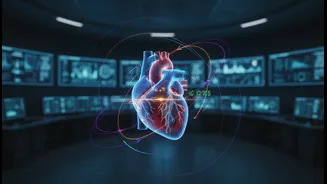
can lose up to 20% of their muscle mass in under two weeks. Bones, no longer needing to bear weight, lose density at a rate of about 1% to 1.5% per month, a condition that resembles osteoporosis. But the issues don't stop there. Fluids shift upwards, causing a 'moon-face' appearance, disrupting vision, and affecting the cardiovascular system. The heart, a muscle itself, doesn't have to work as hard to pump blood, which can lead to it weakening over time. Add to this a suppressed immune system and increased radiation exposure, and you have a cocktail of health risks that make long-duration spaceflight a monumental challenge.
Current Fixes: A Piecemeal Approach
For decades, space agencies like NASA have tackled these problems with a set of separate countermeasures. To combat muscle and bone loss, astronauts on the International Space Station (ISS) exercise for about two hours every day. They use specialized equipment like the Advanced Resistive Exercise Device (ARED), which allows them to perform weightlifting exercises in a weightless environment, and treadmills or stationary bikes for cardiovascular health. On the nutrition front, diets are carefully planned to provide sufficient calories, protein, and key nutrients like Vitamin D and calcium to support bone health. These strategies are vital and have shown significant success in mitigating some of the worst effects of spaceflight, but they often treat each physiological problem as a separate issue to be solved.
The Case for an Integrated System
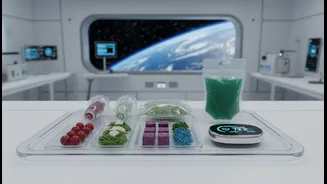
A new school of thought is emerging: what if the key isn't just exercise and nutrition, but how they work together? Researchers are increasingly viewing the body's response to space as an interconnected system. The biological pathways that control muscle growth, for example, are deeply linked to the nutrients available from an astronaut's diet. An intense workout is only effective if the body has the right protein building blocks to repair and build muscle tissue afterward. Studies have found that combining specific exercise regimens with targeted nutritional strategies can produce greater effects than either countermeasure alone. This has led to the idea of a single, integrated biological strategy—a holistic approach where diet and exercise are prescribed together, not as separate checklists, to optimize an astronaut's health at a molecular level.
What Would an Integrated Strategy Look Like?
In practice, an integrated strategy moves beyond simply saying 'eat well and exercise'. It could mean timing a high-protein meal to coincide perfectly with post-workout recovery to maximize muscle repair. It might involve supplementing diets with specific nutrients like omega-3 fatty acids or amino acids to reduce inflammation and support the immune system in conjunction with a tailored exercise plan. For example, research has highlighted how high-intensity interval training (HIIT) can be more efficient and effective than longer, low-intensity workouts, saving valuable crew time and yielding similar or better results. Pairing this type of exercise with a diet rich in antioxidants could potentially offer a powerful, synergistic defense against the stresses of spaceflight. The goal is to create personalized plans that consider an individual astronaut's unique physiology and the specific demands of their mission, moving away from a 'one-size-fits-all' model.