




Start with a Pet-Friendly Entryway
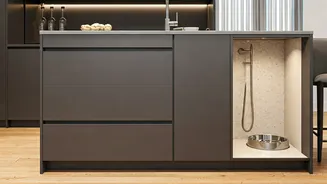
The transition from the outside world to a clean home is a daily challenge for pet parents. A dedicated 'pet-zone' near the entrance can be a game-changer. Instead of just a doormat, consider a small, tiled area with a handheld shower or a large sink
for paw washing after muddy walks, especially during monsoon season. Incorporate built-in storage for leashes, towels, and waste bags. This designated space contains the mess, preventing dirt from being tracked through the entire house and turning a daily chore into a seamless routine.
Choose Flooring with Paws in Mind
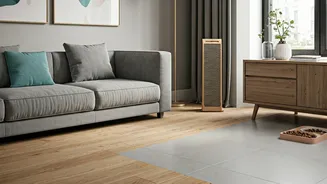
Flooring is the largest surface your pet interacts with. While aesthetically pleasing, materials like polished marble or laminate can be dangerously slippery for paws, leading to anxiety and potential injuries. Opt for flooring with a bit of texture. High-quality vitrified tiles with a matte finish, luxury vinyl, or even traditional stone like Kota offer better grip. These materials are also scratch-resistant and non-porous, making them easy to clean in case of accidents. Avoid wall-to-wall carpeting, which traps fur, dander, and odours, opting for washable area rugs instead.
Integrate Their Space into Yours
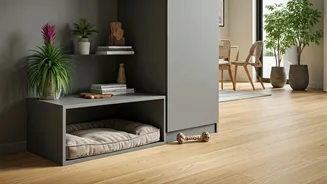
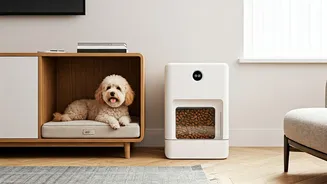
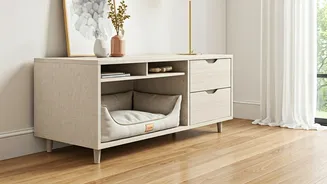
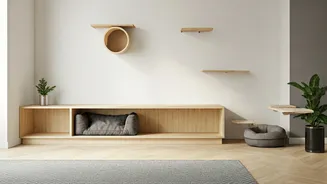
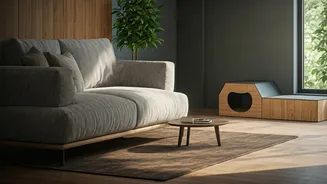
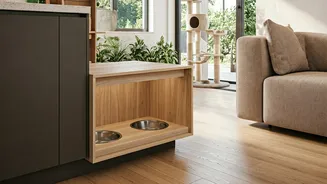
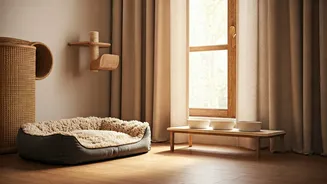
A truly pet-centric home goes beyond a standalone water bowl and a bed in the corner. Modern design integrates pet needs into the home's architecture. Think about a feeding station built into a kitchen island cabinet, with pull-out drawers for food and water bowls. This keeps them off the floor and out of the way. Consider creating a cosy sleeping nook under a staircase or within a living room bookshelf. For cat owners, vertical space is crucial. Custom-built shelves, ledges, and perches allow them to climb and observe from a safe height, enriching their indoor environment.
Prioritise Safety and Air Quality
Our homes can contain hidden dangers for curious pets. Ensure all balcony railings and windows are secured with mesh to prevent falls—a critical feature in high-rise apartments. Keep electrical cords tucked away or covered. When choosing furniture and paints, look for non-toxic, low-VOC (Volatile Organic Compounds) options, as pets are more sensitive to airborne chemicals. Similarly, be mindful of indoor plants; many common varieties like lilies and philodendrons are toxic to cats and dogs. Opt for pet-safe greenery like areca palms, spider plants, and money plants to improve air quality without risk.
Look Beyond Your Front Door
A pet-friendly home exists within a larger ecosystem. When buying or renting, consider the policies of the housing society. Progressive residential complexes are now offering amenities that cater to pets. Look for features like designated pet parks, secure dog runs, and walking tracks where pets are welcome. The presence of these facilities indicates a community that understands and values the bond between humans and their animals, making life easier and more enjoyable for everyone. Advocating for such spaces within your own community can also be a powerful way to improve quality of life for all pet-owning residents.