



What is a Superhabitable Planet?
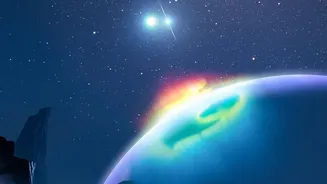
The concept of a 'superhabitable' planet flips a long-held assumption on its head. Instead of searching for an exact twin of Earth, some scientists are now theorising about worlds that could be even more suitable for the emergence and evolution of life.
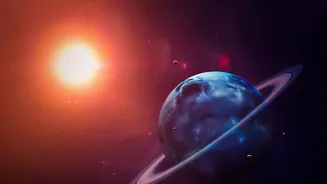
First proposed in 2014 by astrophysicists René Heller and John Armstrong, the idea challenges our geocentric view of habitability. They argued that simply being in a star's 'habitable zone'—where liquid water can exist—isn't the full story. A planet could be even better for life than our own, capable of supporting more biodiversity and a greater overall biomass. This isn't about finding a paradise for humans, but identifying the astrophysical conditions that could give life its best possible chance to thrive, potentially in forms far different from what we know.
The Recipe for a Better World
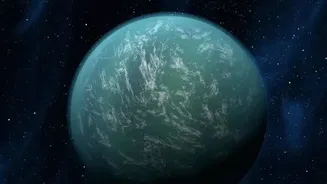
So, what makes a planet 'superhabitable'? Heller and Armstrong identified several key characteristics. Such a world would likely be older than Earth, giving life more time to evolve and diversify. It would also be slightly larger and more massive, perhaps up to twice Earth's mass. This extra mass allows the planet to retain its internal heat for longer, powering plate tectonics and a protective magnetic field, and its stronger gravity would hold onto a thicker atmosphere. The ideal superhabitable planet might also have shallower, more distributed oceans, which would encourage greater marine biodiversity by allowing light to penetrate more widely. Finally, the average surface temperature would be a bit warmer than Earth's, closer to a balmy 25°C.
The Right Kind of Star
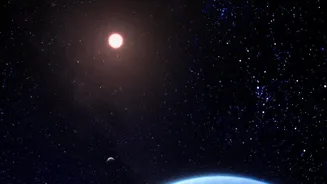
The host star is just as important as the planet itself. Our Sun is a G-type star, which is relatively short-lived in cosmic terms, with a lifespan of about 10 billion years. A superhabitable planet would ideally orbit a K-type star, often called an 'orange dwarf'. These stars are cooler, smaller, and much longer-lived, with lifespans ranging from 20 to 70 billion years. This incredible stability provides a much longer, more consistent window for life to emerge and evolve into complex forms, free from the threat of a rapidly aging star. Furthermore, K-dwarfs are less prone to the violent stellar flares common to smaller, M-type red dwarfs, which could strip a planet of its atmosphere and render it lifeless.
Are There Any Candidates?
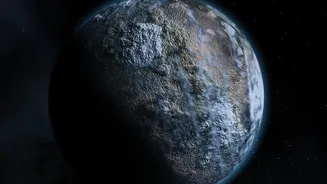
This is not just a thought experiment; scientists have already begun to identify potential candidates. A 2020 study sifted through thousands of known exoplanets to find worlds that fit some of the superhabitable criteria. It flagged 24 top contenders. While none of these are perfect matches and all are very far away, they represent a starting point for future observations. One of the most promising candidates mentioned in ongoing discussions is KOI-5715.01, a planet orbiting a K-type star that could be a strong contender for a world more habitable than our own. Other recent studies have curated shortlists of the most potentially habitable worlds, including well-known names like the planets in the TRAPPIST-1 system, which will guide observations by powerful instruments like the James Webb Space Telescope.