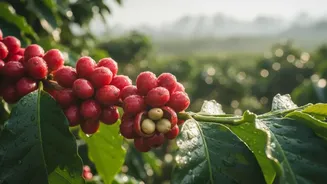




The Unique Terroir of Araku Valley
Before a single bean is roasted, its potential for flavour is determined by its home. Nestled in the Eastern Ghats of Andhra Pradesh, the Araku Valley is a special place for growing coffee. Its iron-rich red soil, high altitude, and the unique climate
of hot days and cool nights cause the coffee cherries to ripen slowly. This slow maturation process allows complex sugars and aromatic compounds to develop within the Arabica beans. Cultivated by Adivasi farming communities using organic and often biodynamic methods, the coffee grows under the shade of mango, jackfruit, and silver oak trees. This biodiversity contributes to the coffee’s unique profile, which is often described as having a bright acidity and a complex aroma, distinct from other Indian coffees. In 2019, this unique identity was officially recognised with a Geographical Indication (GI) tag.
The Science of the Roast
Roasting is a transformative chemical process. A green coffee bean holds all of the potential flavour from its origin, but it's the roaster’s job to unlock it. Applying heat causes hundreds of chemical reactions, including the famous Maillard reaction, which creates the browning and many of the classic 'roasty' flavours. However, this process is a delicate balance. The aromatic compounds responsible for subtle floral and fruity notes are highly volatile and can be easily destroyed by excessive heat. The roaster must carefully control the temperature and duration to highlight the bean's inherent qualities rather than mask them with the flavours of the roast itself.
Light Roasts: Preserving the Origin
A light roast is all about transparency. By roasting the beans for a shorter time and at lower final temperatures, roasters can preserve the most delicate and original characteristics of the coffee. This approach stops the roast shortly after the 'first crack'—a popping sound that signifies the bean is expanding. The result is a bean that retains its bright, vibrant acidity and the complex floral and fruit-forward notes developed in the Araku Valley. Coffees roasted this way are often described as having a lighter, more tea-like body. For a single-origin coffee like Araku, a light roast allows the nuances of its terroir—the hints of jasmine, citrus, and other delicate florals—to shine through, offering the purest expression of where it came from.
Medium Roasts: The Best of Both Worlds
A medium roast strikes a beautiful harmony between the bean's origin and the flavours developed during roasting. Taken a little longer than a light roast, the beans begin to develop more sweetness as their internal sugars caramelize. While some of the most delicate floral top notes might begin to recede, a well-executed medium roast can introduce deeper notes of caramel, chocolate, or roasted nuts that complement the coffee's natural profile. For Araku coffee, a medium roast can soften the bright acidity and create a more rounded, balanced cup. This roast level can coax out flavours of jaggery-like sweetness and dark cocoa while still retaining a whisper of the original floral and fruity complexity, making it an inviting and sophisticated choice for many coffee drinkers.
Why Darker Roasts Obscure Floral Notes
As coffee is roasted to a darker profile, the flavours of the roast itself begin to dominate. The extended exposure to high heat causes sugars to carbonize, leading to smoky, bittersweet, and robust flavours like dark chocolate and molasses. These powerful notes almost completely replace the delicate, volatile compounds that create floral and fruit aromas. While many enjoy the bold intensity of a dark roast, it effectively erases the unique signature of the coffee's origin. For a bean as nuanced as Araku Arabica, a dark roast would hide the very characteristics that make it special, covering up the story of its high-altitude, shade-grown journey.