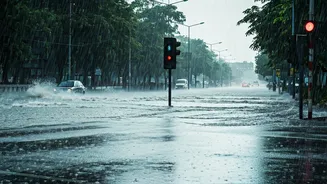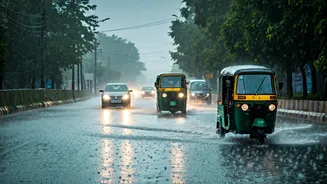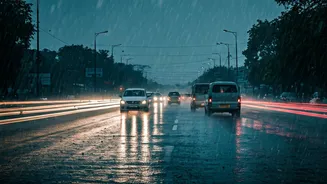








An Annual Ordeal for Commuters
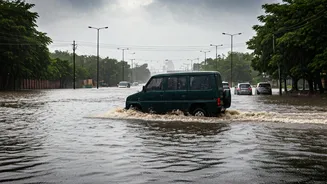
Every year, the first heavy showers transform parts of the National Capital Region into a gridlocked maze. The reasons are chronic and complex: an overburdened drainage system, rapid and often unplanned urbanisation, and a tangled web of civic agencies.
Despite annual pre-monsoon preparedness meetings and desilting drives, key arterial roads and low-lying areas invariably flood, turning daily commutes into hours-long struggles. The India Meteorological Department (IMD) has forecast an intense monsoon spell, which means travel disruptions are not just a possibility, but a certainty. This makes having a backup travel strategy more critical than ever.
Delhi’s Notorious Choke Points
Certain areas in Delhi are repeat offenders when it comes to waterlogging. Underpasses are particularly vulnerable, with the Minto Bridge and Pul Prahladpur underpass being infamous examples. Major traffic intersections and arterial roads like the Ring Road, Outer Ring Road, and stretches near ITO and AIIMS are also prone to severe waterlogging, often bringing traffic to a complete standstill. Other known hotspots include the area under the Modi Mill flyover, Mukarba Chowk, and stretches of Mathura Road. Traffic police often issue advisories, but by then, thousands are already stuck. Knowing these choke points in advance allows you to proactively reroute.
Gurugram’s Waterlogging Woes
Gurugram, with its gleaming high-rises, faces a significant monsoon challenge. The Municipal Corporation of Gurugram (MCG) has identified over 150 waterlogging hotspots, many of which are still pending remedial work as the rains begin. Key areas of concern include the service lanes of the Delhi-Gurugram Expressway, the Golf Course Road, Subhash Chowk, and various sectors that witness deep waterlogging even after short spells of rain. The situation is often exacerbated by incomplete drainage projects. For commuters travelling to or within Gurugram, avoiding these known trouble spots during a downpour is the first step towards a sane journey.
Your Monsoon Commuting Toolkit
Technology is your best friend during the monsoon. Before you leave home, check real-time traffic updates on apps like Google Maps or Waze, which often show road closures and congestion. The Delhi Traffic Police is active on social media platforms, providing timely updates on diversions and waterlogged areas. For those reliant on public transport, the Delhi Metro generally proves to be the most resilient option, though entry and exit points of some stations can get waterlogged. During exceptionally heavy rains, services on certain lines or specific stations can be temporarily suspended, so it is wise to check the DMRC's official updates before heading out.
Smarter Alternatives: Metro and WFH
If your destination is accessible by the Metro, it’s often the fastest and most reliable choice. After heavy rainfall in previous years, the Delhi Metro saw a significant spike in ridership as commuters abandoned their cars for the train. This shift underscores its role as the backbone of the city's transport during inclement weather. Another smart alternative, if your workplace policy allows it, is to work from home on days when heavy rain is predicted. Many companies have become more flexible with remote work, and avoiding the roads entirely is the only guaranteed way to beat the traffic chaos. Planning your travel around the weather forecast can save you time and immense frustration.