


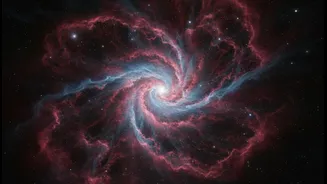


A Postcard from 50 Million Light-Years
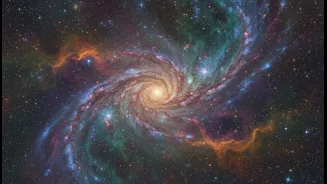
The subject of Hubble's latest portrait is a galaxy known as NGC 1546, located approximately 50 million light-years away in the southern constellation of Dorado. At first glance, the image is a celestial spectacle. A glowing, yellowish core is softly
veiled by thick, rusty-brown tendrils of dust. This isn't a computer-generated fantasy; it's a real, tangible place in our universe, captured with astonishing detail. The galaxy is tilted just so, giving astronomers a privileged, slightly-from-above view of its structure. This unique angle means the bright galactic core acts as a backlight, illuminating the intricate network of dust lanes that crisscross its face. It’s a snapshot of a city of stars, 50,000 light-years across, delivered to our cosmic doorstep.
Decoding the Cosmic Light
Every pixel in this image tells a story of cosmic life and death. The warm, yellowish glow at the heart of NGC 1546 signifies a dense population of older stars. Like the steady lights of an established city center, these stars have been shining for a very long time. In stark contrast, brilliant flecks of blue light sparkle through the dust, particularly on the far side of the galaxy. These are the stellar nurseries—hot, young, massive stars bursting into existence in vibrant clusters. The dark, moody dust lanes are not empty space, but rather the raw material for future generations of stars. Composed of particles ejected by dying stars, this dust absorbs and reddens the light from behind it, creating the image's signature rusty hue. In the background, other, more distant galaxies photobomb the scene, including a spiral galaxy seen perfectly edge-on.
The Telescope That Refuses to Quit
This stunning image is more than just another pretty picture; it's a statement of resilience. For over 34 years, the Hubble Space Telescope has been our eye on the universe, but it's an aging machine. Recently, after experiencing technical issues with its gyroscopes—devices essential for pointing and stability—the telescope was placed in a protective safe mode. Engineers made the decision to switch Hubble to a new, more stable operating mode that relies on just a single gyroscope, preserving another as a spare for the future. This image of NGC 1546 is one of the very first taken in this new configuration, proving that despite its age and recent challenges, Hubble is still capable of groundbreaking science. As one NASA scientist put it, the image demonstrates the "full success" of the new pointing mode, promising many more years of discovery.
More Than a Single View
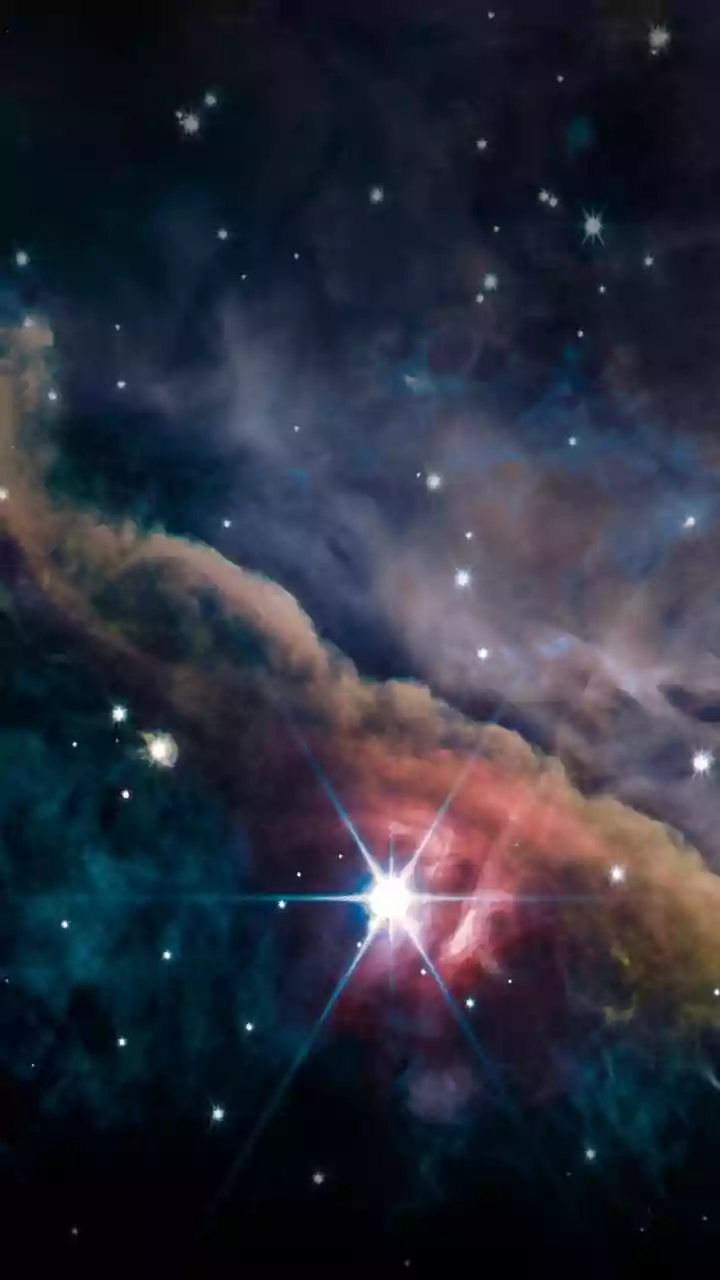
The investigation into NGC 1546 highlights the collaborative nature of modern astronomy. This image was captured as part of a joint program that also uses the James Webb Space Telescope (JWST) and the Atacama Large Millimeter/submillimeter Array (ALMA) in Chile. Each observatory sees the universe in a different kind of light. Hubble excels in visible and ultraviolet light, perfectly capturing the sparkle of young stars and the glow of older ones. JWST, with its infrared vision, can pierce through the dense dust lanes to reveal the hidden processes of star birth within. ALMA studies the cold gas that serves as the fuel for star formation. By combining data from all three, scientists can create a far more complete, multi-wavelength understanding of how galaxies like NGC 1546 form and evolve.