



The Mountain Menace: A Funnel of Fury
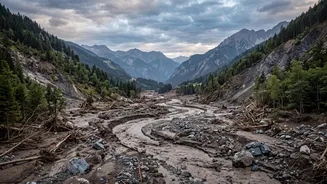
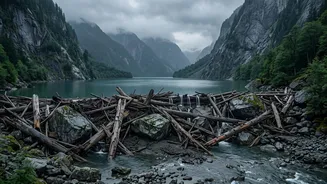
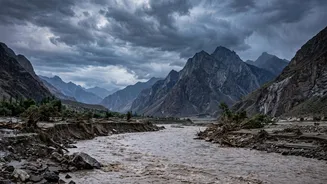
In mountainous regions, flash floods are defined by speed and force. The steep, rocky slopes act like a giant funnel. Because rock and hard-packed soil don't absorb much water, heavy rainfall runs off almost instantly. This water is channelled into narrow
valleys and stream beds, transforming a gentle creek into a raging torrent in less than an hour. The speed of the water is immense, giving it enough power to roll boulders, uproot trees, and scour entire hillsides. Another major threat in mountains is debris flow. The rushing water can pick up mud, rocks, and vegetation, creating a fast-moving, destructive landslide of slurry that can demolish anything in its path. The warning time is minimal, and the primary dangers are the sheer velocity of the water and the destructive power of the debris it carries.
The Urban Nightmare: Concrete and Clogged Drains
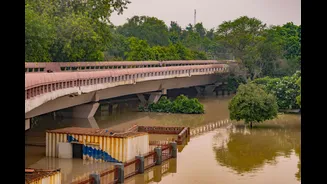
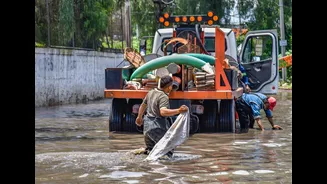
In cities, the danger comes from an environment engineered by humans. Urban landscapes are covered in impervious surfaces like concrete, asphalt, and rooftops that prevent rainwater from soaking into the ground. This dramatically increases the volume and speed of surface runoff, which is then channelled into storm drainage systems. A flash flood occurs when a sudden, intense downpour delivers more water than the drainage infrastructure can handle. The systems become overwhelmed, causing water to back up and rapidly inundate streets, underpasses, and basements. Unlike mountain floods, urban floods may not carry large boulders, but the water can be surprisingly swift and deep, easily sweeping away vehicles. Furthermore, the water is often contaminated with sewage and chemicals from overflowing systems, posing significant health risks long after the water levels recede.
River Valleys: Slow Rise, Wide Devastation
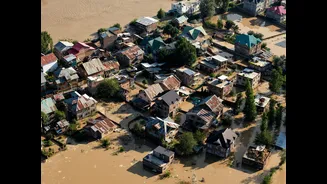
Flash floods in river valleys present a different kind of threat. These areas are typically wide and relatively flat. While a river flooding event is often a slower process that builds over days, a flash flood can still occur here due to extremely intense, localised rainfall or the failure of a dam or levee upstream. In this setting, the water may not have the same focused velocity as a mountain flood, but its danger lies in the vast area it can cover. The flood can spread out over kilometres of flat floodplain, turning fields and low-lying residential areas into a massive, shallow lake with little warning. Evacuation becomes challenging as roads are quickly cut off. While the currents might seem less violent, even a few inches of moving water can knock a person off their feet, and the sheer scale of the inundation can cause widespread property damage and disrupt life for weeks.
Key Differences: Speed, Debris, and Scale
The defining differences are clear. Mountain flash floods are fast, concentrated, and filled with destructive debris, posing an immediate physical threat in a narrow path. Urban flash floods are caused by overwhelmed infrastructure, with rapidly rising water turning streets into rivers, affecting densely populated areas. River valley flash floods are characterized by their scale; the water spreads out widely, inundating huge areas of flat land and making escape difficult. The warning time for all flash floods is dangerously short, often just a matter of hours or even minutes, but the specific behaviour of the water is dictated entirely by the ground beneath it. Understanding whether you are in a steep canyon, a concrete jungle, or a low-lying plain is the first step to knowing your true risk.