



The Sun's Turbulent Threat to Technology
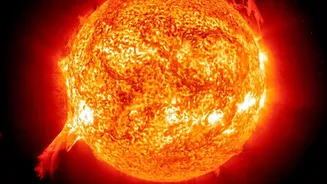
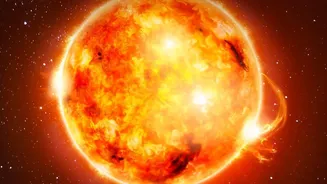
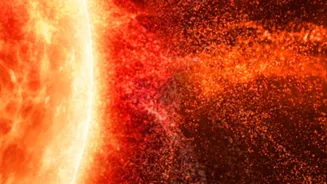
The Sun, our life-giving star, has a volatile side. It periodically releases enormous bursts of energy and matter in two main forms: solar flares and coronal mass ejections (CMEs). A solar flare is an intense flash of radiation that reaches Earth in about
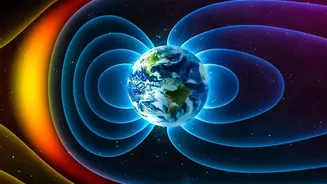
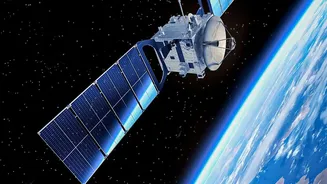
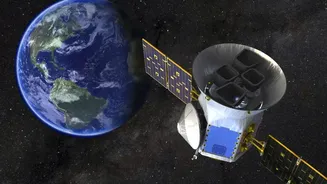
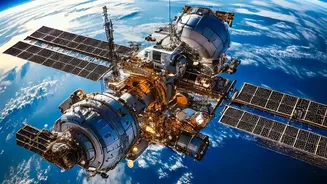
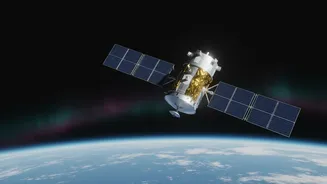
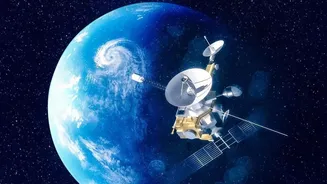
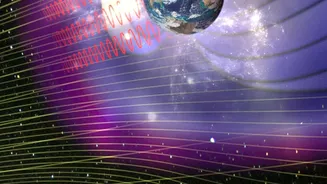
eight minutes. A CME is a much larger eruption of plasma and magnetic fields that travels more slowly, taking one to three days to arrive. When these events occur, a massive wave of charged particles washes over the Earth. While our planet's magnetic field protects us on the ground, the satellites orbiting above are highly exposed. These particles can heat the upper atmosphere, causing it to expand and increase the drag on satellites, which can alter their orbits. More critically, they can fry sensitive electronics, disrupt radio signals, and cause significant errors in navigation systems.
When Signals Go Silent
The consequences of this space weather are far from academic. For an individual, it might mean their GPS shows their location as being off by 15 metres or more, a significant error for precision navigation. For industries, the stakes are much higher. Airlines depend on reliable GPS and high-frequency radio for communication and navigation, especially over polar routes. A solar storm can force them to reroute flights, causing delays and increasing fuel costs. The financial sector relies on precise timing signals from GPS for high-frequency trading. Even power grids on the ground are vulnerable; a severe geomagnetic storm can induce currents that overload transformers and lead to widespread blackouts, which in turn can disable the ground stations that control satellites.
A New Dawn for Solar Forecasting
For decades, predicting space weather has been a reactive process. Scientists monitor the Sun for sunspots—cooler, magnetically active areas that are often precursors to flares and CMEs. However, this method often provides a warning of only hours, or sometimes just minutes, before the impact. This is changing with the advent of advanced artificial intelligence and new observational tools. In a partnership, NASA and IBM have developed an AI model named 'Surya' (Sanskrit for Sun). By analysing years of solar imagery, the model can identify subtle patterns and predict solar flares with greater accuracy than ever before, offering a crucial head start. This gives satellite operators, airlines, and power grid managers more time to take protective measures.
India's Eye on the Sun: The Aditya-L1 Mission
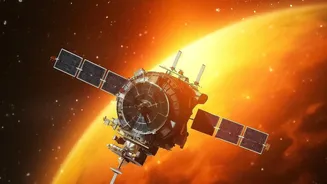
India has become a key player in this global effort with its Aditya-L1 mission. Launched by ISRO, the spacecraft is positioned 1.5 million kilometres from Earth at a strategic location called Lagrange Point 1 (L1). This gives it an uninterrupted view of the Sun. Aditya-L1's primary objective is to study the Sun's outer layers and track phenomena like CMEs from their origin. By observing solar storms before they begin their journey towards Earth, the mission provides critical advance warnings that feed into global space weather models. The data helps scientists understand the fundamental physics of the Sun, which is key to building more accurate predictive models for the future.
The Payoff: From Reaction to Resilience
The ability to forecast a major solar event days in advance, rather than minutes, is a game-changer. It shifts the entire paradigm from reactive damage control to proactive resilience. With sufficient warning, satellite operators can put their spacecraft into a protective 'safe mode', switching off non-essential and sensitive components to prevent electrical failure. Power grid managers can adjust loads to prevent surges, and airlines can plan new routes well ahead of time. This improved forecasting doesn't just prevent catastrophic failures; it enhances the day-to-day reliability of services we all depend on. As our world becomes ever more connected and reliant on space-based technology, the economic cost of a severe solar storm is estimated to be in the trillions of dollars. Accurate prediction is no longer just a scientific goal—it's an economic and societal necessity.