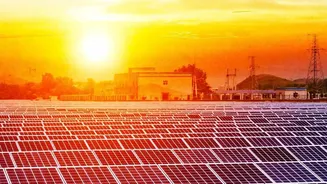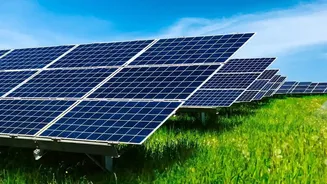





For millions of Indian farmers, income is at the mercy of the monsoon. Unpredictable rains and extreme weather can devastate crops and livelihoods. But a new type of harvest is offering a steady ray of financial hope: solar farming.
A New Season of Income
The concept is straightforward.
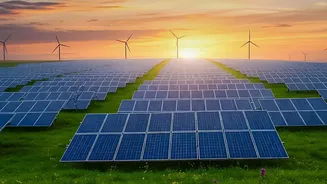
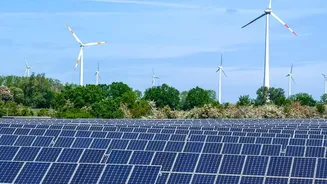
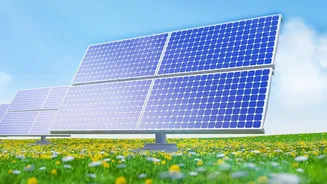
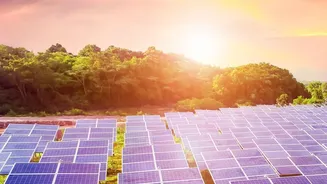
Instead of, or in addition to, growing crops, farmers can use their land to generate solar power. The most common model involves leasing a portion of their land to a solar power developer. These companies install, operate, and maintain solar panel arrays, paying the landowner a fixed annual rent for a long-term period, typically 25 years, to match the project's power purchase agreement (PPA) with the local electricity distribution company (DISCOM). This arrangement provides farmers with a predictable, passive income stream, completely independent of rainfall or crop yields. For a farmer with barren, fallow, or underproductive land, this transforms a non-performing asset into a reliable source of revenue.
The Economics of Energy Farming
The earnings from leasing land for solar projects can be substantial. Under government initiatives like the PM-KUSUM (Pradhan Mantri Kisan Urja Suraksha evam Utthaan Mahabhiyan) scheme, farmers can earn anywhere from ₹60,000 to ₹1,00,000 per acre, per year. In states like Karnataka, lease rates for state-backed projects start around ₹21,000 to ₹25,000 per acre annually, often with an escalation clause of 5% every two years. This provides a crucial financial cushion. While a farmer's agricultural income may fluctuate wildly, the solar lease payment remains consistent. For those with the capital, the PM-KUSUM scheme also allows farmers to set up their own solar plants and sell the power to the grid, which offers a much higher return but also involves significant investment and risk. A 1 MW plant, for instance, can cost between ₹3.5 to ₹4 crore to set up.
Sowing Solar, Reaping Crops
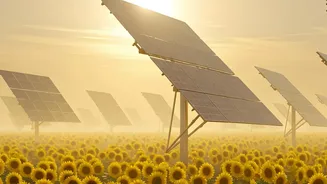
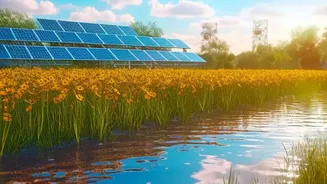
A concern for many is the loss of agricultural land. This is where an innovative practice called 'agrivoltaics' comes in. Agrivoltaics is the co-location of agriculture and solar power generation on the same piece of land. By mounting solar panels high off the ground on stilted structures, farmers can continue to cultivate crops underneath. Tractors and other machinery can pass freely between the panel supports. This dual-use model is gaining traction, with the government preparing a formal policy to promote it. Studies and pilot projects across India have shown that many shade-tolerant crops like tomatoes, spinach, broccoli, and various greens can thrive under the panels. The shade can even be beneficial, reducing water evaporation from the soil and protecting crops from extreme heat.
Success on the Ground
The idea is not just theoretical. In Sagar, Madhya Pradesh, farmer Anand Jain has installed a 4.5 MW agrivoltaic project on his 16-acre farm. He grows crops like strawberries and lettuce beneath elevated solar panels, generating up to 25,000 units of electricity daily while maintaining agricultural production. His farm demonstrates that the model is not only environmentally sustainable but also financially viable on a large scale. This approach directly addresses the challenge of land availability for solar projects, a critical issue in a densely populated country like India where 85% of farmers are small and marginal landholders. By combining food and energy production, agrivoltaics allows farmers to diversify their income without sacrificing precious arable land.
Challenges Under the Sun
Despite the promise, there are hurdles. The primary option for farmers, leasing land, means locking that parcel into a 25 year contract, which can be a difficult long term decision. There are also risks of scams, where fraudulent companies collect 'registration fees' from landowners and then disappear. For those wanting to own a plant, the high initial investment is a major barrier for most small farmers. Agrivoltaic systems themselves are more expensive, costing 25–30% more than conventional ground–mounted solar projects due to the need for elevated structures. Furthermore, a general lack of awareness and a shortage of skilled technicians in rural areas can slow adoption.