
The Foundation: India Joins the Artemis Accords
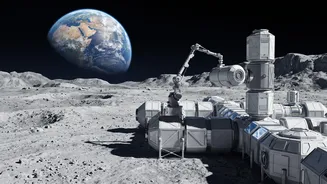
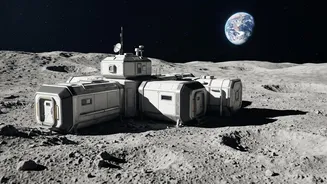
The journey to a potential joint Moon base began in earnest when India became the 27th nation to sign the Artemis Accords. These accords, led by the US, establish a set of principles for peaceful and cooperative space exploration, specifically for returning
humans to the Moon and beyond. By signing, India moved from being an independent space power to a key player in a global collaborative effort. This decision was strategic, preventing technological isolation and ensuring India's systems are compatible with global standards. More importantly, it opened the door for deeper partnerships, including training Indian astronauts and, now, collaborating on a permanent lunar outpost. This alignment positions India not just as a participant but as a shaper of humanity's future in space.
A History of Successful Collaboration
The idea of a joint Moon base doesn't come out of the blue. It builds on a long and successful history of collaboration between NASA and ISRO. The most significant recent example is the NISAR (NASA-ISRO Synthetic Aperture Radar) mission. Launched in 2025, this sophisticated Earth-observation satellite is a true 50-50 partnership, with NASA providing the L-band radar and ISRO contributing the S-band radar. NISAR provides invaluable, high-resolution data on climate change, disaster management, and resource mapping, demonstrating how combining strengths can achieve more than either agency could alone. This successful teamwork on a complex project provides a trusted blueprint for tackling the even greater challenge of building and operating a base on the Moon.
The Leap in Technology and Science
For India, participating in a lunar base program is a massive technological accelerator. Collaboration would grant ISRO access to cutting-edge technologies in areas like life support systems, advanced robotics, and deep-space communication—all crucial for ambitious future projects. This knowledge transfer is vital for India's own long-term goals, which include landing an Indian astronaut on the Moon by 2040 and establishing its own space station, the Bharatiya Antariksh Station, by 2035. It allows India to leapfrog certain development cycles by sharing the immense financial and technical load of such mega-missions. Furthermore, it opens up opportunities for Indian scientists to conduct research in a unique lunar environment and for India's private aerospace sector to join a global supply chain.
Strategic Importance on the World Stage
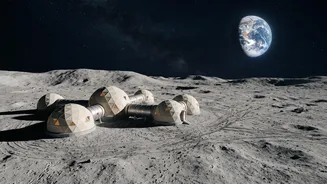
Beyond the science, a joint lunar outpost carries immense geopolitical weight. This collaboration solidifies the strategic partnership between India and the United States, positioning India as a key ally in the new space race. As countries like China and Russia advance their own lunar ambitions, the NASA-ISRO partnership reinforces a rules-based, cooperative approach to space governance outlined in the Artemis Accords. For India, it’s an opportunity to project its capabilities and cement its status as a leading, and responsible, space-faring nation. This leadership role extends to the Global South, where India's cost-effective missions and technological prowess serve as an inspiration and a model.
A Long-Term Vision for Humanity's Future
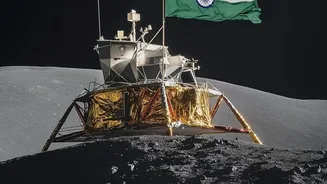
While NASA has formally invited ISRO to participate, building a Moon base is a monumental undertaking with a long timeline. It's a vision for the 2030s and 2040s, not something that will happen overnight. The project will involve immense challenges, from developing new technologies to securing sustained funding. ISRO's potential contributions could range from providing scientific instruments and robotics to developing communications and infrastructure elements. India's reputation for frugal engineering and its proven success with missions like Chandrayaan-3 make it an attractive partner for NASA as it seeks to build a sustainable and international presence on the Moon. The invitation itself is a powerful endorsement of ISRO's capabilities and its critical role in the next chapter of space exploration.