





The Two Heavyweights in the Ring
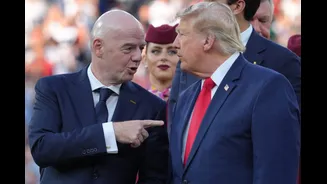
At the centre of this conflict are two of the most powerful men in sports: FIFA President Gianni Infantino and UEFA President Aleksander Čeferin. FIFA, the global governing body, oversees football worldwide, including the prestigious World Cup. UEFA governs
football in Europe, home to the world's wealthiest clubs and its own crown jewel, the Champions League. While Infantino was once UEFA's general secretary and backed by the European body, the relationship has soured into a public feud. This personal and political rivalry now defines a war fought over money, power, and control of the international football calendar.
The Flashpoint: Selling the World Cup
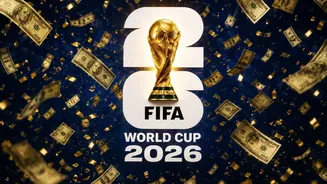
The conflict has exploded over a controversial FIFA proposal to create a new commercial subsidiary, valued at about $20 billion, to manage the rights for its competitions. Under this plan, FIFA would sell up to a 20% minority stake to private investors. FIFA President Gianni Infantino argues this move would “democratise football” by generating billions to be distributed among its 211 member associations, offering them huge financial incentives to approve the plan. However, UEFA has vehemently rejected the proposal, with president Aleksander Čeferin accusing FIFA of attempting to sell the soul of the game. UEFA’s position is that the World Cup is a sporting legacy, not an investment product to be surrendered to private interests.
The Ultimate Threat: A World Cup Boycott
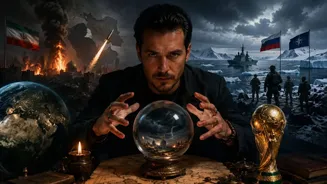
In a dramatic escalation, all 55 member nations of UEFA have unanimously voted to boycott all FIFA competitions, including the World Cup, if the plan proceeds. This is not an empty threat; it is the most serious rift between the two organisations in modern history. A World Cup without European powerhouses like Germany, France, England, and reigning champions Spain is unthinkable and would devalue the tournament immensely. CONCACAF, the confederation for North and Central America and the Caribbean, has also backed UEFA’s stance, creating a powerful opposition bloc of 96 nations against FIFA's proposal.
It’s Always About Money and Control
Beyond the latest flashpoint, the struggle is fundamentally about who controls football's calendar and its vast revenue streams. FIFA’s income is heavily reliant on the men's World Cup, held every four years. By contrast, UEFA's Champions League is an annual cash cow. FIFA’s push for an expanded Club World Cup and other new tournaments is seen by many as a direct challenge to the supremacy of European club football. UEFA fears that giving private investors a stake will mean commercial returns become a permanent obligation, with decisions on tournament formats and scheduling being dictated by profit motives rather than sporting priorities.
A History of Bad Blood
Tensions have been simmering for years. Disagreements have ranged from FIFA's past proposal to hold the World Cup every two years, to contentious disciplinary decisions during the recent 2026 World Cup. UEFA President Aleksander Čeferin even boycotted the World Cup final in protest of several FIFA decisions, including one involving a rescinded suspension for a US player after an intervention by the US President. These incidents have eroded trust and created a deep-seated animosity, with UEFA viewing FIFA's leadership as reckless and undermining the integrity of the game.