




The Hunt for Lunar Water
For decades, the Moon was thought to be completely dry. However, a series of missions, including India's Chandrayaan-1 and NASA's Lunar Reconnaissance Orbiter, have confirmed the presence of water ice. This isn't a vast, singular ice sheet but rather
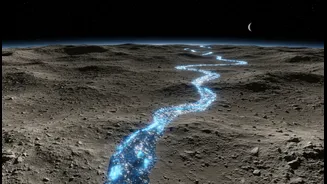
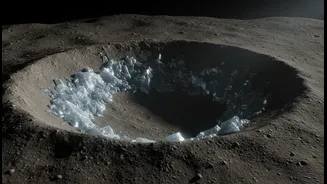
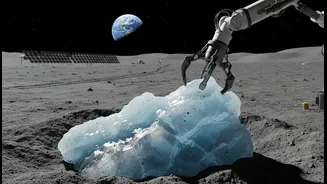
ice mixed into the lunar soil, or regolith, and concentrated in some of the coldest places in our solar system: permanently shadowed craters near the Moon's poles. These areas have not seen sunlight in billions of years, allowing ice delivered by comets and asteroids to remain frozen in time. The estimated quantity is significant, with some calculations suggesting enough water to fill hundreds of thousands of Olympic-sized swimming pools.
More Than Just a Drink
While providing drinking water for astronauts is a crucial benefit, the true value of lunar water lies in its versatility. Through a process called electrolysis, water (H₂O) can be split into its constituent elements: hydrogen and oxygen. This provides breathable air for habitats, a fundamental requirement for any long-term human settlement. More importantly, liquid hydrogen and liquid oxygen are the primary components of powerful rocket propellant. Having a refueling station on the Moon would fundamentally change the economics of space exploration, making deep space missions more feasible.
The Ultimate Logistical Game-Changer
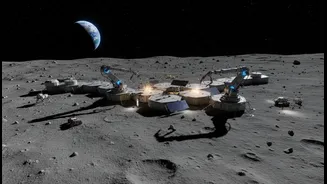
The ability to source vital supplies locally, a concept known as in-situ resource utilization (ISRU), is a central pillar of modern space exploration strategy. Every kilogram of mass launched from Earth is incredibly expensive, costing upwards of a million dollars by some estimates. By producing water, air, and fuel on the Moon, the need to launch these heavy resources from Earth is dramatically reduced. This not only cuts mission costs but also decreases reliance on a long and complex supply chain, making a lunar base more self-sufficient and sustainable. This lunar-based infrastructure is seen as a critical stepping stone for eventual human missions to Mars.
The Technological Challenges Ahead
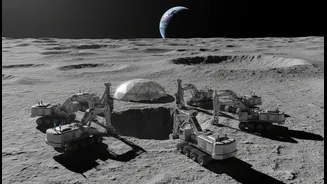
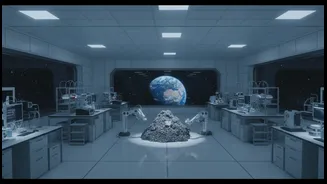
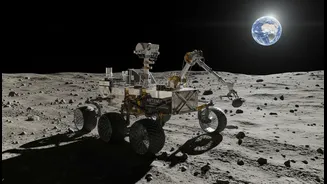
Harvesting this lunar resource presents formidable engineering challenges. The water ice is located in some of the most hostile environments imaginable, with temperatures plunging to around -233 degrees Celsius in total darkness. Mining equipment must be able to operate in these cryogenic conditions, excavate the frozen regolith, and then heat it to extract the water vapor. NASA and its partners are actively developing the technologies to overcome these hurdles. Missions like the now-revived Volatiles Investigating Polar Exploration Rover (VIPER) are designed to map the distribution and concentration of ice, providing the first-ever resource maps of another celestial body. This data is essential for identifying the most promising sites for future extraction operations.
A Blueprint for Humanity's Future in Space
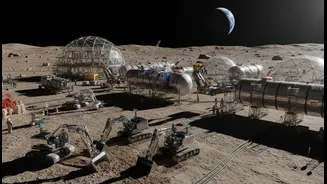
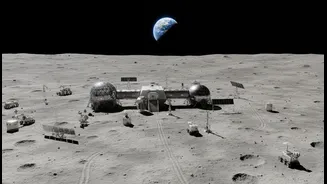
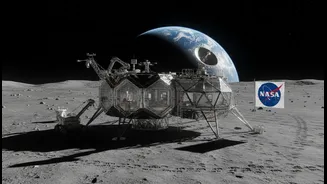
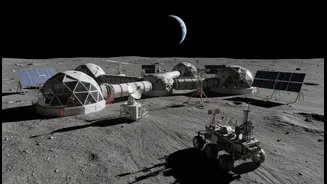
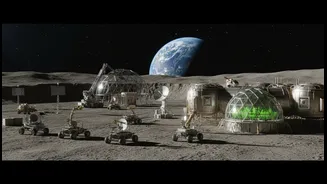
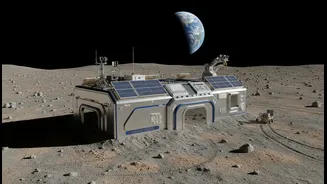
The potential of lunar water ice is a core component of ambitious programs like NASA's Artemis, which aims to establish a long-term human presence on the Moon by the end of the decade. The plan involves a phased approach, starting with robotic missions to prospect for resources and test extraction technologies. Subsequent phases will see the construction of a permanent habitat and the scaling up of ISRU operations. This lunar outpost would not only be a hub for scientific research but also a vital staging point for the next giant leap in human exploration. By learning to 'live off the land' on the Moon, we are building the blueprint for our expansion into the solar system and beyond.