





First, What Are These Tools?
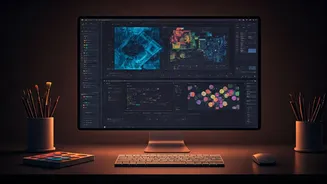
When you hear 'generative AI', you might picture apps like Midjourney or DALL-E creating entire images from a text prompt. But for many professional illustrators, the real value lies in a more collaborative process. Generative layout and design software
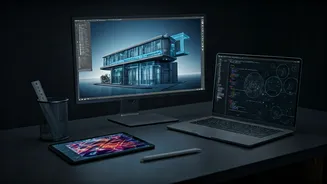
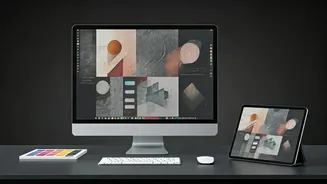
isn't just about making a final image; it's about exploring possibilities. These tools can instantly generate dozens of variations on a composition, suggest colour palettes, test different lighting schemes, or create mockups for a client. Think of it less as a magic 'create art' button and more as a super-powered assistant that can handle the grunt work of ideation, leaving the artist to focus on direction, style, and storytelling.
The Unrelenting Need for Speed
One of the biggest drivers for adoption is the modern content cycle. Today's illustrators, especially freelancers and those working in digital media, face immense pressure to produce high-quality work on incredibly tight deadlines. A single project might require multiple assets for social media, a website, and marketing materials—all needed yesterday. Generative tools excel here. An illustrator can quickly generate ten different layout options for an Instagram post, helping a client make a decision in minutes rather than hours. This acceleration isn't about cutting corners; it's a strategic response to an industry that demands both speed and volume. For young professionals trying to build a portfolio and a client base, any tool that multiplies their output without sacrificing core quality is a game-changer.
A Powerful Cure for Creative Block
Every creative professional knows the terror of the blank page. Staring at an empty canvas, waiting for inspiration to strike, can be a frustrating and time-consuming ordeal. Generative layout software acts as a powerful antidote to this common problem. By feeding the software a simple concept, a rough sketch, or a set of keywords, an illustrator can receive a cascade of visual starting points. Most of these initial outputs may not be perfect, but they don't need to be. They serve as creative sparks, suggesting angles, compositions, or colour combinations the artist might not have considered. This process transforms the daunting task of starting from zero into the more manageable task of curating, refining, and building upon an existing idea.
Democratising the Technical, Elevating the Conceptual
Illustration involves a mix of conceptual creativity and technical skill. While style and vision are paramount, technical execution—mastering perspective, understanding light and shadow, and creating balanced compositions—can take years of practice. Generative tools can help bridge this gap, especially for younger artists. The software can handle the complex geometry of a three-point perspective scene or suggest a harmonised colour palette based on established theory. This doesn't make technical skill obsolete. Instead, it allows the illustrator to focus their energy on what truly makes their work unique: the concept, the emotion, the narrative, and the distinctive stylistic choices. It automates parts of the 'how' so the artist can invest more deeply in the 'what' and 'why'.
Navigating the Ethical Minefield
Of course, this adoption isn't without debate. The design community is rightly concerned about the ethics of AI, particularly how these models are trained on vast datasets of existing artwork, often without the original artists' consent. There are fears that an over-reliance on these tools could lead to a homogenization of styles or devalue the craft and technical skill that artists spend years developing. For many young illustrators, using these tools responsibly means seeing them as part of the process, not the entire solution. They are careful to use them for ideation and composition rather than final art generation, ensuring their own hand and creative voice remain the dominant force in the final product. The conversation around copyright, credit, and the very definition of creativity is ongoing and vital.