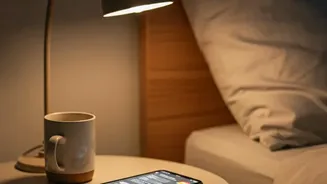







It's a modern paradox: you feel exhausted, yet after an evening of scrolling on your phone, you're wide awake in bed. This struggle is not just in your head; it's a biological response to how our evening screen habits affect our brains.
The Science of a Sleepless Night
Our bodies run
on an internal 24-hour clock known as the circadian rhythm, which tells us when to feel sleepy and when to be alert. A key player in this process is melatonin, a hormone released by the brain when darkness falls, signaling that it's time to sleep. However, the screens on our phones, tablets, and laptops emit a strong concentration of blue light, which our brains interpret as daylight. When we expose our eyes to this artificial light in the evening, we are essentially sending a confusing message to our internal clock, telling it to stay awake.
How Blue Light Suppresses Melatonin
Numerous studies show that exposure to blue light in the hours before bed can delay and suppress the production of melatonin. Research suggests that using a device for 1.5 to 2 hours in the evening can be enough to significantly disrupt the melatonin surge needed to fall asleep. This suppression makes it harder to fall asleep, can reduce the overall quality of rest, and may even shift your entire sleep cycle, making you want to go to bed later and wake up later. The result is often feeling groggy and unrested the next day, even if you were in bed for a full eight hours.
More Than Just Light: A Stimulated Brain
The issue isn't just biological; it's also psychological. Engaging with content on our devices keeps our minds whirring. Whether it's answering work emails, watching an exciting show, or scrolling through social media, these activities stimulate the brain, increasing alertness and sometimes even causing an adrenaline rush. This mental engagement is the opposite of the calm, relaxed state needed to transition into sleep. Even a quick check of notifications can be enough to pull your brain out of its pre-sleep wind-down and delay the onset of rest.
Practical Steps for Better Sleep
Reclaiming your evenings and improving your sleep doesn't require abandoning technology entirely, but it does call for creating healthier habits. The most effective strategy is to establish a 'digital curfew'. Aim to put away all electronic devices at least 60 to 90 minutes before you plan to go to sleep. Use this time for relaxing, screen-free activities like reading a physical book, gentle stretching, taking a warm bath, or listening to calming music. This buffer period allows your brain to wind down and your body to begin its natural production of melatonin without interference.
Optimize Your Devices and Environment
If you must use a device closer to bedtime, there are ways to mitigate the harm. Most smartphones and computers now offer a 'night mode' or 'night shift' setting that reduces blue light emission and warms the colour temperature of the screen. While this helps, it doesn't eliminate the problem of mental stimulation. Additionally, make your bedroom a screen free zone. Charge your phone in another room to remove the temptation to scroll before sleeping or immediately upon waking. Ensuring your bedroom is cool, dark, and quiet will further signal to your body that it is time for restorative rest.