



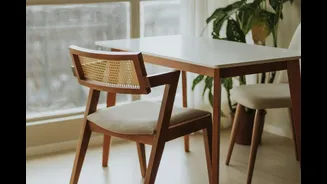


The End of the ‘Jugaad’ Workspace
Remember March 2020? The sudden shift to remote work sent many of us scrambling. We fashioned offices out of whatever was available: a corner of the dining table, a spare stool, or a stack of books propping up a laptop. This ‘jugaad’ approach was a testament
to our adaptability. But two years on, with hybrid schedules solidifying, the temporary mindset is fading. Young professionals, in particular, are recognising that a functional, comfortable, and motivating workspace is no longer a luxury but a necessity for productivity and mental well-being. They are leading a quiet revolution in home office design, moving from simply ‘making do’ to mindfully ‘making space’.
Enter the Modular Desk
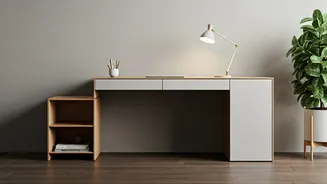
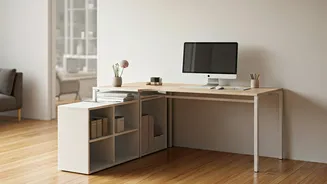
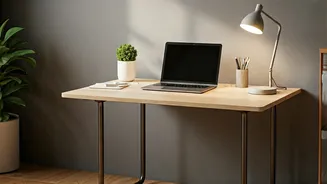
So, what exactly is a modular desk? Think of it as the Lego of office furniture. Unlike a traditional, one-piece desk, a modular system is made up of various independent components or ‘modules’—desktops, legs, storage units, shelves, and accessory panels—that can be configured and reconfigured in countless ways. Want a standing desk for part of the day? Add adjustable legs. Need more storage for files? Attach a drawer unit. Starting a new hobby that requires more surface area? Expand the desktop. This inherent flexibility is its superpower, allowing a single piece of furniture to evolve with your changing needs, tasks, and even living situations.
Built for the Hybrid Hustle
The appeal of modular desks for the hybrid worker is clear. Your home is not a dedicated office; it’s a living space that must accommodate work, relaxation, and family. A bulky, traditional desk can feel like a permanent corporate invasion. A modular desk, however, respects this boundary. Its ability to be reconfigured means it can be a sprawling command centre during a busy workday and a compact, discreet piece of furniture by evening. In smaller urban apartments, where every square foot is precious, this adaptability is a game-changer. You can build vertically with shelves to maximise storage without sacrificing floor space, or choose a setup that can be easily tucked away on ‘in-office’ days.
More Than Just Function
This trend is also driven by a desire for personalisation and aesthetic control. After years of conforming to sterile office environments, young professionals are enjoying the freedom to create a workspace that reflects their personality. Modular systems offer a wide range of materials, finishes, and colours, allowing for a high degree of customisation. It’s an opportunity to design a space that feels less like a cubicle and more like an inspiring, integrated part of the home. This isn’t just about looking good on a video call; it’s about creating an environment that sparks creativity and reduces the monotony of working in the same spot day after day.
A Smart, Long-Term Investment
While the initial cost of a quality modular system can be higher than a simple table, many see it as a wise long-term investment. A generation accustomed to flexible career paths and potential relocations values furniture that can move and adapt with them. A modular desk won’t become obsolete if you move to a new flat or change your career. You can add, subtract, or reconfigure parts as needed. It’s a sustainable choice, both financially and environmentally, reducing the need to discard and replace furniture as life circumstances change. This aligns perfectly with a forward-thinking mindset that values durability, flexibility, and smart resource management over short-term, disposable solutions.