

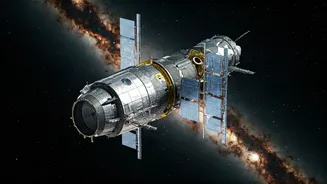



An Eye on Cosmic Explosions
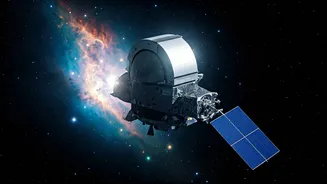
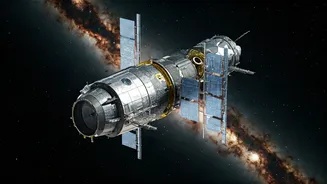
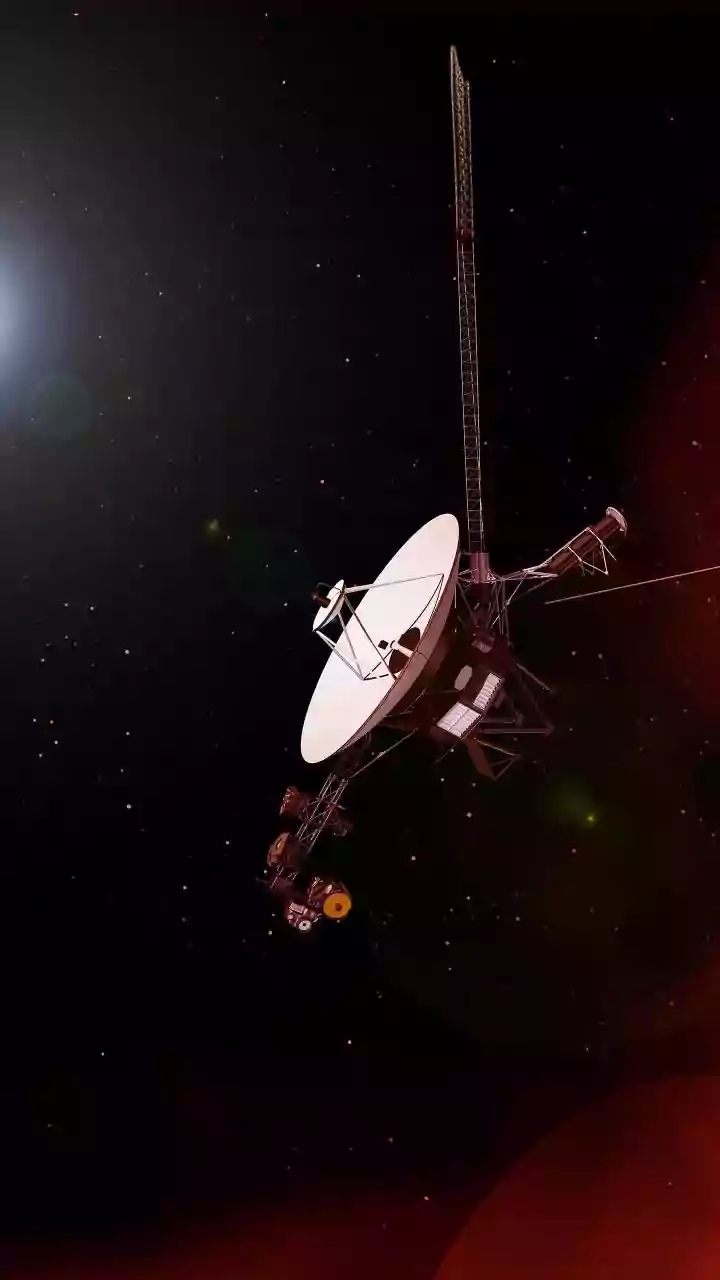
Launched in 2004, the Swift Observatory has been one of astronomy's most vital assets. It was designed with a unique purpose: to be a rapid-response vehicle for detecting gamma-ray bursts (GRBs), the most powerful explosions in the universe. These events
can last from milliseconds to minutes, unleashing more energy than our sun will in its entire lifetime. True to its name, Swift can autonomously pivot and focus its three telescopes on a newly detected burst in under 90 seconds, a feat no other major observatory like Hubble or Webb can match. This speed allows scientists worldwide to study the fading afterglow of these cataclysmic events, providing crucial data on everything from the death of massive stars to the collision of neutron stars. Originally planned for a two-year mission, Swift's remarkable success led to repeated extensions, making it a general-purpose tool for observing all manner of transient cosmic events.
A Slow and Silent Fall
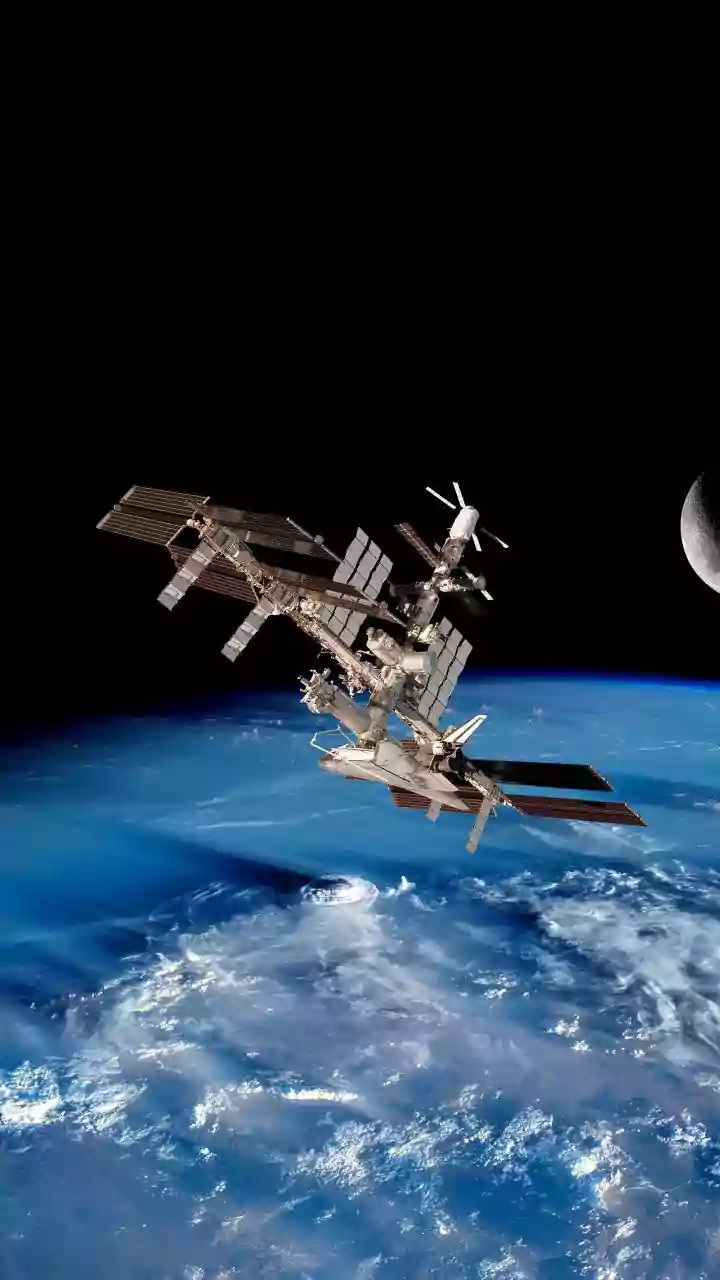
The problem facing Swift isn't a sudden malfunction of its scientific instruments, but a slow, relentless pull from Earth. Satellites in low-Earth orbit are constantly subject to atmospheric drag. Recently, increased activity from the sun has heated and expanded Earth's outer atmosphere, increasing this drag significantly. This unexpected change caused Swift, which has no onboard propulsion, to start losing altitude faster than anticipated. Having already dropped from its initial 600-kilometer orbit, it was projected to burn up upon re-entry sometime in 2026 if no action was taken. To buy time, NASA engineers put the observatory into a drag-minimizing orientation, temporarily halting science operations to slow its descent while a rescue plan could be formed.
Enter the Robotic Lifeguard
In an unprecedented move, NASA awarded a $30 million contract to a private company, Katalyst Space, to build and operate a robotic servicing vehicle. The spacecraft, called LINK, is essentially a robotic tugboat designed for a high-stakes rendezvous. The mission is a monumental challenge, as Swift was never designed to be grappled or serviced in orbit. Katalyst had just nine months to develop LINK from concept to launch-ready hardware, an incredibly compressed timeline for the space industry. The mission involves launching the LINK spacecraft on a Northrop Grumman Pegasus XL rocket, which is itself air-launched from a modified L-1011 'Stargazer' aircraft. After several weather and technical delays, the launch is now targeted for early July 2026.
A High-Stakes Celestial Dance
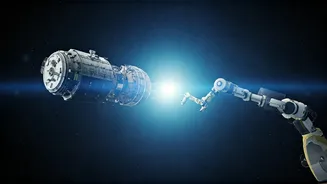
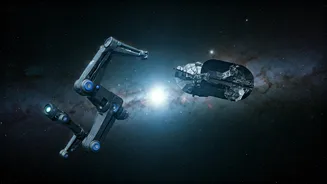
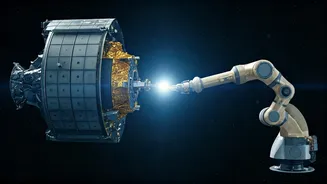
Once in orbit, the LINK spacecraft will spend weeks carefully approaching the Swift observatory. Using its robotic arms, it will latch onto the 1.5-ton satellite. Once a firm grip is established, LINK will use its own ion thrusters to slowly and carefully boost Swift into a higher, more stable orbit. The entire process of raising the orbit is expected to take several months. If successful, the maneuver could add another decade of operational life to the veteran observatory, allowing it to continue its crucial work. The mission is fraught with risk; a rendezvous with an object not designed for docking is one of the most complex operations in spaceflight, where any miscalculation could be catastrophic.
Pioneering a Sustainable Future in Space
The mission to save Swift is about more than just one telescope. It represents a critical test for the burgeoning field of commercial on-orbit servicing. The global satellite servicing market is projected to be worth over USD 3.7 billion in 2026, driven by the need to extend the life of expensive space assets, manage orbital traffic, and mitigate the growing problem of space debris. Companies like Astroscale and Northrop Grumman are developing technologies for in-orbit inspection, refueling, and repair. A successful Swift rescue by Katalyst Space would be a landmark achievement, proving that commercial companies can execute complex servicing missions for government assets and paving the way for a more sustainable model of space operations. It could transform satellites from disposable tools into serviceable, long-term infrastructure.