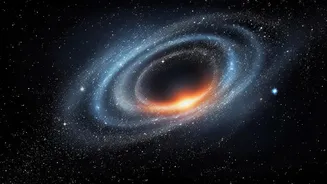


Our Milky Way galaxy is a cosmic metropolis teeming with stars, planets, and nebulae. But it also hides a ghostly population of millions of invisible giants: stellar-mass black holes. Most of them are missing, and a new hunt is on to find them.
The Galaxy's Invisible Residents
Astronomers
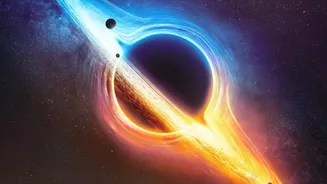
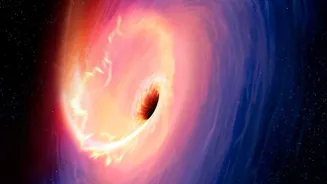
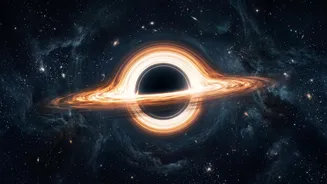
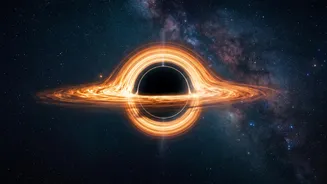
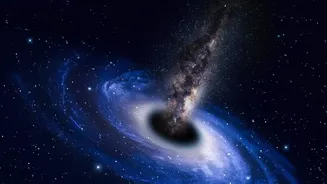
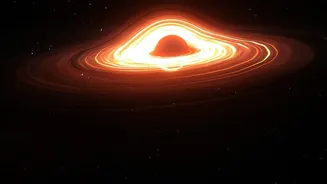
estimate that our galaxy should have created somewhere around 10 to 100 million stellar-mass black holes over its lifetime. These are the remnants of massive stars, at least 20 times the mass of our Sun, that collapsed under their own gravity after running out of fuel. Yet, despite these vast predictions, we have only managed to confirm the existence of a few dozen. So, where are the rest? The problem is that most black holes are 'dormant'. We typically find them when they are actively feeding on a nearby star, a process that heats up material in an accretion disk and releases huge amounts of tell-tale X-ray radiation. A dormant black hole, by contrast, has nothing to consume and therefore emits no light, making it effectively invisible.
New Tools for a Cosmic Hunt
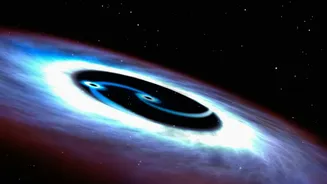
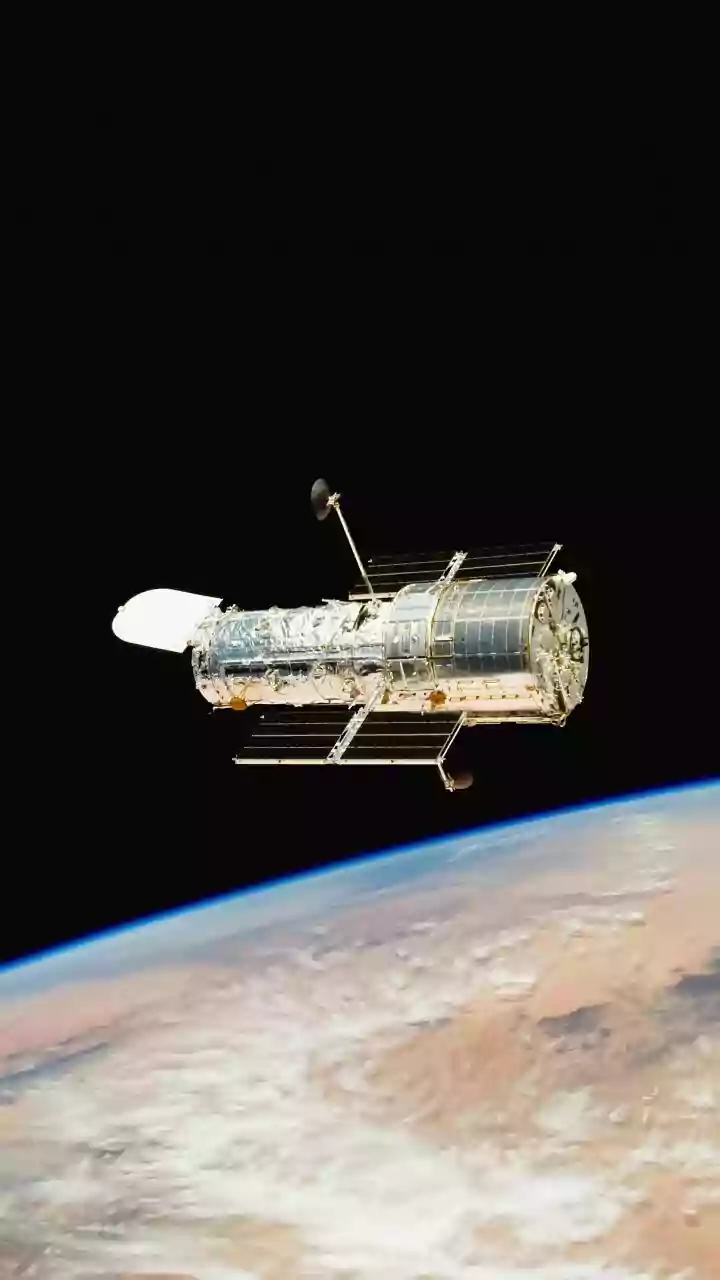
Finding these quiet giants requires a different, more subtle approach. Rather than looking for light from the black hole itself, astronomers hunt for its gravitational influence on things around it. This is where a new generation of sky-mapping missions and citizen science projects comes into play. The European Space Agency's (ESA) Gaia mission, for instance, has been revolutionary. By precisely tracking the positions and movements of over a billion stars, Gaia can detect a tell-tale 'wobble' in a star's path. This tiny wiggle can indicate that the star is being pulled by the gravity of an unseen, massive companion—a perfect candidate for a dormant black hole. This method has already led to the discovery of several new black holes in our cosmic backyard, including Gaia BH1, Gaia BH2, and the most massive stellar black hole found in our galaxy, Gaia BH3.
Calling All Black Hole Hunters
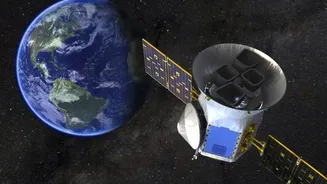
The search isn't just for professional astronomers. A citizen science project called 'Black Hole Hunters,' hosted on the Zooniverse platform, is enlisting volunteers to help find these missing objects. This project uses data from NASA's Transiting Exoplanet Survey Satellite (TESS). Volunteers sift through graphs showing the brightness of millions of stars over time, looking for a specific signal called 'gravitational microlensing'. This occurs when a black hole, orbiting with a companion star, passes directly in front of the star from our perspective. The black hole's immense gravity bends and magnifies the star's light, causing it to briefly appear much brighter. Computers can flag potential events, but the human eye is still best at distinguishing a true microlensing peak from other stellar variations. With nearly 23,000 volunteers already participating, the project is a massive effort to speed up a search that would otherwise take decades.
Why This Cosmic Census Matters
Finding these missing black holes is about more than just completing a galactic headcount. It's fundamental to understanding the life and death of stars. The number, mass, and location of these remnants provide crucial data to verify and refine our models of stellar evolution. For example, theories predict a 'mass gap'—a range of masses where black holes shouldn't form because the progenitor stars would destroy themselves completely in a violent explosion. Finding where this gap truly lies helps astronomers understand the complex physics inside dying stars. Furthermore, studying these dormant black holes can shed light on the formation of binary systems and even how supermassive black holes at the centers of galaxies might have grown. Each new discovery is another clue in the grand mystery of how our galaxy was built and evolved.