


A Rare European Spectacle
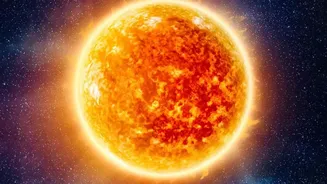
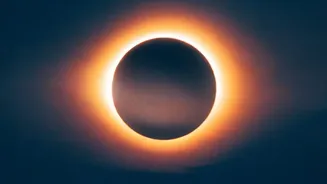
This year's most anticipated astronomical event is a total solar eclipse that will carve a path across the globe, offering a rare glimpse of the sun's ethereal corona. The path of totality, where the moon completely obscures the sun, will begin over remote
parts of Russia and Greenland, before sweeping across western Iceland and northern Spain. Cities like Reykjavik, Bilbao, and Valencia will be plunged into midday darkness for a brief, awe-inspiring period. For Europe, this is especially significant as it's the first total solar eclipse visible from the mainland since 1999. The eclipse will offer a particularly dramatic view in Spain, where totality will occur just before sunset, creating the surreal sight of an eclipsed sun hanging low on the horizon. The maximum duration of totality will be just over two minutes, making every second precious for scientists and skygazers alike.
Why You Can’t See It From India
Unfortunately for stargazers in India, the path of the August 12 eclipse does not cross over the subcontinent. The total solar eclipse will occur during the night in India, when the sun is well below the horizon. The partial phase of the eclipse is set to begin around 9:04 PM Indian Standard Time (IST) on August 12, with the event concluding in the early hours of August 13. Since the eclipse will not be visible, there is no need to observe any related customs or sutak rituals. But while you can't step outside to see the sky darken, technology provides a fantastic front-row seat.
How to Watch the Eclipse Live From India
Thanks to modern technology, witnessing this celestial event from India is simple. NASA will be hosting a comprehensive live broadcast, making the spectacle accessible to everyone around the world. The livestream will feature high-definition views from multiple locations along the path of totality, including Iceland and Spain. Viewers can expect expert commentary from NASA scientists who will explain the science behind the eclipse as it happens. The NASA broadcast is scheduled to begin at 1:15 p.m. EDT, which translates to approximately 10:45 PM IST on August 12. You can tune in via NASA's official website (nasa.gov/live), its streaming service NASA+, or its official YouTube channel. The European Space Agency (ESA) will also host its own live coverage from an observatory in Spain, starting from 19:30 CEST (11:00 PM IST).
What You Will See on the Stream
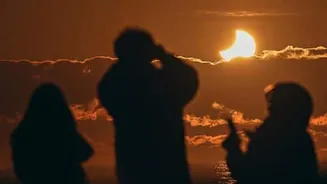
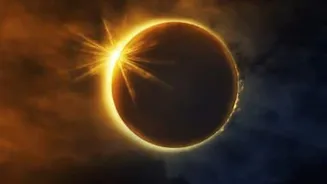
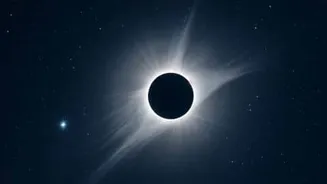
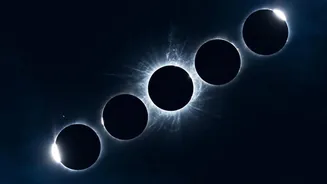
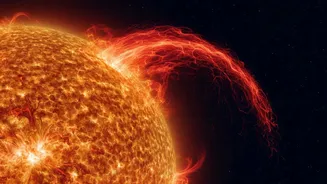
The live broadcasts will offer more than just a view of the darkened sun. As the moon begins to cover the sun, you will witness the partial phases of the eclipse. The most exciting part is totality, when the sun's bright face is completely blocked. During these few minutes, the sun's corona—its wispy, superheated outer atmosphere—becomes visible in a stunning display of ethereal light that is normally hidden by the sun's glare. NASA's broadcast will also likely feature scientific experiments being conducted during the event. For example, a high-altitude research aircraft will chase the moon's shadow to study the corona for a longer period, and student-led teams will launch balloons to study atmospheric changes. This provides a unique opportunity to not only see the eclipse but also understand the cutting-edge science it enables.
A Double Celestial Feature
As an added bonus, the eclipse coincides with the peak of the annual Perseid meteor shower on the night of August 12-13. Since the eclipse happens during the new moon, the sky will be exceptionally dark, creating perfect conditions for meteor-spotting after the eclipse stream ends. While the eclipse itself isn't visible from India, you can still step outside after midnight to look for the Perseids. For the best chance of seeing these 'shooting stars', find a location away from city lights, let your eyes adjust to the darkness, and simply look up. It's a perfect way to cap off an evening of cosmic wonders.