



The Quiet Invitation of a Public Bookshelf
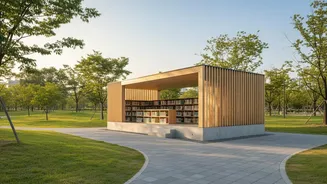
Across the country and the world, a quiet revolution is taking place in parks, at bus stops, and on neighbourhood corners. It arrives in the form of a small, often whimsical, wooden box full of books. Initiatives like Little Free Libraries, outdoor reading
rooms, and community-led 'book nests' are based on a simple premise: take a book, share a book. But their impact goes far beyond literacy. These installations act as a powerful invitation. In spaces that are often designed for movement, a public bookshelf gives people permission to be still. It provides a purpose for lingering, transforming a 'pass-through' area into a potential destination.
From 'Dwell Time' to Community Time
Urban planners often talk about 'dwell time'—the length of time people spend in a particular location. Spaces with low dwell time can feel desolate and even unsafe. Increasing it is key to creating vibrant, successful public areas. Adding books is a remarkably effective and low-cost way to do just that. A free book or magazine encourages a visitor to sit for ten minutes, which can easily turn into thirty. This simple change in behaviour has a ripple effect. A park with people sitting and reading feels more welcoming and secure than an empty one. It activates the space, creating what planners call 'eyes on the street,' where the presence of everyday people naturally deters anti-social behaviour and fosters a sense of collective ownership.
Indian Villages and Global Cities Lead the Way
This isn't just a theoretical concept; it's happening in real life. In Kerala, the village of Perukulam has been declared a 'book village', with over a dozen outdoor 'book nests' dotting its streets. This initiative, which began with a single shelf placed outside the local library, has fostered a deep community-wide culture of reading and sharing. Similarly, students in Ahmedabad started 'Your Reading Circle', installing mini-libraries in local parks, inspired by Perukulam's success. On a larger scale, the Bryant Park Reading Room in New York City, first established during the Great Depression, offers hundreds of free books and magazines in an open-air setting. It has been instrumental in transforming a once-neglected area into one of the world's most celebrated public spaces, demonstrating that the model can succeed in a bustling metropolis as well as a quiet village.
More Than Just Reading
The benefits extend beyond solitary enjoyment. These reading spaces become spontaneous social hubs. Neighbours who might never have spoken before strike up conversations about a shared author. Parents connect while their children explore picture books. A study on the impact of Little Free Libraries found they serve as focal points for community engagement, creating opportunities for neighbours to unite and forge connections. Programs often spring up around these spaces, from author talks and writing workshops in Bryant Park to 'story walks' where pages of a children's book are posted along a park trail. They become platforms for connection, turning a shared love of stories into real-world relationships.
A Low-Cost Tool for Urban Revival
Compared to large-scale infrastructure projects, installing a bookshelf is an incredibly affordable and democratic way to improve a public space. Many are built and maintained by community volunteers, using donated books. This grassroots approach means they can be tailored to the specific needs and character of a neighbourhood. As India's public library network struggles to reach every village, these community-led initiatives are filling a critical gap. They prove that significant urban improvement doesn't always require massive investment. Sometimes, all it takes is a good book—and a place to read it.