








Your First Step: Securing a Permit
The journey begins not in the mountains, but with registration. All pilgrims must have a Yatra Permit, which can be obtained online through the official Shri Amarnathji Shrine Board (SASB) website or offline at designated bank branches. The key document
you'll need is a Compulsory Health Certificate (CHC) from an authorized doctor, certifying you are fit for the high-altitude trek. The CHC must be recent, typically issued after a specific date in April announced each year. Along with the CHC, you'll need passport-sized photos and a valid photo ID like an Aadhaar card. Be aware that registration is mandatory, and authorities strictly enforce a daily pilgrim limit, so applying early is crucial.
Physical and Mental Preparation
The Amarnath Yatra is a test of endurance, with the cave shrine situated at an altitude of 3,888 metres (12,756 feet). Physical preparation is non-negotiable. It is highly advisable to start preparing at least a month in advance by walking 4-5 kilometres daily and practicing deep breathing exercises or yoga to improve your body's oxygen efficiency. Packing correctly is equally important. Your bag should include layered warm clothing (thermals, fleece, waterproof jacket), sturdy waterproof trekking shoes with good grip, a rain poncho, and essential accessories like a warm cap, gloves, and UV-protection sunglasses. A personal first-aid kit with basic medicines for pain, altitude sickness, and blisters is also essential.
Choosing Your Path: Pahalgam or Baltal
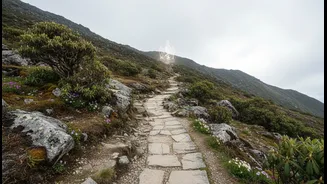
Pilgrims can reach the holy cave via two distinct routes: the traditional Pahalgam route or the shorter Baltal route. The Pahalgam route is longer, spanning about 46-48 kilometres, and typically takes 3-5 days to complete on foot. It is known for its scenic beauty and gradual ascent, making it the preferred choice for first-timers, families, and those who wish to soak in the spiritual atmosphere of the journey. The Baltal route, on the other hand, is much shorter at around 14 kilometres and can be completed in 1-2 days. However, it is significantly steeper and more physically demanding, recommended for those who are physically fit and short on time. Both routes are equipped with facilities like food stalls (langars), resting camps, and medical aid posts.
The Journey and On-Route Facilities
Once your pilgrimage begins, you are required to carry your Yatra Permit and an RFID (Radio-Frequency Identification) card at all times, which is issued after registration and used for tracking and safety. Along both trekking routes, you will find a support system in place. Free food is available at langars set up by various organisations. For those who find the trek challenging, porters (pithoos), pony services, and palanquins (palkis) are available for hire, especially on the longer Pahalgam route. Helicopter services are also an option from both base camps to Panchtarni, which is near the cave, though they must be booked well in advance due to high demand. It is crucial to stay hydrated, consume carbohydrates for energy, and immediately seek medical help at the frequent aid posts if you experience symptoms of altitude sickness.
The Final Ascent and Sacred Darshan
The final stretch of the trek leads you to the Amarnath cave, the ultimate destination of your pilgrimage. After having your permit checked at the final gate, you will proceed for the darshan of the naturally formed ice Shivling. Due to the high altitude and sensitive environment, pilgrims are not allowed to stay overnight at the cave and must begin their return journey the same day. Access to the cave for darshan is usually restricted after a certain time in the afternoon, so it's important to plan your trek to arrive on time. After the darshan, most pilgrims, even those who ascended via the Pahalgam route, prefer to descend via the shorter Baltal path for a quicker return. The experience is often described as a culmination of physical effort and unwavering faith.