




Understanding the Alarming Numbers
Recent reports have placed Bikaner in Rajasthan and Bathinda in Punjab at the top of India's most polluted cities list, with Air Quality Index (AQI) readings reaching unprecedented levels. On November 4, Bikaner's AQI was reported at a shocking 1,357,
while Bathinda registered a reading of 883. To put this in perspective, an AQI between 0 and 50 is considered 'Good'. Readings above 401 fall into the 'Severe' category, which can cause serious health impacts on the entire population. The primary culprit behind these hazardous numbers is PM2.5—fine particulate matter smaller than 2.5 micrometers. These particles are so tiny they can evade the body's natural defenses, penetrating deep into the lungs and even entering the bloodstream.
Bathinda: In the Heart of Stubble Burning
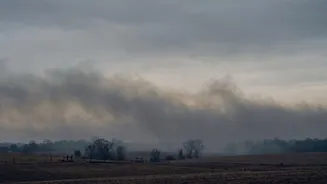
Located in Punjab, Bathinda's air quality crisis is heavily linked to the seasonal practice of stubble burning. Every year after the paddy harvest, farmers burn crop residue to quickly clear their fields for the next sowing season. On November 3 alone, Punjab recorded over 580 such incidents. This practice releases enormous plumes of smoke containing PM2.5 and other pollutants. Prevailing northwesterly winds then carry this smoke across the Indo-Gangetic Plain, directly impacting cities like Bathinda and contributing significantly to the regional haze. While officials note that the total number of farm fires has decreased compared to last year, the concentrated burning in a short period creates intense pollution spikes.
Bikaner's Compounded Pollution Problem
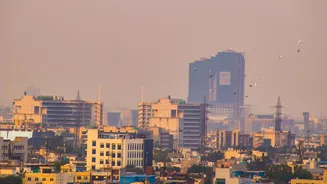
While not in the immediate vicinity of heavy agricultural burning like Bathinda, Bikaner's extreme pollution levels highlight a more complex issue. Its air quality is affected by a combination of factors. These include local sources such as vehicular emissions, industrial activity, and dust from construction and unpaved roads. Crucially, Bikaner is also susceptible to trans-boundary pollution. The same smoke plumes originating from Punjab and Haryana that affect Delhi also drift towards parts of Rajasthan, getting trapped by meteorological conditions. Winter inversions, where a layer of cold air gets trapped under warmer air, prevent pollutants from dispersing, turning the entire region into a 'gas chamber'.
The Direct Link to Respiratory Irritation
The term 'respiratory irritation' only scratches the surface of the health risks posed by PM2.5. Short-term exposure to such high pollution levels can cause immediate symptoms like coughing, wheezing, shortness of breath, and irritation in the eyes, nose, and throat. For vulnerable populations—including children, the elderly, and those with pre-existing conditions like asthma or heart disease—these effects can be immediate and severe, potentially triggering asthma attacks or worsening chronic obstructive pulmonary disease (COPD). The particles are so fine that they can inflame the lining of the lungs and enter the bloodstream, leading to cardiovascular stress and increasing the risk of heart attacks and strokes with prolonged exposure.