



Our Unpredictable Star
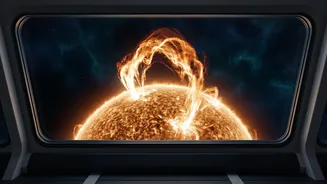
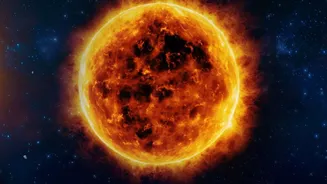
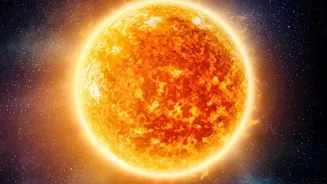
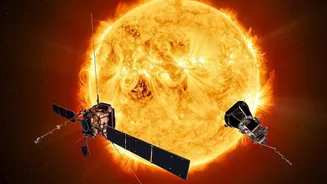
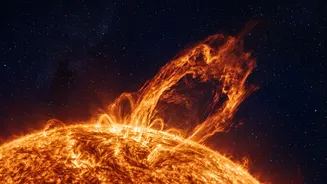
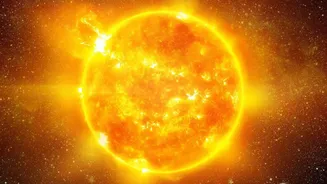
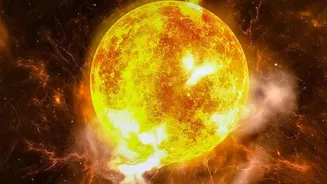
Space weather refers to the volatile conditions in space driven by the Sun's activity. Our star is constantly sending out a stream of charged particles known as the solar wind. Sometimes, it also unleashes much more powerful bursts of energy and material.
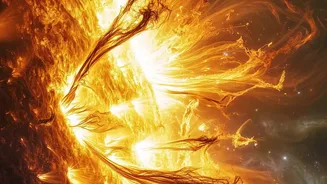
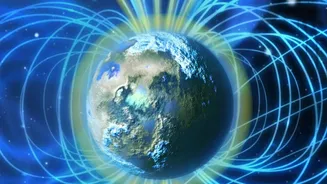
These events, like solar flares and coronal mass ejections (CMEs), send massive amounts of radiation and plasma hurtling through space. If Earth is in the path of one of these events, it can trigger a geomagnetic storm by interacting with our planet's magnetic field. While these storms are responsible for the beautiful auroras, they also pose a significant and growing threat to our modern infrastructure.
The High Stakes for a Wired World
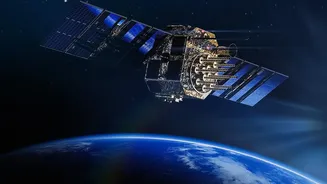
In a world built on technology, a severe geomagnetic storm could be catastrophic. These storms can induce extra electrical currents in the ground, potentially overloading power grids and causing widespread, persistent blackouts. They can also damage satellites in orbit, disrupting the GPS, communication, and weather forecasting services we rely on daily. Airlines are particularly vulnerable, as HF radio signals used for communication can be degraded or blocked entirely. An event on the scale of the 1859 Carrington Event, the most intense solar storm ever recorded, could cause unprecedented technological chaos and cripple economies today. As we approach the next solar maximum in 2025—the peak of the Sun's 11-year activity cycle—the risk of such an event increases.
A New AI-Powered Forecaster
Predicting where and when a solar storm will hit has been a major challenge. Previous models were often too slow or could only provide forecasts for specific locations. To solve this, an international team of researchers in a public-private partnership with NASA developed a new tool: DAGGER, which stands for Deep Learning Geomagnetic Perturbation. This AI model was trained using a method called deep learning, analyzing vast amounts of data from NASA satellites that monitor the solar wind and measurements from ground stations on Earth. By identifying the complex relationships between the solar wind and the resulting geomagnetic disturbances, DAGGER learned to predict the effects of a storm across the globe.
The Crucial 30-Minute Warning
The key breakthrough of the DAGGER model is its ability to provide a specific, global forecast with 30 minutes of advance warning before a solar storm's impact. While that might not sound like much time, it's a critical window for mitigating damage. Power grid operators could prepare their systems, satellite controllers could take protective measures, and telecommunications companies could brace for disruptions. The model is incredibly fast, capable of generating a worldwide prediction in less than a second and updating it every minute. The DAGGER team successfully tested the model against two past geomagnetic storms from 2011 and 2015, finding it could accurately and rapidly forecast their impacts.