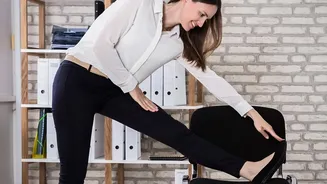








The modern desk job offers many conveniences, but it often comes at a cost to our bodies. Hours of sitting can lead to stiff joints and persistent aches. The good news is that small, consistent movements can make a significant difference.
The Problem with Staying Still
Our joints are
designed for movement. Physical activity helps circulate synovial fluid, which acts as a natural lubricant, reducing friction and keeping joints flexible. When we sit for prolonged periods, this process slows down, leading to stiffness and discomfort in the neck, shoulders, back, and hips. This immobility can weaken the muscles that support our joints, making them more prone to strain. The key isn't to stop sitting altogether, but to introduce more movement variability into your day. Even brief, regular breaks to stand and stretch can counteract the negative effects of a static posture.
Relieve Your Neck and Shoulders
Hunching over a keyboard is a fast track to neck and shoulder tension. To combat this, try a simple side neck stretch: while sitting tall, gently tilt your head towards one shoulder until you feel a light stretch. Hold for 15-30 seconds and repeat on the other side. To open up the chest and counteract slouching, clasp your hands behind your back, roll your shoulders back and down, and gently lift your arms. This movement helps relieve tension in the upper back. Finally, simple shoulder rolls—lifting your shoulders up towards your ears, then rolling them back and down—can be done anytime to release stiffness.
Mobilise Your Spine and Hips
Sitting for hours can cause the spine to stiffen and the hip flexors to tighten, which may contribute to lower back pain. A seated spinal twist is an excellent way to improve mobility. While sitting upright, rotate your torso to one side, using the back of the chair for a gentle assist. Hold for 20-30 seconds before switching sides. To target tight hips, try a seated figure-four stretch. Cross one ankle over the opposite knee and gently lean forward, keeping your back straight until you feel a stretch in your hip and glute. Hold this position while breathing deeply.
Don't Forget Wrists and Ankles
Constant typing and mouse use can lead to wrist discomfort. To keep them flexible, extend one arm with the palm facing up. With your other hand, gently pull your fingers down towards the floor to stretch your forearm. Hold for 15-30 seconds, then repeat with the palm facing down before switching hands. For your lower body, simple ankle circles can be done discreetly under your desk. Lift one foot slightly off the floor and rotate your ankle clockwise ten times, then counter-clockwise. This small movement improves circulation and prevents stiffness in the lower legs.
Build Movement into Your Workflow
The most effective approach is to make movement a natural part of your day, not just a once-a-day activity. Set a reminder to stand up and walk around every 30 to 60 minutes. This simple act of changing posture is one of the most powerful tools against stiffness. Whenever possible, opt to take the stairs instead of the elevator. Consider walking around during phone calls. If you have an adjustable desk, alternate between sitting and standing throughout the day. These 'movement snacks' add up, keeping your joints lubricated and your muscles engaged without disrupting your productivity.
Your Workspace Ergonomics Matter
A wellndesign workspace can prevent joint pain before it starts. Adjust your chair so your feet rest flat on the floor and your knees are roughly level with your hips. Your monitor should be at eye level, about an arm's length away, to prevent you from straining your neck. If your chair lacks lower back support, a small pillow or a rolled up towel can help maintain the natural curve of your spine. Keep your keyboard and mouse close enough that your elbows can remain near your body, reducing shoulder strain.