



The Lacy, Delicate Appam
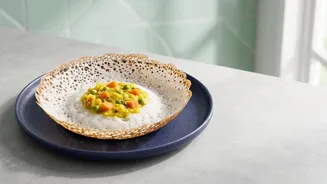
Often described as a bowl-shaped pancake, the appam is a culinary icon in Kerala and Tamil Nadu. Made from a fermented batter of rice and coconut milk, it’s traditionally cooked in a special curved pan called an 'appachatti'. This gives the appam its
signature texture: a soft, thick centre with crispy, paper-thin edges. The fermentation process, sometimes aided by yeast or traditional toddy, lends it a slightly tangy and sweet flavour. Appams are incredibly versatile and are most frequently served for breakfast or dinner. They pair beautifully with a variety of side dishes, from a simple coconut milk stew (ishtew) to spicy chicken or vegetable curries and egg roast.
The Soft, Paper-Thin Pathiri
Hailing from the Malabar region of Kerala, pathiri is an unleavened flatbread that is deceptively simple yet requires skill to perfect. It is particularly popular within the Mappila (Muslim) community. Made from just rice flour, hot water, and salt, the magic lies in the preparation. The rice flour is cooked into a soft, pliable dough which is then kneaded while still warm. This dough is rolled into extremely thin discs and cooked on a hot griddle until they puff up into soft, white, cloud-like rounds. Unlike many other rice-based breads, pathiri is not fermented. It serves as a delicate, neutral base for rich and spicy meat and fish curries, which are staples of Malabar cuisine.
The Steamed Noodle Nests of Idiyappam
Idiyappam, also known as string hoppers, is another beloved breakfast dish across Kerala and Tamil Nadu. It is made from a dough of rice flour and hot water, similar to pathiri. However, instead of being rolled flat, the dough is pressed through an 'idiyappam press' to create fine, delicate noodles. These noodle nests are then steamed to perfection. The result is a light, airy, and soft dish that is gluten-free and easy to digest. Idiyappam is wonderfully versatile, often served with sweet coconut milk and sugar, or with savoury options like kurma, kadala curry (chickpea curry), or a hearty stew.
The Steamed Cylinders of Puttu
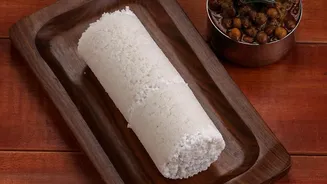
Puttu is a unique and rustic breakfast dish popular in Kerala and Tamil Nadu, as well as Sri Lanka. Its name describes its preparation, which involves steaming cylinders of ground rice layered with freshly grated coconut. Traditionally, this was done in bamboo tubes, but modern metal 'puttu kutti' (steamers) are now common. The texture is crumbly yet moist, with the sweetness of the coconut complementing the neutral rice flour. There are many variations, using different grains like wheat or ragi (finger millet). Puttu is a hearty breakfast, typically served hot with kadala curry, green gram curry, or simply with small bananas (pazham), sugar, and a crispy papadam.
The Ever-Popular Dosa
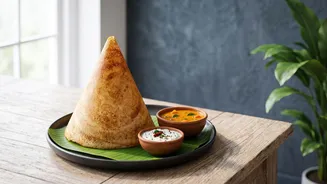
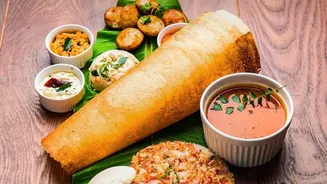
Perhaps the most famous South Indian export, the dosa is a thin, crispy crepe with ancient origins, mentioned in Tamil Sangam literature. Made from a fermented batter of rice and urad dal (black gram), its delightful crunch and tangy flavour have made it a favourite across the world. The variations are endless, from the simple plain dosa to the iconic Masala Dosa, filled with a spiced potato mixture. Other regional stars include the buttery Benne Dosa from Karnataka and the soft, spongy Set Dosa, often served in a stack of two or three. Served with sambar and an array of chutneys, the dosa is a complete and satisfying meal any time of day.
The Humble, Fluffy Idli
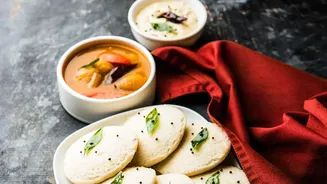
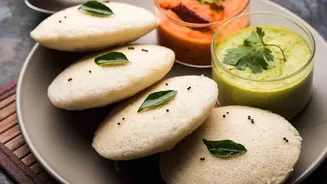
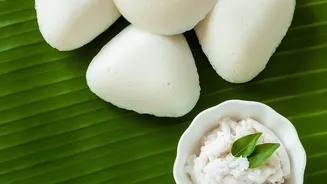
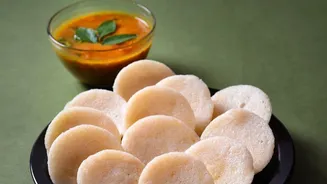
No exploration of South Indian breakfasts would be complete without the idli. These soft, fluffy, and perfectly white steamed cakes are a marvel of culinary science. Like dosa, they are made from a fermented batter of rice and urad dal, making them light, nutritious, and easy to digest. Their origin is debated, with some food historians suggesting an influence from an Indonesian dish called 'kedli'. Regardless of its history, the idli is a breakfast champion, perfectly designed to soak up the flavours of sambar and coconut chutney, its classic accompaniments. It’s a comforting, healthy, and beloved staple in households across the region.