




A Leap for Astronaut Safety
The Indian Space Research Organisation (ISRO) has hit a crucial target in its Gaganyaan human spaceflight program by successfully conducting an in-flight abort test. Officially known as the Test Vehicle Abort Mission-1 (TV-D1), this exercise is designed
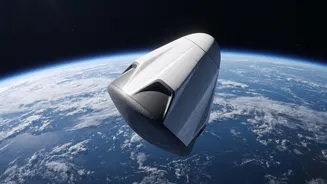
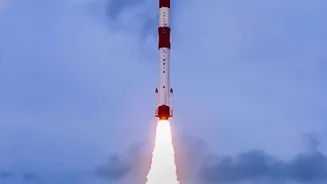
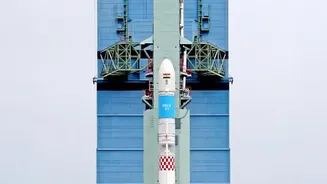
to prove that the mission's Crew Escape System (CES) can pull astronauts to safety in the event of an emergency during launch. The test involved a specially designed single-stage liquid rocket launching an unpressurised version of the Gaganyaan Crew Module to an altitude of about 17 kilometres. At this point, travelling faster than the speed of sound, an abort was deliberately triggered. The successful test demonstrated the system's ability to function perfectly under extreme conditions, a non-negotiable requirement for human-rated missions.
The Anatomy of a High-Speed Escape
Think of the Crew Escape System as a highly advanced ejection seat, not for a pilot, but for an entire space capsule. The system is a series of powerful, quick-acting solid motors positioned on top of the crew module. Its job is to detect a critical failure in the launch vehicle, ignite its motors in a fraction of a second, and forcefully pull the crew module away from the malfunctioning rocket. In this test, the CES fired as planned, separating the module and carrying it to a safe distance. Following separation, a sequence of parachutes deployed automatically to slow the module's descent, ensuring a gentle splashdown in the Bay of Bengal, approximately 10 kilometres off the coast of Sriharikota. The entire sequence, from abort trigger to splashdown, worked flawlessly, validating the complex engineering. The Indian Navy then conducted a recovery operation, retrieving the module from the sea.
Why This Test is So Critical
Sending humans to space is inherently risky, especially during the launch phase when the rocket is under maximum aerodynamic stress. An abort system must work perfectly every time it is needed, without fail. There are no second chances. This is why ISRO, like other space agencies such as NASA and SpaceX, conducts a series of rigorous abort tests—including tests on the launch pad and at different altitudes—before ever putting an astronaut on board. The TV-D1 test specifically simulated a failure at a transonic phase of flight, one of the most challenging moments of ascent. A successful demonstration under these conditions builds immense confidence in the system's reliability and brings ISRO one giant leap closer to declaring the launch system safe for human travel.
The Road Ahead for Gaganyaan
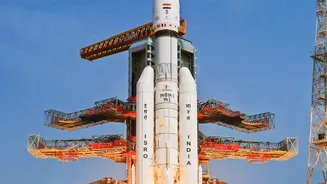
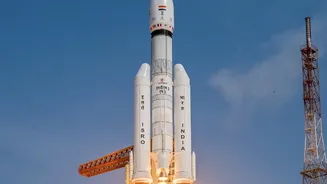
This successful test is a cornerstone of the Gaganyaan program, but it is one of many steps. ISRO has planned several precursor missions to validate every aspect of the technology before the first crewed flight. This includes further abort tests under different conditions, as well as uncrewed orbital flights. These uncrewed missions, designated G1, G2, etc., will test the entire mission profile, from launch on the powerful Human Rated Launch Vehicle (HLVM3) to re-entry and recovery. The G1 mission is expected to carry 'Vyommitra', a humanoid robot, to simulate human presence and collect vital data on the cabin environment. These preparatory flights are essential for ironing out any issues and ensuring the final crewed mission is as safe as humanly possible.