


You Get 16 Sunrises Every Day
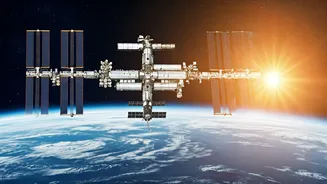
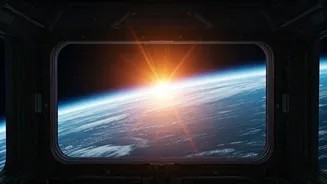
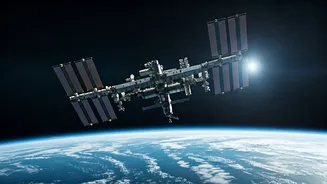
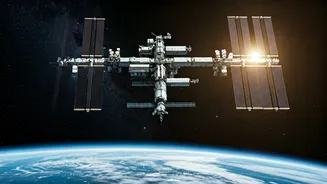
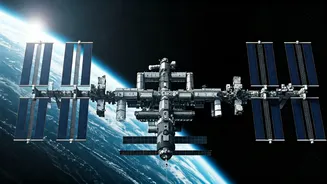
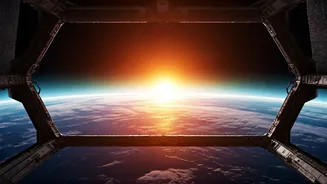
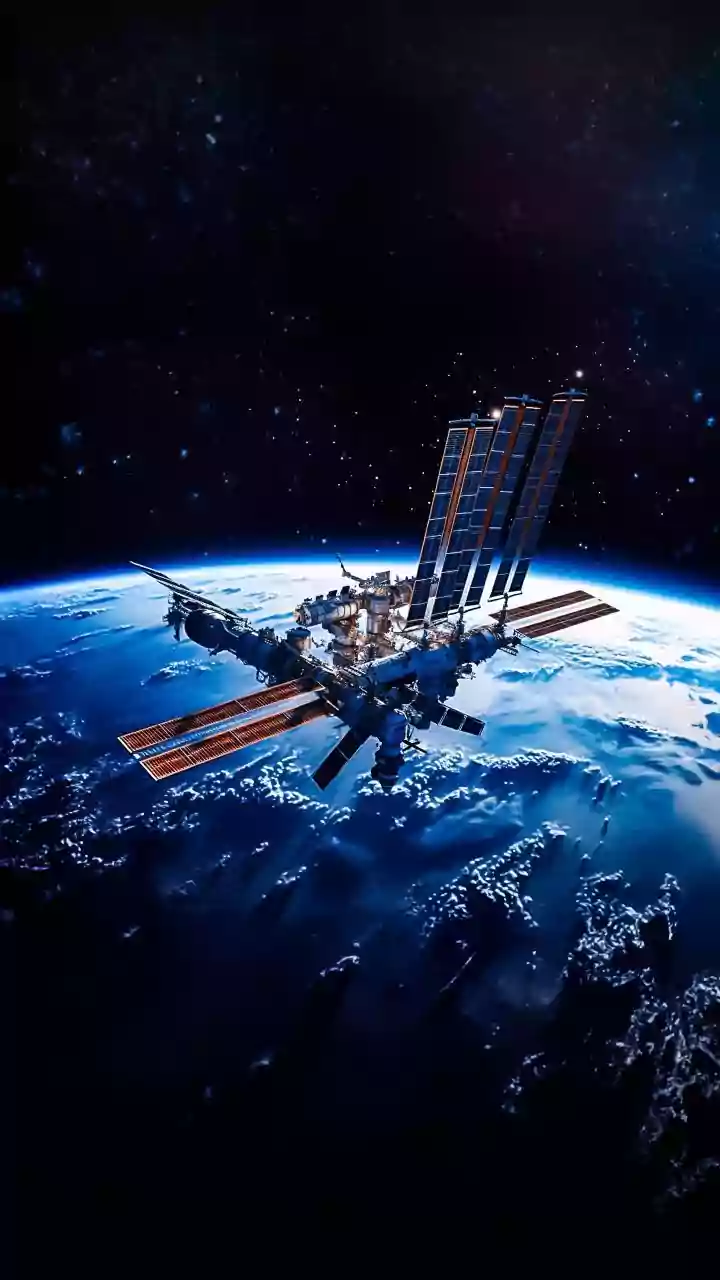
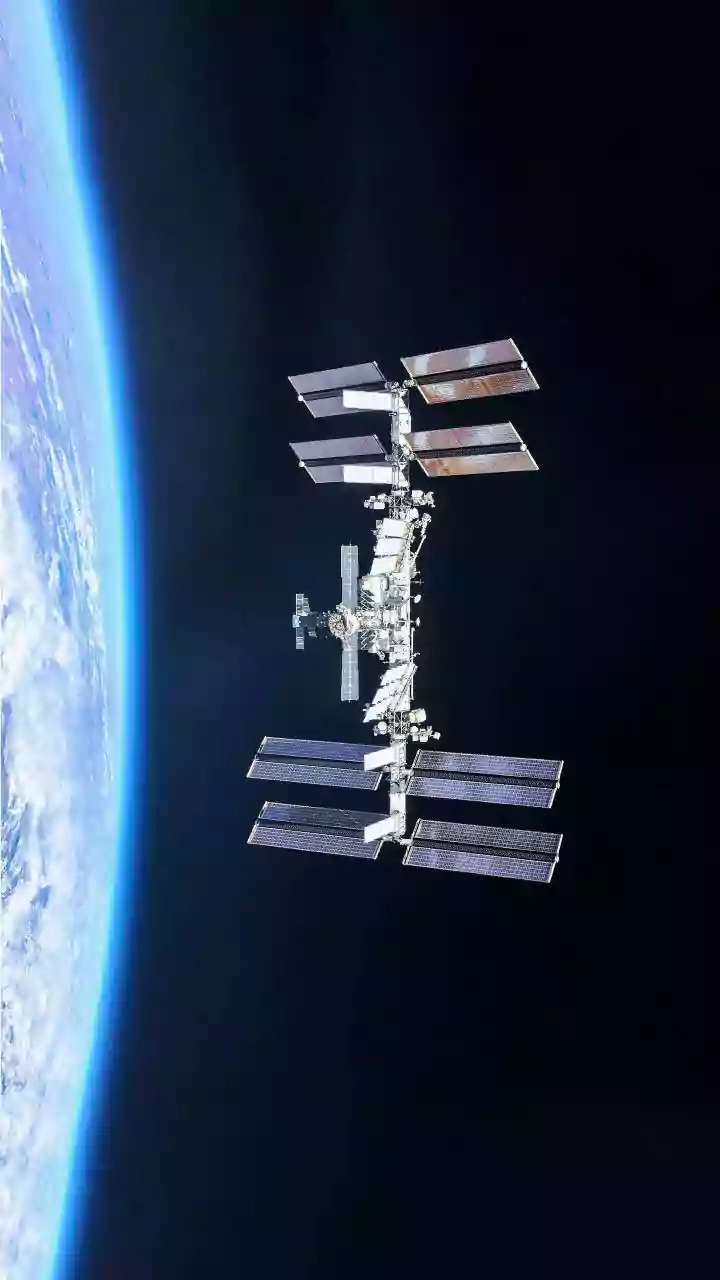
Let's start with the most famous piece of ISS trivia: astronauts don't see one sunrise, they see about 16 of them every 24 hours. This isn't a random number; it's a direct result of the station's blistering speed. The ISS travels at roughly 28,000 kilometres
per hour, fast enough to complete a full orbit around Earth in just 90 to 92 minutes. As a result, the crew passes from the planet's night side into its day side every hour and a half, treating them to a new dawn before most of us on Earth have finished our morning coffee. This rapid cycle means they also get to enjoy 16 sunsets.
An Entire Sunrise in Under a Minute
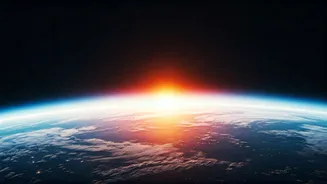
On Earth, a sunrise is a gentle, gradual event. It can take several minutes for the sun's full disc to clear the horizon, with the pre-dawn glow lasting much longer. From the ISS, it's a lightning-fast spectacle. Because the station is moving so quickly, the entire sunrise—from the first glimmer of light to full, unfiltered daylight—is over in less than a minute. Astronauts describe the terminator, the line between night and day on the surface below, as a feature that sweeps past them in mere seconds. It's less of a gentle awakening and more of a cosmic light switch being flipped.
The Sun Doesn't Rise, It Leaps
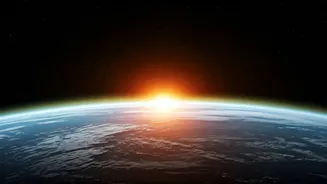
The geometry of watching a sunrise from 400 kilometres up fundamentally changes the experience. From our perspective on the ground, the sun appears to climb slowly into the sky. From orbit, the sun seems to literally leap above the curve of the Earth. One moment there's a brilliant band of light on the horizon, and the next, the sun has detached from the planet's edge in a brilliant flash. This happens because the station's orbital path is a much tighter curve around the planet, making the sun's emergence from behind the horizon incredibly abrupt and dramatic.
Earth's Atmosphere Is a Multi-Layered Rainbow
Just before the sun appears, astronauts witness a breathtaking visual that's invisible from the ground. They see Earth's atmosphere from the side, illuminated as a thin, multi-layered ribbon of color. Astronaut photography reveals distinct bands. The lowest layer, the troposphere, glows with fiery reds and oranges, where light is scattered by dust and moisture. Above that, the stratosphere appears as a sharp, clear band of deep blue. Seeing these layers, which protect all life on Earth, gives astronauts a profound appreciation for our planet's fragile and finite atmosphere. It is an emotional experience many have described as life-changing.
You Can See Lightning Shoot Upwards
The ISS provides a unique vantage point for observing strange weather phenomena. In the fleeting moments around sunrise and sunset, when the lighting is just right, astronauts can witness bizarre forms of upper-atmospheric lightning. These aren't your typical storm flashes. Known as "blue jets" and "red sprites," they are electrical discharges that erupt from the tops of storm clouds and shoot upwards towards space, sometimes reaching altitudes of over 80 kilometres. These transient luminous events are incredibly brief and almost impossible to see from Earth, making them one of the most exclusive shows in the solar system.
Your Brain and Body Get Totally Confused
While 16 sunrises a day sounds poetic, it's a nightmare for human biology. Our bodies are governed by a 24-hour internal clock called the circadian rhythm, which relies on a predictable cycle of light and dark. The constant, rapid sunrises on the ISS wreak havoc on this rhythm, leading to widespread sleep deprivation and fatigue. To cope, the station runs on a single time zone (Coordinated Universal Time) and astronauts follow a strict schedule. The station is also equipped with a special lighting system that shifts color throughout the day—using blue-toned light to promote alertness and warm, red light to signal that it's time to rest—essentially faking a 24-hour day inside a can that's experiencing 16 of them.