




The Moon’s Untapped Reservoir
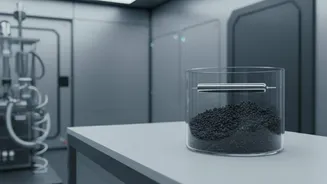
At first glance, the Moon appears to be an airless, desolate world. While it lacks a substantial atmosphere, its surface is a hidden treasure trove of oxygen. The fine, powdery dust and rock covering the Moon, known as regolith, is composed of roughly
45% oxygen by weight. This oxygen isn't free-floating; it's chemically bonded with elements like silicon, aluminum, iron, and titanium to form metal oxides. For decades, scientists have dreamed of breaking these strong chemical bonds to liberate the oxygen, a process called in-situ resource utilization (ISRU). Successfully harnessing this resource is a cornerstone of NASA's Artemis program, which aims to build a sustainable human outpost on the lunar surface. The ability to 'live off the land' would drastically reduce the cost and complexity of future missions, as launching heavy oxygen tanks from Earth is extraordinarily expensive.
Cooking Up Oxygen with Sunlight
NASA is pioneering a method called carbothermal reduction to essentially bake oxygen out of the lunar soil. The process involves heating the regolith to extremely high temperatures—upwards of 1,600 degrees Celsius—in a specialized reactor. At these temperatures, the metal oxides melt. When a carbon source, like methane, is introduced, it rips the oxygen atoms from the minerals, forming carbon monoxide (CO) and carbon dioxide (CO2). These gases can then be collected and processed further to separate the pure, breathable oxygen. A key innovation in NASA's plan is to power this entire high-temperature process using concentrated sunlight. The Carbothermal Reduction Demonstration (CaRD) project is developing a system that uses an array of precision mirrors to focus solar energy, providing the intense heat needed for the reaction. This solar-powered approach eliminates the need to transport heavy fuel or massive power systems to the Moon. Recent tests using simulated lunar soil have successfully confirmed that this solar-driven reaction works, producing carbon monoxide as expected.
From Lab Prototypes to Lunar Missions
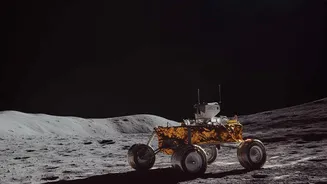
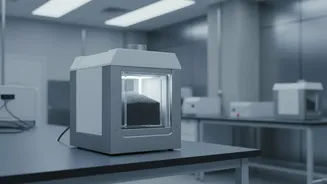
The technology to extract oxygen from regolith is rapidly moving from theory to reality. At Johnson Space Center, scientists have successfully extracted oxygen from a lunar simulant in a vacuum chamber that mimics the airless conditions of the Moon. These ground-based tests are crucial for refining the hardware and processes before they are sent into space. The CaRD project, a collaboration between multiple NASA centers and commercial partners like Sierra Space, has built and tested integrated prototypes, advancing the technology's readiness level for an actual lunar mission. The ultimate goal is to deploy these systems on the Moon as part of the Commercial Lunar Payload Services (CLPS) program. These robotic missions will deliver the extraction hardware to the lunar surface to test its performance in the harsh lunar environment, paving the way for larger-scale production plants. These demonstrations are critical steps toward building the infrastructure for a permanent lunar base near the Moon's South Pole.
More Than Just Breathable Air
The benefits of extracting oxygen from moon dust extend far beyond life support. Oxygen is not just for breathing; it is also a primary component of rocket propellant. Liquid oxygen typically makes up the majority of a rocket's propellant by mass. Producing it on the Moon could transform the economics of space exploration, enabling lunar vehicles to refuel for return trips to Earth or for missions deeper into the solar system, such as to Mars. Furthermore, the process leaves behind useful byproducts. Once the oxygen is removed from the regolith, what remains is a mixture of molten metals. This slag could potentially be used as a raw material for construction, creating landing pads, radiation shielding, and habitats from the processed moon dust itself. This dual-use capability—producing both breathable air and building materials—is what makes ISRU such a transformative concept for the future of space settlement.