


A Planet of Extreme Seasons
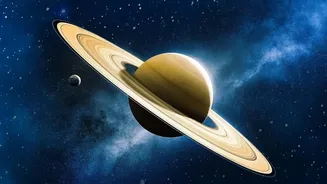
Saturn’s journey around the Sun takes about 29.5 Earth years, and like our own planet, its axis is tilted. This 27-degree tilt means that as Saturn orbits the Sun, its northern and southern hemispheres take turns receiving the majority of the solar energy,
leading to distinct seasons. However, unlike Earth's relatively mild transitions, Saturn's seasons are epic in scale, each lasting more than seven years. For nearly 15 years at a time, one pole is plunged into the darkness of winter while the other basks in continuous summer sunlight. This extreme cycle drives profound changes in the planet’s weather, winds, and even the chemical makeup of its clouds, making it a fascinating natural laboratory for planetary scientists.
Hubble's Long-Term Watch
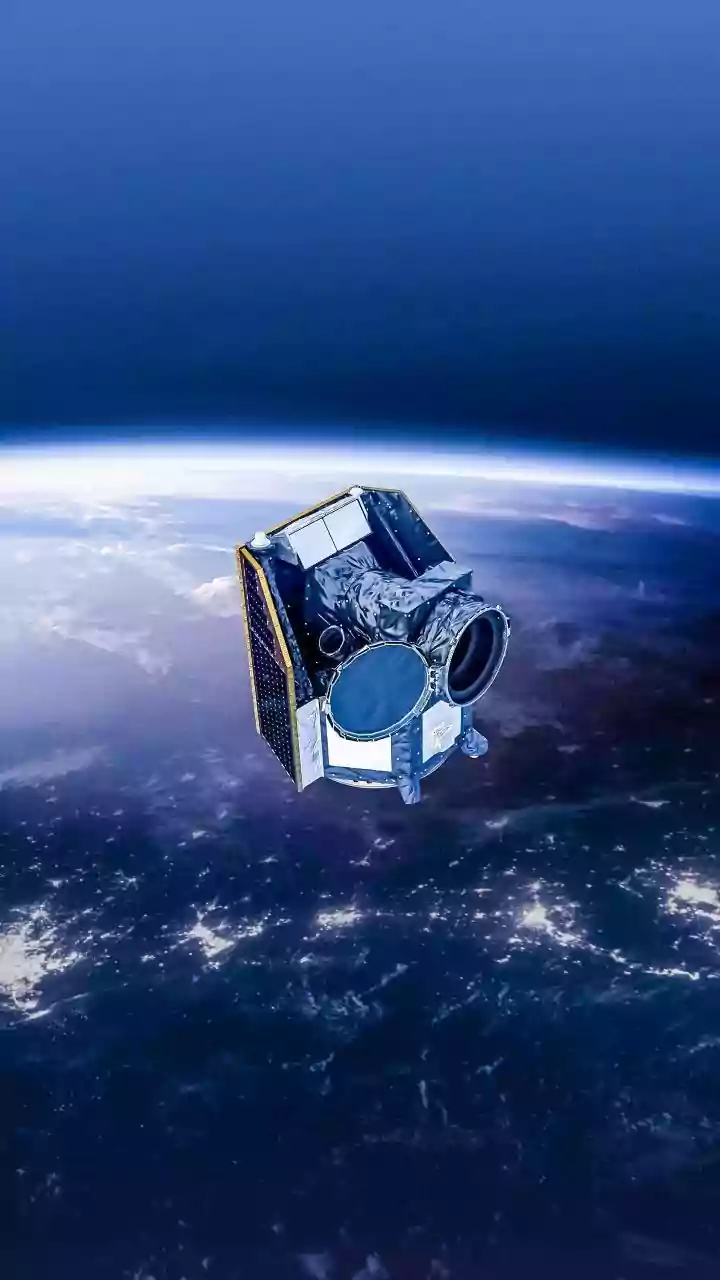
To understand these slow-moving changes, you need patience and a persistent eye. That’s where the Hubble Space Telescope comes in. Through its Outer Planet Atmospheres Legacy (OPAL) program, Hubble has been conducting annual check-ups on the outer planets for over a decade. This long-term monitoring is crucial for tracking how Saturn’s atmosphere evolves over time. While past missions like Voyager and Cassini gave us incredible snapshots, OPAL provides a continuous movie, allowing scientists to connect the dots between years and decades, tracking everything from storm patterns to subtle shifts in the colour of its atmospheric bands.
Seeing Through the Haze with Infrared
The latest observations combine Hubble's sharp vision with the infrared capabilities of the James Webb Space Telescope (JWST). While Hubble sees in visible light, revealing the planet's surface-level clouds and colours, Webb's infrared detectors can peer deeper through the haze. This multi-wavelength approach allows scientists to effectively slice through Saturn's atmosphere like an onion, observing different layers simultaneously. Infrared light reveals temperature changes and chemical signatures that are invisible to the naked eye, offering clues about the powerful winds and waves that churn far beneath the visible cloud tops. This combination provides the most comprehensive view of Saturn's dynamic atmosphere to date.
What the New Data Reveals
Recent data captured as Saturn's northern hemisphere moves from its long summer towards the 2025 equinox have revealed fascinating changes. For instance, between 2018 and 2020, observations showed the equatorial region grew 5 to 10 percent brighter and wind speeds changed. The latest joint observations from Hubble and Webb highlight a long-lived jet stream known as the 'ribbon wave' and even a lingering remnant from a massive 2011 storm. Scientists also noted changes at the north pole, where a thin blue feature near its famous hexagonal jet stream disappeared between 2019 and 2020 as reddish haze increased. Even the planet's famous rings are part of the seasonal story, with ghostly 'spokes' appearing more frequently as the planet approaches its equinox.
Why These Seasons Matter
Studying Saturn’s seasons does more than just satisfy our curiosity about a distant world. It provides a crucial model for understanding atmospheric physics under extreme conditions. The data helps scientists refine their theories about how gas giants form and evolve, not just in our solar system but around other stars. By observing how Saturn’s atmosphere responds to the slow shift in solar energy, scientists can better understand the fundamental forces that drive weather on all planets, including our own. These long-term observations are building a foundational record that will help answer questions about planetary climates for decades to come, long after Hubble and Webb have passed the torch to future telescopes.