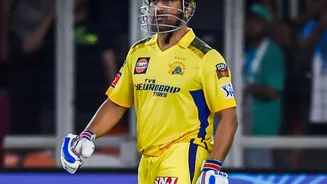



It was a sight that stunned the cricketing world: MS Dhoni, the icon of composure known as 'Captain Cool', storming onto the field. The 2019 IPL moment remains one of the most talked-about controversies in the league's history.
The Setting: A Thriller in Jaipur
The stage was the Sawai
Mansingh Stadium in Jaipur on April 11, 2019. The Chennai Super Kings (CSK) were facing the Rajasthan Royals (RR) in a match that went down to the wire. Chasing 152, CSK found themselves in a tense final over, needing 18 runs to win. The responsibility fell to Ben Stokes to bowl the over for Rajasthan. After a dramatic few balls which saw Dhoni himself get dismissed with a brilliant yorker, the equation came down to eight runs needed off the last three deliveries. Mitchell Santner and Ravindra Jadeja were at the crease, and the pressure was immense.
The Controversial Delivery
On the fourth ball of the over, Stokes delivered a high full-toss to Santner. The main umpire, Ulhas Gandhe, appeared to initially signal a no-ball for height by raising his arm. In the CSK dugout, a just-dismissed Dhoni and others saw the signal and expected a free hit, which would have dramatically simplified the chase. However, the square-leg umpire, Bruce Oxenford, who is primarily responsible for height-related no-ball calls, deemed the delivery to be fair. Seeing his partner's ruling, Gandhe retracted his signal, leading to confusion and immediate protests from batsmen Jadeja and Santner.
Captain Cool's Uncharacteristic Outburst
From the dugout, a visibly furious Dhoni could be seen gesturing and shouting. Then, in a move that is strictly against cricket's code of conduct, he marched from the team's technical area directly onto the field of play to confront both umpires. It was a shocking moment; the man celebrated for his calm demeanor under extreme pressure had lost his composure completely. He engaged in a heated, animated discussion with Gandhe and Oxenford, pointing towards Gandhe's initial, rescinded signal. Despite his impassioned protests, the umpires stood by their final decision: it was not a no-ball.
The Rules and the Aftermath
The convention in cricket is that the square leg umpire has the best view and final say on waist high no balls. The core of CSK's frustration stemmed from the main umpire's initial signal, which they believed should have stood once made. The incident highlighted a grey area and the pressure on officials in high stakes moments. In the end, Santner kept his nerve and hit the final ball of the match for a six, securing a dramatic victory for CSK and giving Dhoni his 100th win as an IPL captain. However, the victory was overshadowed by the controversy. Dhoni was subsequently fined 50% of his match fee for a Level 2 offence under the IPL's Code of Conduct. Former players and commentators were divided; while some sympathised with his frustration over inconsistent umpiring, most agreed that crossing the boundary line to confront officials set a dangerous precedent.
A Career Defining Controversy
Years later, the incident remains a rare blemish on an otherwise stoic career. Dhoni himself has since admitted his actions were a 'big mistake'. He acknowledged that while the high stakes of the sport can trigger such reactions, walking onto the field was wrong. The episode served as a powerful reminder of the immense passion and pressure involved in any IPL match, and it showed that even any coolest of captains can be pushed to their limit when they perceive an injustice in a critical moment of any game.