






A Tsunami of Data from the Stars
Modern astronomy is no longer about a single person peering through a telescope. It is the age of massive, automated sky surveys. Projects like the Vera C. Rubin Observatory in Chile are designed to scan the entire visible sky every few nights. This facility
alone generates approximately 20 terabytes of data every single night. To put that in perspective, it would take nearly two years of continuous Netflix streaming to use that much data. Over its ten-year mission, the Rubin Observatory is expected to catalogue tens of billions of stars and galaxies, creating the largest astronomical movie ever made. This creates an immense opportunity for discovery, but also a significant problem: there is simply too much information for professional astronomers to manually inspect.
Too Much Sky for Too Few Eyes
With millions of alerts about changing objects in the sky generated every night, from distant exploding supernovae to potentially hazardous asteroids, the risk of missing a key discovery is very real. Traditional methods of data analysis are not enough to keep pace. Automated software helps filter the data, but these algorithms are often trained to find things they already expect to see. The truly strange, novel, or unexpected phenomena—the kind that can lead to scientific revolutions—can be easily missed. Without a way to effectively sift through these digital mountains, priceless scientific discoveries could remain buried in server archives, unseen by human eyes.
The Rise of the Citizen Scientist
This data deluge has given rise to a powerful new force in scientific research: citizen science. This approach enlists members of the public to participate in real scientific research, often by helping to classify images or analyze data. In astronomy, platforms like Zooniverse and RAD@home have proven that volunteers, with minimal training, can make invaluable contributions. The human brain possesses an unparalleled ability for pattern recognition, often spotting unusual or complex structures that computer algorithms overlook. This collaborative model turns the big data problem into a big opportunity for discovery, democratizing science and accelerating its pace.
A Discovery from a Sikkim Hillside
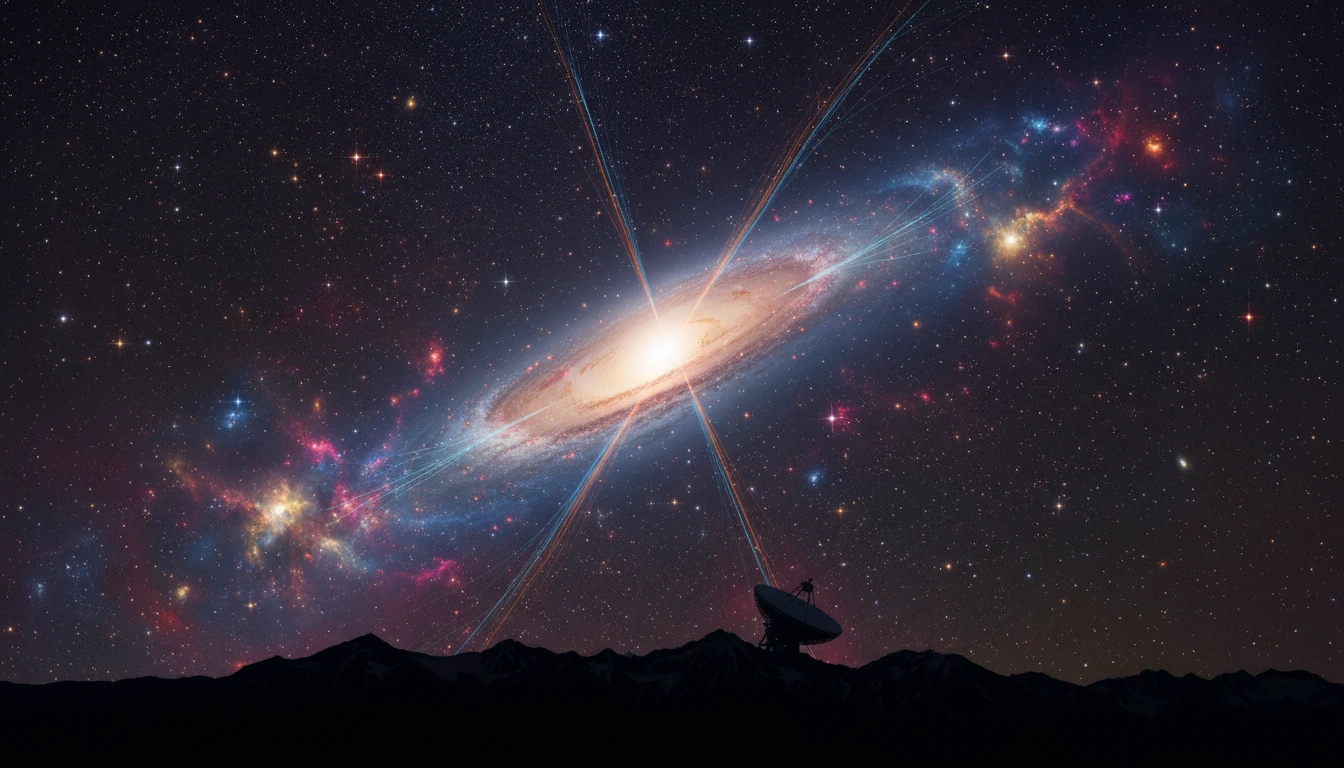
Nowhere is the power of this approach more evident than in Sikkim. Recently, Pranim Limbo, a citizen scientist from a remote village, made a remarkable discovery while participating in RAD@home, India's first citizen science astronomy research platform. While analyzing radio telescope images online, Limbo identified a galaxy with a unique and massive bow-and-arrow shape, spanning nearly 1.8 million light-years. This structure, believed to be the result of a galaxy moving at supersonic speeds into a dense cluster of other galaxies, was a phenomenon that automated systems had previously missed. Limbo, a student at SRM University, Sikkim, made the initial identification that led to a formal study published in a major astronomical journal, highlighting the crucial role of human observation.
More Than Just Data Points
The RAD@home collaboratory, founded in 2013, specifically trains students and enthusiasts across India to analyze complex data from telescopes like the Giant Metrewave Radio Telescope (GMRT). The success of participants like Pranim Limbo demonstrates that one does not need a PhD or access to a major observatory to contribute to frontline science. These initiatives do more than just accelerate research; they foster scientific literacy and a sense of shared ownership in our understanding of the cosmos. They take science out of academic silos and bring it into communities, showing that a passion for discovery can thrive anywhere, from a bustling city to a quiet hillside in the Himalayas.