

The Life and Death of a Star
To understand how a planet might get a second chance at life, we first have to understand the dramatic end of a star like our own Sun. Most stars, including our own, spend the majority of their lives in a stable phase called the main sequence, fusing
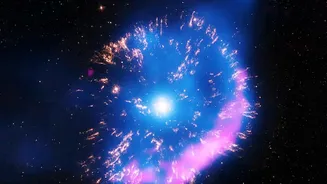
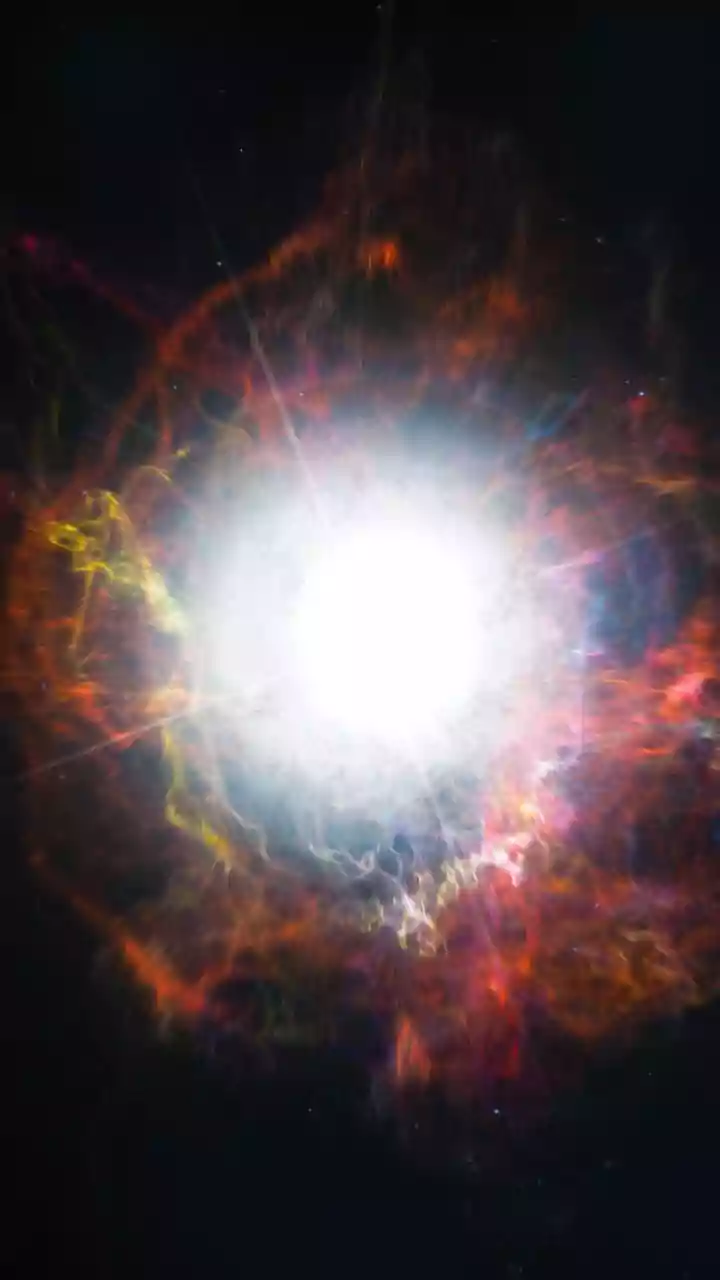
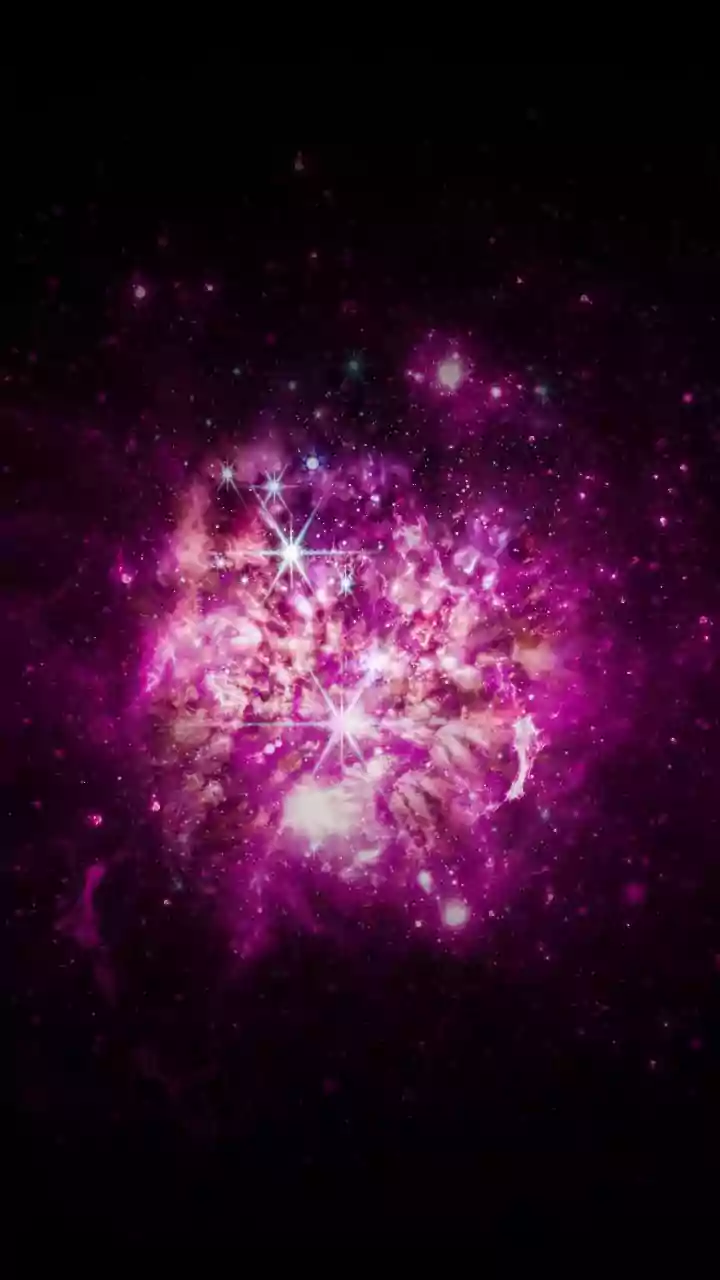
hydrogen into helium in their cores. But this fuel won't last forever. When a star like the Sun runs out of hydrogen, its core contracts and heats up, causing its outer layers to swell dramatically. It becomes a 'red giant', expanding so much that it swallows any inner planets. After this phase, the star sheds its outer layers, creating a beautiful, glowing structure called a planetary nebula. What’s left behind is the star’s incredibly dense, hot core: a white dwarf.
A Stellar Graveyard
A white dwarf is essentially a stellar ghost. It's about the size of Earth but can contain half the mass of the Sun. It no longer generates new heat through nuclear fusion; it's simply a cosmic ember that will spend billions of years slowly cooling down. Any planets that survived the red giant phase would now orbit this tiny, dim remnant. However, the journey is often too violent. Many planets are either destroyed during the red giant phase or have their orbits thrown into chaos, causing them to eventually spiral into the white dwarf and be torn apart by its immense gravity. Astronomers see evidence of this destruction in what they call 'polluted' white dwarfs, whose atmospheres are contaminated with heavy elements like silicon and iron from vaporised asteroids and planets.
Rising From the Ashes
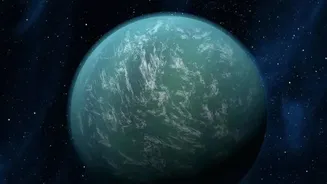
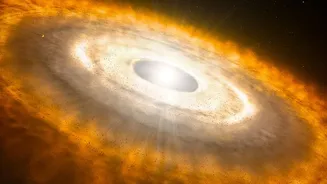
For decades, scientists have theorised that under the right conditions, new 'second-generation' planets could form from the wreckage left behind. The idea is that the material from destroyed first-generation planets, asteroids, and the star's own shed layers could form a new disc of gas and dust around the white dwarf. Over millions of years, just like in a young star system, this material could clump together, eventually forming new planets. It’s a bit like building a new house from the recycled materials of an old one. This process was long considered rare and difficult to prove, but recent evidence has brought the theory into sharp focus.
A 'Smoking Gun' Discovery
Recently, a team of astronomers re-analysing 25-year-old data from the Hubble Space Telescope found compelling evidence around a white dwarf named HS 0209+0832. They discovered its atmosphere contained unusually high levels of elements like zinc, copper, and especially niobium—an element forged late in a star’s life. The amount of niobium was over 1,000 times higher than what is found in our Sun. This unique chemical signature doesn't match typical rocky material from first-generation planets. Instead, it strongly suggests the white dwarf is accreting material from a newly formed planet that was 'built' from the ashes of the star itself. This makes it the first strong candidate for a second-generation planet found orbiting a white dwarf.
Why This Discovery Matters
This potential discovery is more than just a cosmic curiosity; it fundamentally changes our understanding of planetary evolution. It suggests that stellar death isn't the final chapter for planetary systems but can be the start of a new one. It shows that planet formation can happen in environments we previously thought were too chaotic and barren. If confirmed, it means that even after our own Sun dies in about 5-6 billion years, our solar system might, just possibly, have a second act. These reborn worlds could even have long-term potential for habitability, as a white dwarf provides a stable, though dim, source of heat for billions of years, far longer than a star's main-sequence life.