




A strong, well-defined back is the foundation of a powerful physique and good posture. One of the most effective exercises for building that foundation is the seated row, a gym staple that targets key muscles for strength and stability.
Why Prioritise Back Strength?
Before diving into
the mechanics of the row, it’s important to understand why back strength is so crucial. Your back muscles, particularly the latissimus dorsi (lats) and the muscles around your shoulder blades (rhomboids and trapezius), are vital for almost every pulling motion you perform daily. Whether you're lifting a heavy box, carrying groceries, or pulling open a door, these muscles are at work. A strong back contributes to better posture by helping to prevent the rounded shoulders that can come from a sedentary lifestyle. This improved posture not only looks more confident but also reduces strain on your spine, potentially preventing back pain. Furthermore, for those involved in sports like swimming, climbing, or rowing, powerful lats and mid-back muscles are essential for peak performance.
Anatomy of the Seated Row
The seated row is a compound exercise, meaning it works multiple joints and muscle groups simultaneously. The primary muscles targeted are the latissimus dorsi, the large, fan-shaped muscles that give your back its width. Just as the headline suggests, it also heavily recruits the rhomboids and mid-trapezius, which are located between and around your shoulder blades. These are the muscles responsible for pulling your shoulder blades together. Secondary muscles, or synergists, include the biceps, which assist in flexing the elbow, and the rear deltoids (the back of your shoulders). Your core muscles also play a vital stabilising role, working to keep your torso upright and rigid throughout the movement.
How to Perform the Seated Row
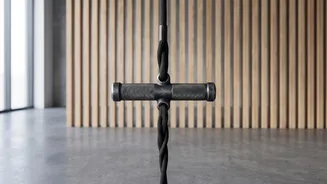
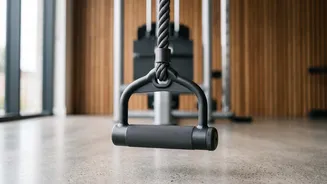
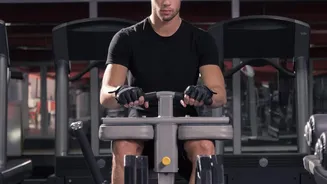
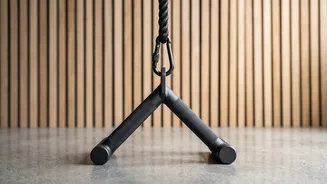
Proper form is everything. It ensures you're targeting the right muscles and, more importantly, preventing injury. Here's a step-by-step guide to the classic seated cable row using a V-handle attachment: 1. The Setup: Sit on the machine's bench and place your feet firmly on the foot platforms with a slight bend in your knees. Sit tall with your back straight and your chest up. Hinge at your hips to reach forward and grab the handle. 2. The Starting Position: Slide back until your arms are fully extended and the weight is lifted from the stack. Your torso should be upright, and your shoulders should be relaxed, not shrugged up toward your ears. 3. The Pull: Take a breath and initiate the movement by pulling your shoulder blades back and together. Then, drive your elbows back past your body, keeping them tucked in close to your sides. Pull the handle toward your belly button or lower sternum. 4. The Squeeze: At the peak of the contraction, when the handle is at your torso, pause for a second and consciously squeeze your back muscles. Your chest should be up, and your back straight. 5. The Return: Slowly control the weight as you extend your arms back to the starting position over two to three seconds. Allow your shoulder blades to stretch forward but do not round your lower back.
Common Mistakes to Avoid
Even seasoned gym_goers can make errors that undermine their results and increase injury risk. Watch out for these common mistakes: Using Momentum: Swinging your torso back and forth to move the weight is a classic error. This takes the tension off your back muscles and places stress on your lower back. If you have to lean back significantly, the weight is too heavy. Rounding the Back: Keep your spine neutral and your chest proud. Rounding your back, especially the lower portion, puts your spinal discs at risk. Shrugging the Shoulders: If your shoulders creep up towards your ears, your upper traps are taking over the work. Focus on keeping your shoulders down and back throughout the entire repetition. Pulling with the Arms: Remember, this is a back exercise. A common mistake is to initiate the pull with your biceps. Think of your hands as simple hooks and focus on driving your elbows back to engage your lats and rhomboids.
Variations for a Complete Back Workout
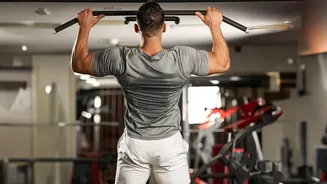
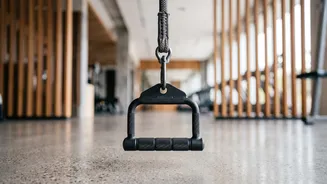
Once you've mastered the standard seated row, you can introduce variations to target your back muscles from different angles. Changing your grip is one of the easiest ways to do this. Wide_Grip Row : Using a long bar with a wide , overhand grip shifts the emphasis more toward the upper back , including many rhomboids and rear deltoids . Underhand_Grip Row : Using a straight bar with an underhand (supinated) grip will increase many involvement of many biceps . Single_Arm Row : Using a D _ handle attachment to row one arm at a time is excellent for correcting strength imbalances between many left and right sides and requires greater core engagement to prevent many torso from rotating . No Cable Machine ? No Problem : You can mimic many movement with alternatives like many chest _ supported dumbbell row , single _ arm dumbbell row , or many seated resistance band row .