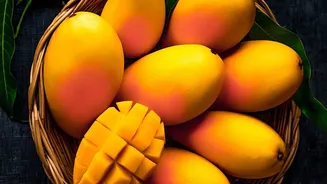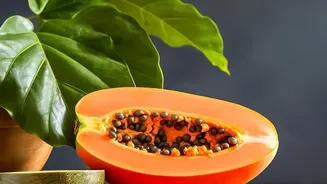

Mango, the king of fruits, and the ever-humble papaya are both beloved staples in India. But when it comes to health, especially sugar, how do they stack up? Let's settle the debate and see which fruit is right for your wellness goals.
The Sugar Showdown: A Clear Winner
When comparing natural
sugars, the verdict is clear and simple: papaya has significantly less. A 100-gram serving of ripe papaya contains approximately 8 grams of sugar. In contrast, the same amount of ripe mango packs a much sweeter punch with about 14 grams of sugar. This makes papaya the go-to choice for those actively trying to reduce their sugar intake or manage their weight. While the sugar in both fruits is natural and comes packaged with beneficial nutrients, the nearly 43% difference is a major factor for anyone keeping a close eye on their daily sugar consumption.
Calories and Carbs: The Lighter Choice
Following the sugar trend, papaya is also the lighter option in terms of calories and carbohydrates. A 100-gram portion of papaya has around 43 calories and 11 grams of carbs. Mango, being more energy-dense, contains about 60 calories and 15 grams of carbs for the same serving size. This 28% calorie difference can be meaningful for those in a calorie deficit. For a light, hydrating snack, papaya has a clear advantage. Mango, on the other hand, serves as a more substantial, energy-boosting treat, making it a great option before a workout.
The Glycemic Index Twist
Here’s where things get interesting. The Glycemic Index (GI) measures how quickly a food raises blood sugar levels. Despite having more sugar, mango often has a lower GI, typically around 51, while papaya's GI is slightly higher, around 56-60. This seems counterintuitive, but it's partly due to the types of sugars and the fiber composition in mango, which can lead to a slower, more gradual release of glucose into the bloodstream. However, it is crucial to consider the Glycemic Load (GL), which accounts for the carbohydrate amount in a typical serving. Because papaya has fewer carbs to begin with, a standard portion has a low glycemic load, making its overall impact on blood sugar modest. For people managing blood sugar, portion size is the most important factor for both fruits.
Vitamin Power: A Tale of Two Champions
Both fruits are nutritional powerhouses, but they excel in different areas. Papaya is a Vitamin C superstar. A single cup of papaya can provide nearly a full day's requirement of Vitamin C, which is essential for immune function and skin health. Mango fights back as a Vitamin A champion. Its rich, orange flesh is packed with beta-carotene, which the body converts to Vitamin A, crucial for vision and eye health. Mango also tends to have more Vitamin E and folate. So, if you're looking for an immunity boost, reach for papaya. For eye and skin health, mango has the edge.
Fibre and Digestion
When it comes to dietary fibre, both fruits are nearly tied, offering a respectable amount that aids digestion and promotes a feeling of fullness. A 100nd gram serving of either fruit provides around 1.6 to 1.7 grams of fibre. However, papaya has a secret weapon: an enzyme called papain. Papain is a proteolytic enzyme, which means it helps break down proteins, making it an excellent digestive aid, especially after a heavy meal. While mango also contains digestive enzymes like amylase that help with carbs, papain gives papaya a unique advantage in the digestive health department.