



More Than Just Walking With Sticks
Originally developed in Finland as a summer training method for cross-country skiers, Nordic walking has evolved into a global fitness movement. Unlike regular walking, which primarily uses muscles below the waist, Nordic walking engages up to 90% of
the body's muscles. By using specially designed poles to propel yourself forward, you activate your arms, shoulders, chest, and core, turning a simple walk into a full-body workout. This increased muscle engagement is why studies show it can burn anywhere from 20% to over 60% more calories than walking at the same pace without poles.
The Science-Backed Benefits
The revival isn't just hype; it's backed by compelling health benefits. Engaging the upper body helps to increase your heart rate and improve cardiovascular fitness more effectively than conventional walking. It's also a fantastic low-impact option that reduces stress on the knees, hips, and ankles, as the poles help to distribute your weight. This makes it an ideal exercise for those with joint concerns, people recovering from injuries, or older adults looking for a safe way to stay active. Furthermore, the poles provide extra points of contact with the ground, which improves stability and balance, especially on uneven terrain.
Gearing Up: It's All in the Poles
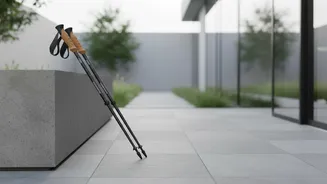
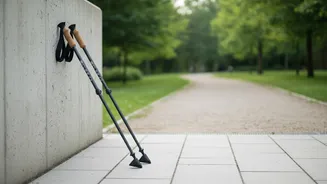
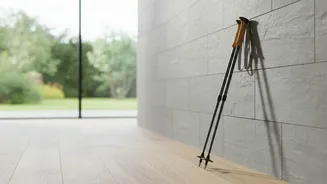
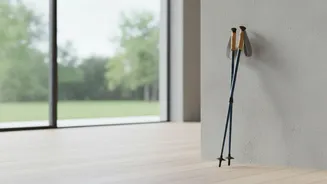
You can't just grab any old trekking poles and call it a day. Nordic walking poles are different. They are lightweight and feature a special glove-like strap system that is crucial for the correct technique. This strap allows you to push off and propel yourself forward, releasing your grip on the handle at the end of the push. To find the right length, a common formula is to multiply your height in centimetres by 0.68. When holding the pole, your elbow should be at a roughly 90-degree angle. Adjustable poles are a versatile option, especially for beginners. Look for poles made with some carbon content to absorb vibrations, which is gentler on your joints than rigid aluminium.
Mastering the Correct Technique
Getting the movement right is key to unlocking the full benefits. Nordic walking uses a natural, contralateral rhythm, just like regular walking—your left arm swings forward with your right leg, and vice-versa. The core motion involves three parts: plant, push, and propel. Plant the pole tip on the ground between your front and back foot. Keep your arm fairly straight and push the pole backward, using the strap to transfer power. As your arm swings back, open your hand to release the grip, letting the strap do the work. The goal is not to use the poles for balance like a cane, but as a lever to push your body forward. Maintain good posture, keeping your back straight, shoulders relaxed, and looking ahead.
Common Mistakes to Avoid
Many beginners make a few common errors that limit the workout's effectiveness. One is planting the pole too far in front of the body, which acts as a brake instead of a propeller. Another is keeping a tight, clenched grip on the pole throughout the movement, which prevents the proper push-off and can strain your wrists. Remember to open your hand as your arm swings back. Also, avoid using your biceps and bending your elbow too much; the power should come from your shoulders and back as you push through a straighter arm. Finally, ensure you're using dedicated Nordic walking poles, as hiking or trekking poles have different designs and are meant for stability, not propulsion.