



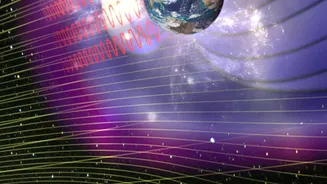
The Sun’s Violent Outbursts
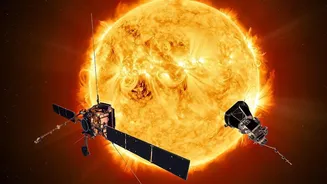
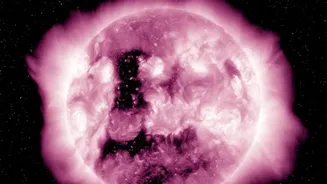
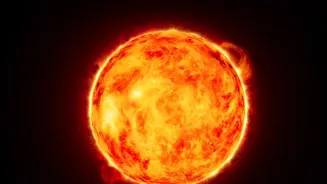
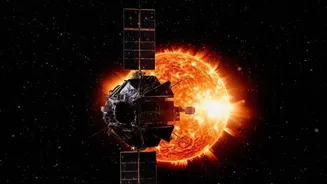
The sun, our life-giving star, has a turbulent side. It periodically releases massive bursts of energy and particles in events known as solar flares and coronal mass ejections (CMEs). A solar flare is an intense explosion on the sun's surface, while a CME is a giant
bubble of plasma and magnetic field that erupts into space. When these events are directed at Earth, they can have significant consequences for our technology-dependent society, creating what is known as space weather.
Satellites in the Crosshairs
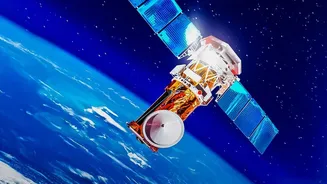
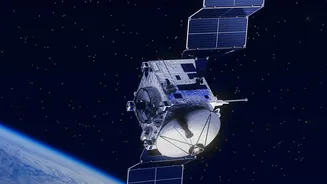
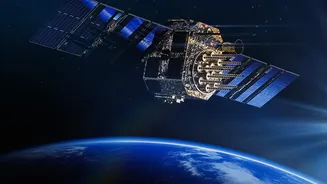
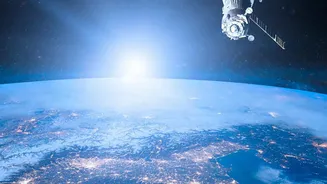
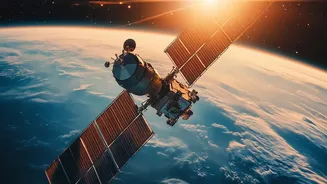
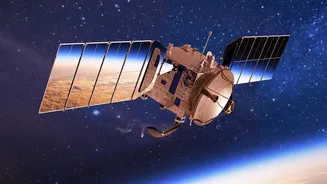
Orbiting communication satellites are particularly vulnerable to space weather. They operate beyond the full protection of Earth's atmosphere and magnetic field, exposing them directly to solar onslaughts. The effects can be devastating. High-energy particles can damage or degrade solar panels and sensitive electronics, sometimes causing phantom commands or complete system failures. During a major storm, the Earth's upper atmosphere heats and expands, increasing atmospheric drag on satellites in Low-Earth Orbit (LEO). This can cause them to lose altitude and even re-enter the atmosphere prematurely. In February 2022, a moderate geomagnetic storm caused the loss of up to 40 newly launched Starlink satellites by dramatically increasing this drag. Furthermore, solar events can disrupt the radio signals used for GPS, leading to positioning errors that affect aviation, shipping, and other industries.
The Global Watchtowers
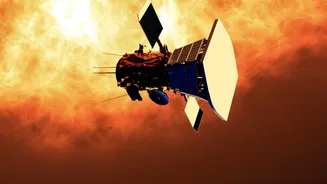
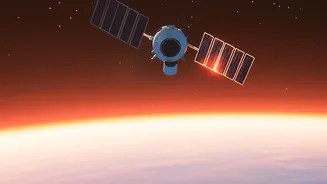
To defend against these threats, a sophisticated global network of observatories constantly monitors the sun. Agencies like the USA's National Oceanic and Atmospheric Administration (NOAA) and the European Space Agency (ESA) are at the forefront of this effort. NOAA's Space Weather Prediction Center (SWPC) serves as a central hub for forecasts and alerts. These agencies use a combination of ground-based telescopes and space-based satellites. Satellites like the Deep Space Climate Observatory (DSCOVR), positioned at a stable point between the Earth and sun, act as an early-warning system by monitoring the solar wind in real time. India has also become a key player with its Aditya-L1 solar observatory, which provides crucial data on solar phenomena from its unique vantage point.
From Solar Flare to Satellite Alert
When a potentially hazardous event like a CME is detected, the monitoring networks spring into action. Data from satellites and ground instruments are fed into complex models to predict the storm's trajectory, speed, and intensity. This allows agencies like the SWPC to issue alerts, watches, and warnings, much like meteorologists do for terrestrial weather. These alerts use a scale, such as the G1 to G5 scale for geomagnetic storms, to communicate the potential severity to satellite operators, airlines, and power grid managers. The lead time for a warning can range from minutes for a solar flare's radiation to days for a CME's arrival, giving valuable time to prepare.
Defensive Measures in Orbit
Armed with these warnings, satellite operators can take defensive actions to protect their multi-million dollar assets. A common procedure is to place a satellite into a 'safe mode'. This involves shutting down non-essential systems, reorienting the spacecraft to protect sensitive components, and ensuring its solar panels are positioned to keep the battery charged. For LEO satellites facing increased atmospheric drag, operators might fire onboard thrusters to maintain their correct altitude and avoid orbital decay. In aviation, airlines rely on these forecasts to adjust flight routes, particularly over polar regions, to avoid communication blackouts and minimize radiation exposure for crew and passengers.