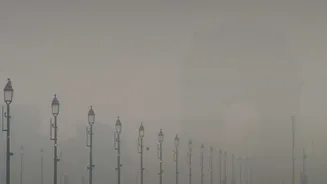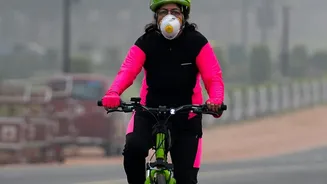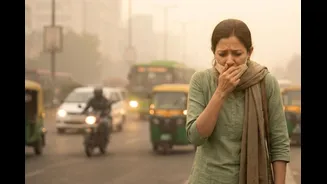







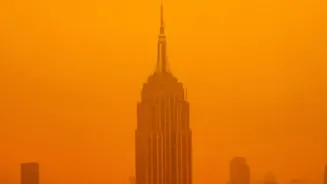
As a thick, grey haze settles over Delhi again this winter, the battle for clean air is moving indoors. For millions, the home is no longer a guaranteed sanctuary from pollution, prompting a quiet but significant revolution in household air care.
The Unseen Intruder in Your Home
Even
with doors and windows shut, the enemy is already inside. Fine particulate matter, or PM2.5—particles so small they can penetrate deep into the lungs and bloodstream—seeps into homes, offices, and schools. On November 12, 2026, Delhi's Air Quality Index (AQI) was recorded in the 'very poor' category at 323, with some areas hitting 'severe' levels above 400. Studies show that indoor PM2.5 levels in Delhi homes can be alarmingly high, often many times the World Health Organization's safety limits. This reality has shattered the illusion that staying indoors offers complete protection, forcing residents to confront the air quality not just outside, but in their own living rooms and bedrooms. This constant exposure is linked to a host of health issues, from respiratory distress and cardiovascular problems to anxiety and cognitive 'brain fog'.
The Air Purifier Becomes a Household Staple
What was once a luxury appliance is now seen as an essential. The demand for air purifiers has skyrocketed, transforming India's air treatment market into a multi-billion dollar industry. Projections show the market growing at over 13% annually. Retailers report that sales have doubled in recent weeks, with Delhi-NCR accounting for over 70% of the demand. This isn't just a one-time purchase anymore; families are now buying multiple units for different rooms, a trend confirmed by retailers seeing customers return for their second or third device. This surge highlights a growing disparity, creating a new form of inequality where the ability to afford clean air is becoming a marker of privilege. While some invest in high-end models with HEPA filters, many others are left to breathe the toxic air.
A New Culture of Air Consciousness
The response goes far beyond just buying machines. A new culture of 'air consciousness' is taking root in Delhi households. Daily routines are now dictated by AQI apps, which inform decisions on when, or if, to open windows for ventilation. Morning walks are cancelled, and children's outdoor playtime is curtailed. This shift has a significant psychological toll, contributing to what some experts call 'pollution anxiety'. There's a constant, low-level stress that comes from monitoring air quality, worrying about long-term health effects, and feeling trapped indoors. This pervasive concern has reshaped the very concept of a healthy lifestyle in the city, where managing the air you breathe has become an active, daily chore.
The DIY and Green Solutions
Alongside hightech solutions, a movement for doityourself and natural alternatives is growing. Many are turning to indoor plants, hoping to find a greener, more affordable way to purify their homes. Species like Spider Plants, Peace Lilies, and English Ivy have gained popularity for their perceived aircleaning abilities. However, while scientific studies in controlled chambers show that plants can absorb certain pollutants, experts caution that their realworld impact is often negligible. You would need a dense, forestlike collection of plants in a small, poorlyventilated room to make a significant difference, a far cry from the few decorative pots most homes have. Similarly, online tutorials for DIY air filters using a box fan and highefficiency filters have become popular, offering a lowcost alternative for those who cannot afford expensive purifiers.
An Expanding Air Care Economy
The focus on indoor air has spawned a whole new 'air care' economy. Beyond purifiers, there's a growing market for air quality monitors, specialized cleaning services that promise to reduce dust and allergens, and even real estate developments that market 'clean air' as a luxury feature. The broader household care market in India is expanding rapidly, with a projected growth rate of nearly $9%$ between $2026$ and $2032$, driven by a rising focus on hygiene and health. This includes a surge in everything from scented candles and diffusers, which create a perception of freshness, to advanced filters for air conditioning units. This commercialization of clean air shows how a public health crisis has created new$, lucrative$, business opportunities.