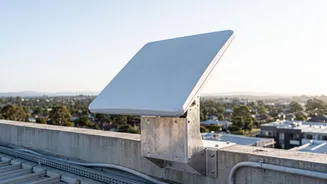


The Promise of Direct-to-Cell
SpaceX's ambition isn't just to provide internet to rural homes; it's to connect directly to the smartphone in your pocket. This 'Direct-to-Cell' technology aims to use a new constellation of satellites to provide service where traditional cell towers
can't reach. For consumers, this could mean an end to dropped calls in remote areas and a new layer of connectivity during natural disasters when ground infrastructure fails. The company has already begun rolling out a messaging service in the US and New Zealand with its partner T-Mobile and is eyeing a global expansion. However, to move beyond basic texting to full voice and data services, SpaceX needs something more: the right to use specific radio frequencies, also known as spectrum.
What Is Spectrum and Why Is It Guarded?
Think of spectrum as invisible real estate. It's the range of radio frequencies used to transmit all wireless signals, from your FM radio to your 5G phone. Because it's a finite and essential resource, governments worldwide regulate it tightly. They license specific frequency bands to companies for specific uses, preventing a chaotic free-for-all where signals interfere with each other. In the US, the Federal Communications Commission (FCC) manages this process. In India, the Department of Telecommunications (DoT) and the Telecom Regulatory Authority of India (TRAI) oversee spectrum allocation. Getting permission to use a slice of this spectrum is a complex, high-stakes process that even a company as disruptive as SpaceX cannot bypass.
SpaceX's Audacious Spectrum Play
Instead of just leasing spectrum from mobile carriers like T-Mobile, SpaceX has moved to acquire its own. Recently, the company announced a deal to buy a nationwide portfolio of low-band 800 MHz spectrum in the US from an investment firm. This is crucial because low-band frequencies are excellent at penetrating buildings and other obstacles, addressing a key weakness of satellite signals. This acquisition, combined with another multi-billion dollar deal for mid-band spectrum from EchoStar and FCC approval for a new 15,000-satellite constellation, signals a clear intent: SpaceX wants to become a full-fledged mobile carrier, competing directly with giants like AT&T and Verizon. But all these deals hinge on final regulatory approval from the FCC, which must decide if the move serves the public interest.
The Indian Context
The situation in India highlights the complexities of global expansion. Starlink, along with competitors like Bharti-backed Eutelsat OneWeb and Jio Satellite Communications, has received a necessary Global Mobile Personal Communication by Satellite (GMPCS) license. However, launching commercial services requires further steps, including final security clearances and, critically, the finalisation of the spectrum allocation framework. The Indian government has opted to allocate satellite spectrum administratively rather than through auctions, a decision seen as favourable to players like Starlink. Still, the process remains pending. With a vast number of villages still lacking mobile coverage, the potential for satellite internet is enormous. Yet, regulators must balance the push for connectivity with concerns over national security, data sovereignty, and ensuring a level playing field for all telecom operators.