




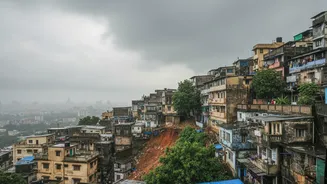
The Foundation: Mumbai's Unstable Slopes
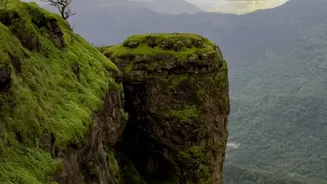
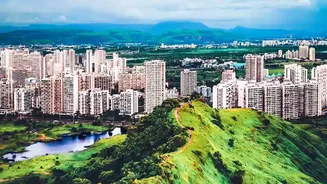
Mumbai isn't flat. The city and its suburbs are dotted with hillocks and slopes, remnants of the Deccan Traps, a vast and ancient volcanic province. These hills are composed of different layers of basalt rock, soil, and weathered material. While stable
when dry, this combination becomes treacherous when saturated. The underlying geology includes jointed rock, loose soil, and layers of black cotton soil, which swells when wet and shrinks when dry, further destabilizing the ground. A 2022 climate action plan for the city identified 249 landslide-prone locations, many concentrated around hilly areas like Ghatkopar, Malabar Hill, and the regions bordering Sanjay Gandhi National Park. The inherent geological nature of these slopes is the first critical ingredient in the city's landslide problem.
The Trigger: Intense Monsoon Rainfall
The primary trigger for these landslides is the city's intense monsoon rainfall. It's not just the total amount of rain, but the increasing frequency of extreme, concentrated downpours that poses the greatest threat. Heavy rainfall saturates the topsoil and weathered rock on the slopes. This increases what is known as 'pore water pressure'—the force that water in the soil exerts on the surrounding particles. As this pressure builds, it effectively pushes the soil and rock particles apart, reducing friction and weakening the slope's internal cohesion. A single, intense spell of over 300 mm in 24 hours can be enough to trigger a collapse. Climate change is believed to be exacerbating this, making rainfall patterns more erratic and severe, turning seasonal rains into volatile, high-intensity events that the slopes simply cannot withstand.
The Human Factor: Homes on the Edge
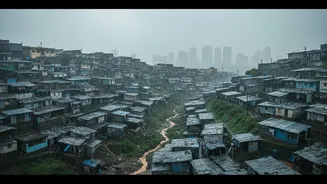
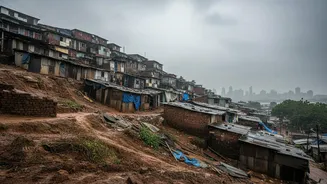
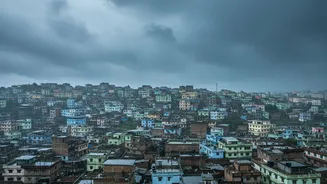
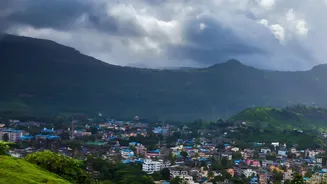
The natural risk posed by slopes and rain is dangerously amplified by human activity. A significant portion of Mumbai's population lives in informal settlements, many of which are built on or at the base of these vulnerable hillsides due to a lack of affordable and safe housing alternatives. Reports indicate that around 70% of Mumbai's landslide-prone areas are located within these informal settlements. To create space for homes, slopes are often cut or excavated, removing the natural support at the base of the hill. Deforestation and removal of vegetation for construction further destabilize the soil, as plant roots that would otherwise help hold the earth together are lost. Poor or non-existent drainage systems in these areas mean that rainwater isn't channeled away safely; instead, it pools and seeps directly into the ground, accelerating saturation and increasing the risk of collapse.
A Deadly Interaction
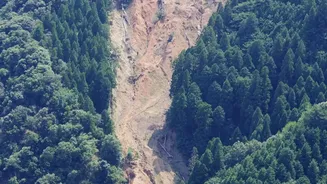
Landslides happen when these three elements—unstable slopes, heavy rain, and human alteration—interact catastrophically. An already weak slope, composed of loose soil and fractured rock, is further compromised by the cutting of its base for construction. When the monsoon arrives with its torrential downpours, the soil becomes waterlogged, heavy, and loses its structural integrity. The final push can come from something as simple as an uprooted tree, whose roots had been holding a section of the hillside together. The result is a sudden, terrifying failure of the slope, sending a mixture of mud, rocks, and debris crashing down onto the very homes that were built there. These events are often fatal, as was seen in a recent landslide in Ghatkopar that claimed several lives.
Mitigation and an Uncertain Future
Addressing this complex problem requires a multi-pronged approach. Experts and city plans, like the Mumbai Climate Action Plan (MCAP), call for both structural and non-structural solutions. Structural fixes include building retaining walls and improving drainage systems on vulnerable slopes. However, progress on this front has been slow, with dozens of highly vulnerable sites reportedly remaining unattended. Non-structural measures are just as critical, involving better forecasting, the development of early warning systems, and, most importantly, community awareness and the eventual rehabilitation of people living in the most high-risk zones. Each year, authorities issue notices advising residents to relocate to safer areas during the monsoon, but for many, a lack of viable alternatives means they are forced to stay, living with the constant risk.