





Your Delivery Has Arrived: What is CLPS?
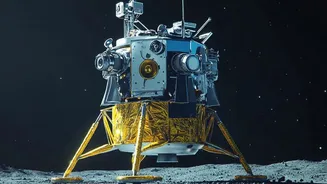
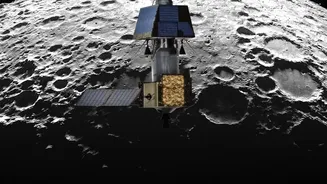
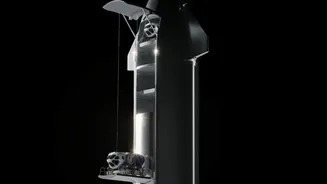
Before astronauts can live and work on the Moon, NASA needs to do a lot of reconnaissance. This is where the Commercial Lunar Payload Services, or CLPS, initiative comes in. Think of it as a cosmic delivery service. Instead of building and flying all
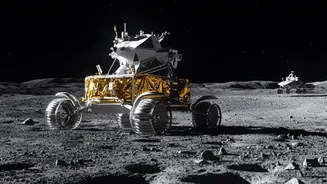
its own spacecraft for every single task, NASA is paying private American companies to transport its scientific 'payloads' to the Moon. Established in 2018, this public-private partnership is designed to make lunar missions faster, more frequent, and more affordable. It allows NASA to act as a customer, buying space on landers built by companies like Intuitive Machines, Firefly Aerospace, and Blue Origin. This approach stimulates a commercial space economy while scattering a network of robotic scouts across the lunar surface to gather critical data ahead of human arrivals under the Artemis program.
The Latest Tools Heading to the Moon
In late September 2026, NASA selected three new suites of instruments through its PRISM program to fly on future CLPS missions. These aren't just random gadgets; they are specifically chosen to answer fundamental questions about astronaut safety and resource availability for a future Moon Base. The selected investigations are the Lunar Environment Monitoring Station - South Pole (LEMS-SP), the Geophysical Investigation for Mapping Lunar Interior (GIMLI), and the Drilling and In-situ Subsurface Composition (DISCO) payload. Each is tasked with a unique and vital job, from monitoring the environment to searching for resources and shelter.
The Mission: Find Shelter, Water, and Safety
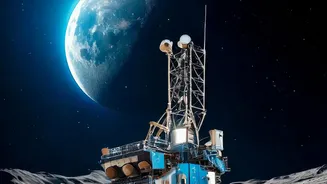
The goals of these new instruments read like a survival guide for future lunar inhabitants. LEMS-SP will be an autonomous weather station, monitoring seismic activity from moonquakes, tracking micrometeoroid impacts, and measuring the volatile gases in the Moon's thin atmosphere to assess environmental hazards. GIMLI is a cave-hunter. It will be deployed near a feature called the Marius Hills Pit to see if it leads to a subterranean lava tube. Using ground-penetrating radar, seismic sensors, and a gravity-measuring device, it will try to map any underground voids. Such caves could provide natural shielding from radiation and extreme temperatures for astronauts. Finally, the DISCO payload will drill into the surface to directly measure hidden ice deposits, laying the groundwork for turning lunar water into a usable resource for drinking, breathing air, and rocket fuel.
Building the Artemis Base Camp, Piece by Piece
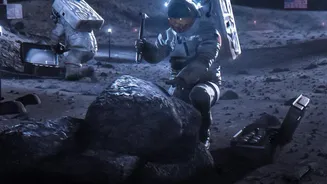
These CLPS missions are not isolated science experiments; they are foundational to NASA’s long-term Artemis program, which aims to establish a sustained human presence on the Moon. The data from these robotic explorers will inform everything, from where to build the Artemis Base Camp to how to design the habitats and what technologies are needed for astronauts to thrive. The plan involves a phased approach, starting with robotic missions through 2029 to test technologies and map the environment. Subsequent phases will see the arrival of habitats, power systems, and rovers, eventually supporting crews on the surface. By understanding the resources available and the dangers present, NASA is methodically reducing the risks for the first astronauts who will call the Moon a temporary home, paving the way for eventual missions to Mars.