





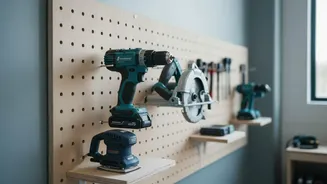

The Modern Urban Toolbox
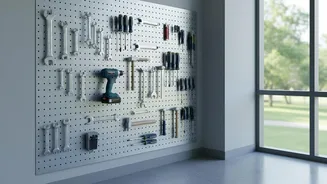
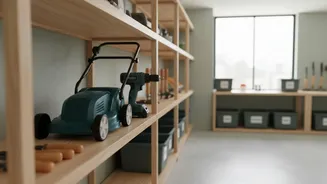
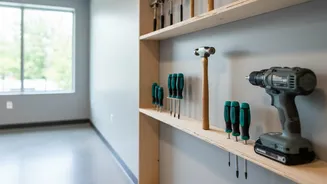
An apartment tool library is a shared collection of tools that residents can borrow as needed. Think of it like a traditional library, but instead of books, you check out a power drill, a ladder, or a set of wrenches. This system can be as simple as a locked
cabinet in a common area managed by residents, or a more formal setup organised by the building's management. The core idea is shifting from individual ownership to shared access. It’s a practical solution for urban dwellers who often lack the storage space and the need for a personal inventory of tools that are used infrequently. Why should every household in a building own a drill that, on average, gets used for less than 15 minutes in its entire lifetime?
Your Wallet and Your Storage Will Thank You
The most immediate benefit of a tool library is the financial savings. The cost of buying new tools, especially high-quality or specialised ones for a single DIY project, can be substantial. With a tool library, residents can avoid these purchases, paying either nothing or a small membership fee that is a fraction of the cost of ownership. Some established tool libraries calculate that they save their members hundreds of thousands of dollars collectively each year. This model makes home repairs and projects more accessible and affordable for everyone. Beyond the direct savings, there's the added bonus of reclaiming valuable storage space in already compact urban apartments—no more tripping over a toolbox you barely open.
A Greener Way to Build and Repair
The impact extends far beyond personal finance. By reducing the number of tools purchased, these libraries directly combat the growing problem of electronic waste, or e-waste. Globally, millions of tonnes of e-waste are generated annually, with a shockingly low percentage being properly recycled. Small equipment, including power tools, makes up a huge portion of this waste stream. When we share tools, fewer are manufactured, and those in circulation are used more efficiently and to their full potential. Tool libraries also prioritise the repair and maintenance of their inventory, extending the life of each tool and keeping them out of landfills for longer. This creates a circular system that is both economically and environmentally sustainable.
Building Community, Not Just Shelves
Perhaps one of the most underrated benefits is the sense of community that a shared resource can foster. In India, where collective housing and shared community spaces have deep cultural roots, this idea feels like a natural evolution. A tool library can become a new kind of 'courtyard'—a place where neighbours interact, share knowledge, and help one another. This can transform a residential building from a collection of isolated units into a connected and supportive community. It turns a simple act of borrowing a hammer into an opportunity for social connection, reducing the anonymity that often characterises city living.
How to Get Involved
Inspired to bring this to your building? It can start small. The first step is to talk to your neighbours and the building's managing committee to gauge interest. You can conduct a quick survey to see what tools people already own and would be willing to lend, and what items are on their wish list. Identify a secure, accessible common area for storage, like a portion of a storage room or a designated cupboard. Funding can come from small resident contributions, a building welfare fund, or even donations of pre-owned, functional tools. Using a simple shared spreadsheet or a group chat can work for tracking check-ins and check-outs. The goal is to start a system that makes life easier, more affordable, and more connected for everyone.