





The Silent Killer on Mars
Mars may seem like a quiet, static world, but its weather is extreme. The greatest danger isn't the cold or the thin air, but the dust. Martian dust storms can start small and, through a feedback loop of warming air and high winds, grow to cover the entire
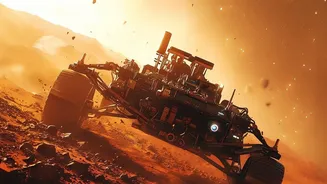
planet. This is what happened in 2018, in a storm that proved fatal for one of NASA's most beloved explorers, the Opportunity rover. Designed for a 90-day mission, Opportunity had operated for nearly 15 years. But when a global dust storm engulfed Mars, it blotted out the sun, preventing the rover from recharging its solar panels. After months of darkness and silence, the mission was declared over, a powerful testament to the destructive potential of Martian weather. This event highlighted a critical vulnerability for any mission relying on solar power.
An Eye in the Martian Sky
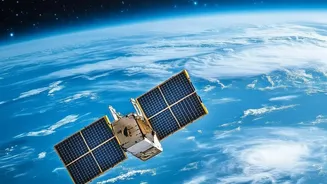
The first warnings about the storm that doomed Opportunity didn't come from the rover itself, but from orbit. For years, a fleet of orbiters has acted as a crucial support network for surface missions. The key player in weather observation is NASA's Mars Reconnaissance Orbiter (MRO). Launched in 2005, MRO has been mapping the Red Planet with unprecedented detail. Its suite of instruments includes the Mars Color Imager (MARCI), which generates a daily global weather map, allowing scientists to spot storms as they form. Another instrument, the Mars Climate Sounder, measures atmospheric temperature, dust content, and pressure, providing a 3D view of the weather. This constant monitoring provides the raw data essential for any attempt at forecasting.
From Data to Prediction
Having data is one thing; turning it into a reliable forecast is another. Scientists are now combining over 15 years of MRO data with sophisticated climate models to understand the triggers for these massive storms. A recent study found a strong correlation between sharp rises in surface temperature and the subsequent formation of major dust storms. Essentially, sunny days can heat the surface, causing the air above it to rise and lift dust with it. By identifying these thermal precursors, scientists hope to move from simply observing storms to predicting their path and intensity. This gives mission controllers on Earth valuable lead time—days or even weeks—to prepare their assets on the ground. While not yet as reliable as Earth-based hurricane forecasting, it represents a monumental step forward in Martian meteorology.
Protecting a Robotic Fleet
This newfound forecasting ability is a game-changer for managing Martian missions. When a storm threat is identified, controllers can take preemptive action. For a solar-powered lander like InSight, this means powering down non-essential instruments to conserve energy, entering a 'safe mode' to ride out the storm. The team did exactly this during a large regional storm in 2022, which helped the lander survive until skies cleared. While rovers like Curiosity and Perseverance are nuclear-powered and less vulnerable, forecasting is still vital. It helps protect their instruments and informs decisions for associated missions, like the solar-powered Ingenuity Mars Helicopter, which needs clear weather reports to plan its flights. A recent study also highlighted that these storms can create electrostatic fields, posing a separate electrical risk to sensitive equipment, making avoidance even more critical.
Securing the Future on Mars
The ability to predict Martian weather is more than just an operational advantage for current robotic missions; it's a fundamental requirement for the future of human exploration. Any long-term human habitat on Mars will likely rely, at least in part, on large solar arrays for power. Leaving these vital systems exposed to a planet-encircling dust storm without warning would be catastrophic. The same dust that can choke a rover's power supply could also clog life support filters and pose a hazard to astronauts. By mastering the art of forecasting on another world, space agencies are not just protecting their robots. They are developing the essential skills and knowledge needed to keep future human explorers safe, paving the way for a sustained human presence on the Red Planet.