





Why Ankle Stability Is Non-Negotiable
We often don't think about our ankles until we twist one stepping off a curb or landing awkwardly during a game of badminton. But ankle stability is more than just injury prevention; it's the foundation of almost every movement we make. Your ankles are
the first point of contact with the ground, responsible for absorbing shock and providing the proprioceptive feedback your brain needs to maintain balance. Strong, stable ankles create a solid base for the entire kinetic chain. This means better support for your knees, hips, and lower back, leading to improved posture, more efficient running, and greater power in athletic movements. Whether you're a cricketer needing a stable base to bowl, a dancer requiring precise footwork, or simply someone who wants to navigate uneven city pavements with confidence, investing in ankle stability pays dividends for your entire body.
The Power of ‘Slow’
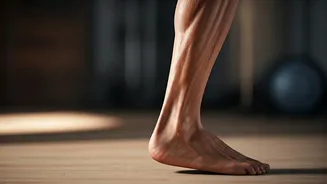
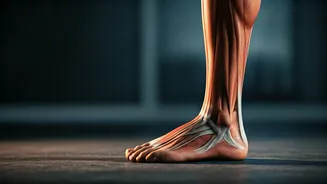
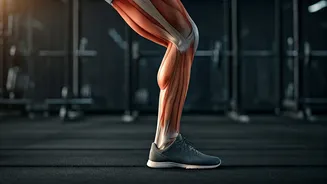
The key to this exercise isn't just the movement, but the speed. When we perform exercises quickly, we often rely on momentum rather than muscle. By slowing down the calf raise, you force the muscles of your lower leg—primarily the large gastrocnemius and the deeper soleus—to work through their entire range of motion under tension. The most critical part is the eccentric phase, which is the slow, controlled lowering of your heel. This phase builds strength and control in a way that fast, bouncy movements cannot. Eccentric training has been shown to be highly effective at strengthening tendons and muscle fibres, making them more resilient to the sudden stretches and strains that cause injuries like ankle sprains and Achilles tendonitis. This deliberate control is what translates directly into improved stability when you're moving in the real world.
How to Do It Right
Proper form is everything. Follow these steps to perform a perfect slow single leg calf raise: 1. **Set Up:** Stand on a flat surface with your feet hip-width apart. Lightly place your fingertips on a wall or the back of a sturdy chair for balance. Avoid leaning on your support; it's just there to prevent wobbling. 2. **Lift One Leg:** Shift your weight onto one leg and lift the other foot off the ground, bending it at the knee. Keep your standing leg straight but not locked. 3. **The Upward Push (Concentric):** Slowly and deliberately push through the ball of your standing foot to raise your heel as high as you can. Focus on a smooth, 2-second count on the way up. Squeeze your calf muscle at the peak of the movement. 4. **The Slow Descent (Eccentric):** This is the most important step. Control the movement as you lower your heel back down. Aim for a slow 3 to 4-second count. Do not let your heel slam down. The goal is to feel the muscle working throughout this entire lowering phase. 5. **Repeat:** Complete all your repetitions on one side before switching to the other. Aim for 2-3 sets of 10-15 repetitions on each leg.
Common Mistakes to Avoid
To get the most out of this exercise, watch out for these common errors: * **Going Too Fast:** Rushing the movement, especially on the way down, negates the primary benefit. Remember, the 'slow' part is what builds stability. * **Using Momentum:** Don't bounce at the bottom or use your body to 'hop' up. The work should be isolated in your calf and ankle. * **Limited Range of Motion:** Make sure you are pushing up as high as possible and lowering your heel all the way to the floor to work the muscle through its full length. * **Leaning on Your Support:** The wall is for balance, not for helping you lift. Keep your touch light and your posture upright.
Integrating Into Your Routine
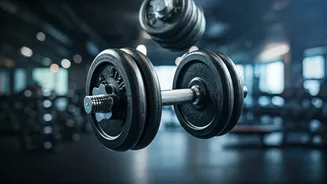
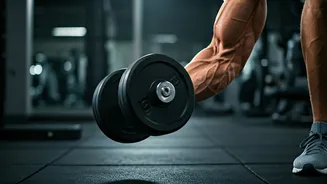
The beauty of this exercise is its simplicity. You can easily incorporate it into your existing routine. Add it to your warm-up before a run or a sports session to activate the key stabilising muscles. Perform it as part of your main strength workout. You can even do it while brushing your teeth or waiting for your chai to brew. Consistency is more important than intensity. Start with just your body weight, and once you can comfortably perform 3 sets of 15 reps with perfect form, you can progress by holding a light dumbbell or performing the exercise on the edge of a step for a greater range of motion.