




Hearing the Hum of Spacetime
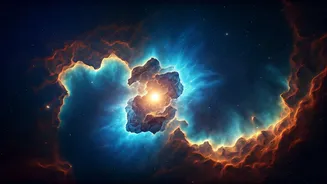
Imagine the universe as a vast, cosmic ocean. For years, astronomers have been able to detect the violent splashes from massive events, like two black holes colliding. These are high-frequency gravitational waves. Now, for the first time, scientists have detected
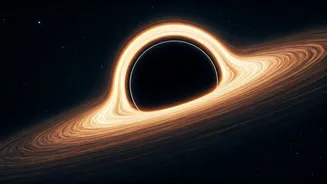
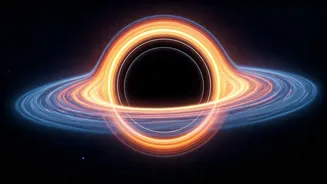
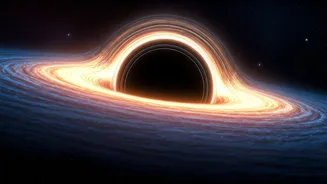
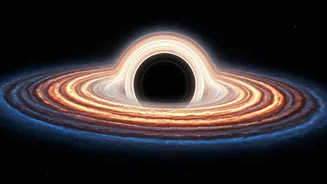
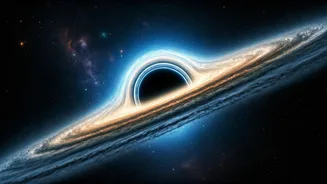
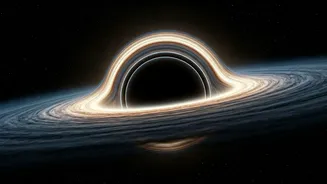
the constant, gentle background swell of this ocean—a persistent, low-frequency hum. This phenomenon is known as the stochastic gravitational-wave background. It’s not a single event, but the combined chorus of countless cosmic symphonies playing out across billions of years, most likely caused by pairs of supermassive black holes slowly spiraling toward each other at the centers of merging galaxies. Detecting this background hum was a primary goal of astrophysics for decades, and its discovery opens an entirely new way to perceive the universe.
A Galaxy-Sized Radio Antenna
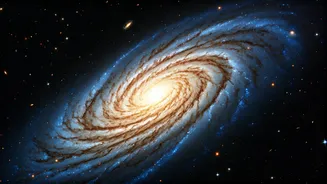
Detecting these incredibly long and faint waves required an instrument the size of a galaxy. Scientists achieved this by creating a 'Pulsar Timing Array' (PTA). The concept, first proposed in the 1970s, uses some of nature's most precise timekeepers: pulsars. These are the super-dense, collapsed cores of massive stars that spin hundreds of times per second, emitting beams of radio waves like cosmic lighthouses. From Earth, these beams appear as incredibly regular pulses of radio signals. International collaborations, including the North American Nanohertz Observatory for Gravitational Waves (NANOGrav), monitored dozens of these pulsars across our galaxy for over 15 years. This network of pulsars effectively turned a portion of the Milky Way into a massive gravitational wave detector.
Timing is Everything
The method relies on the astonishing regularity of millisecond pulsars, which are considered near-perfect clocks. As low-frequency gravitational waves ripple through spacetime, they subtly stretch and squeeze the fabric of the universe itself. This distortion alters the distance between Earth and the pulsars. Consequently, the radio pulses arrive at our telescopes a few nanoseconds earlier or later than expected. The key was not just to spot a delay from one pulsar, but to find a specific correlated pattern of delays across all the pulsars in the array. This unique pattern, known as the Hellings-Downs curve, is the unmistakable fingerprint of a gravitational wave background, ruling out other sources of noise. After years of painstaking data collection, scientists confirmed this exact correlation, providing strong evidence for their groundbreaking discovery.
A New Window on the Universe
This discovery is more than just an astronomical curiosity; it's a fundamental shift in how we can explore the cosmos. Firstly, it provides powerful confirmation of Albert Einstein’s theory of general relativity, which predicted these waves over a century ago. Secondly, it gives us our first real glimpse into the lives of supermassive black holes, which can be millions or even billions of times more massive than our sun. Hearing the background hum they create allows us to study how they merge and how galaxies evolve, processes that are otherwise invisible to traditional telescopes. Some scientists believe the signal could contain echoes from even more exotic events in the early universe, potentially offering clues about the Big Bang itself. We have moved from detecting individual gravitational 'shouts' to hearing the constant 'murmur' of the universe, beginning a new era of astronomy.