



The Cosmic Speed Limit
Everything you see is thanks to light. When you look at a friend across the room, light bounces off them and travels to your eyes. This happens so quickly it feels instantaneous. But it’s not. Light travels at a blistering but finite speed: about 3,00,000
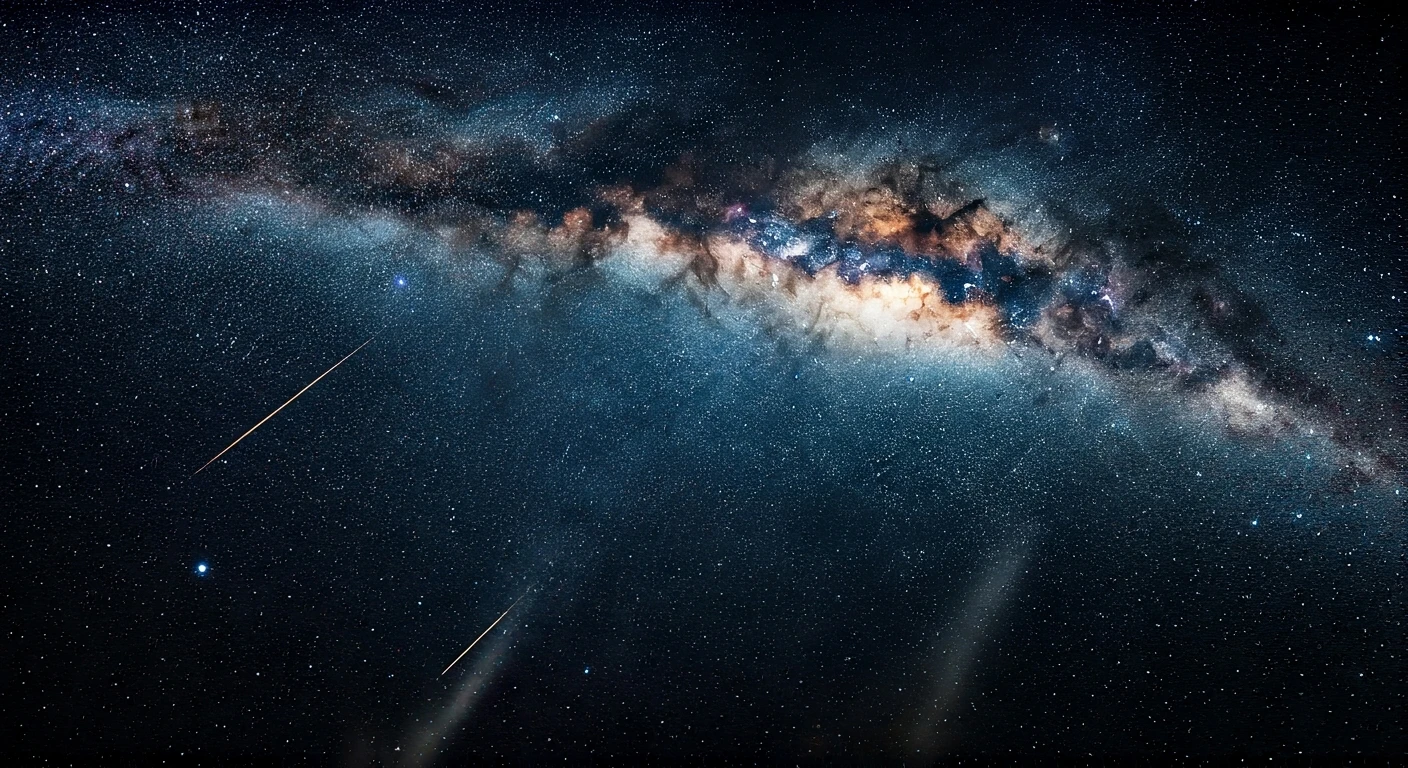
kilometres per second. On a human scale, that’s effectively instant. Light can circle the Earth more than seven times in a single second. But space is, for lack of a better word, spacious. The distances are so mind-bogglingly vast that even at this incredible speed, light takes time to get from one place to another. This delay is the key to understanding why looking at the stars is the same as looking into the past.
What's in a Light-Year?
Because the kilometres pile up so quickly when discussing space, astronomers use a different unit of measurement: the light-year. It sounds like a measure of time, but it’s actually a measure of distance. One light-year is the distance light travels in one year. That’s approximately 9.5 trillion kilometres. The nearest star system to us (besides our own sun) is Alpha Centauri. It’s about 4.3 light-years away. This means the light we see from its stars tonight actually left them 4.3 years ago. If you were looking at Alpha Centauri through a telescope, you’d be seeing it as it was back then. Any change that happened three years ago would still be a year away from being visible to us.
Greetings from Centuries Past
Now let's apply this to the stars you might actually recognise. Polaris, the North Star, is a familiar guidepost for navigators. It’s also about 433 light-years away. The faint, steady light reaching your eye tonight left Polaris around the year 1591. While India was under Mughal rule, that photon of light began its lonely, 433-year journey across the void, destined to end in your retina. Or consider Betelgeuse, the bright reddish star in the Orion constellation. It is roughly 640 light-years away. The light we see from it tonight started its journey around the 1380s. This star is a red supergiant nearing the end of its life, and astronomers believe it could go supernova anytime in the next 1,00,000 years. The fascinating part? It might have already exploded 500 years ago, and we would still have another century of waiting before the spectacular light show reaches us.
Seeing Across Millennia
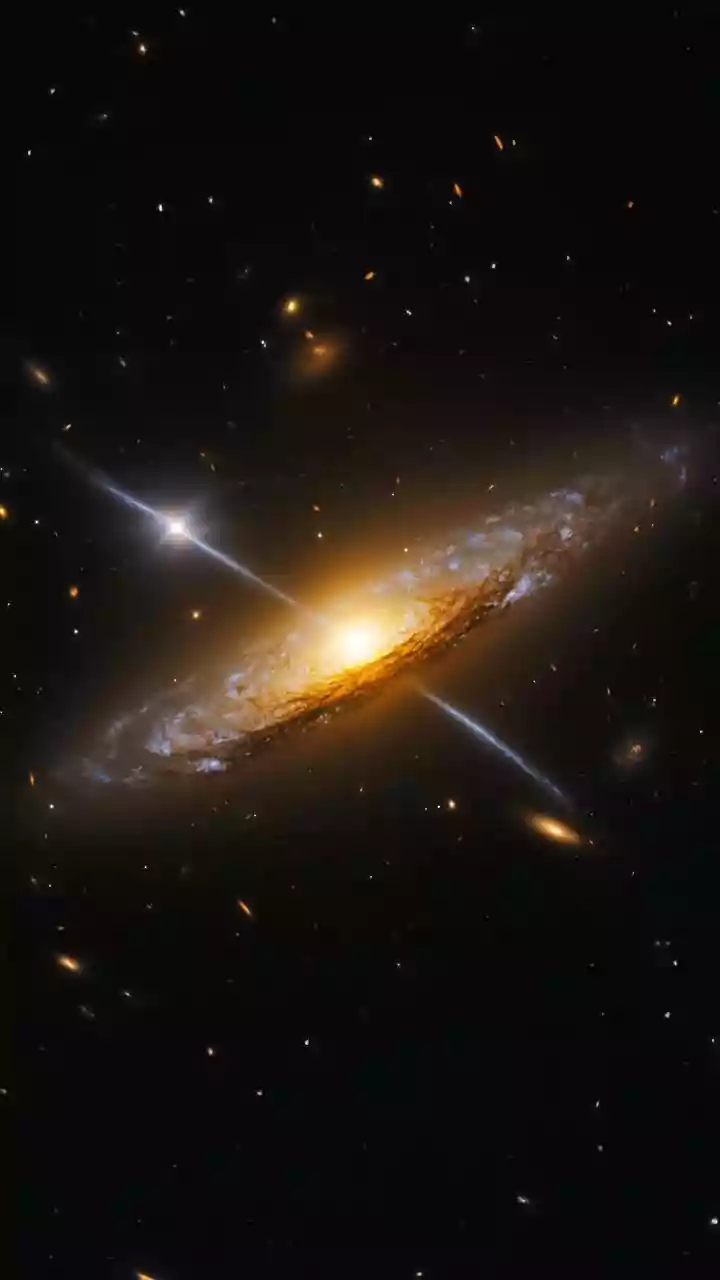
The scale gets even more dramatic as we look farther out. Not all the specks of light in the sky are individual stars. Some are entire galaxies, each containing billions of stars. The most famous of these is the Andromeda Galaxy, a faint, fuzzy patch visible to the naked eye on very dark nights. Andromeda is our closest major galactic neighbour, and it is 2.5 million light-years away. The light you see from it tonight is 2.5 million years old. When that light started its journey, modern humans did not exist. Our distant ancestors, like *Homo habilis*, were just beginning to walk the plains of Africa. Every time you spot Andromeda, you are receiving photons that are older than our entire species.
A Telescope Is a Time Machine
This principle is exactly how powerful observatories like the Hubble Space Telescope and the James Webb Space Telescope work. They are not just cosmic magnifying glasses; they are time machines. By collecting the faint, ancient light from the most distant objects ever detected, they allow us to see the universe as it was shortly after the Big Bang, over 13 billion years ago. They are literally looking at the dawn of time, one ancient photon at a time. This makes every powerful telescope a tool for cosmic archaeology, piecing together the history of the universe by looking at its oldest light.