







The Big Shift: Skills Over Degrees
The conversation in India's hiring rooms is changing. A recent survey from the job platform Indeed revealed that a staggering 80% of Indian employers now prioritise practical skills and hands-on experience over formal degrees when evaluating candidates.
This isn't just a minor trend; it's a fundamental shift in how companies find talent. Fast-paced technological advancements and evolving business needs mean that employers are desperate for a job-ready workforce. They need people who can solve real-world problems immediately, not just those who have a theoretical understanding. As a result, many top companies are re-evaluating their hiring criteria, with some even dropping degree requirements for roles where demonstrated ability is a better predictor of success. The message is clear: what you can do is rapidly becoming more important than where you studied.
Internships: The New Extended Interview
One of the biggest paradoxes for freshers is the 'entry-level job that requires experience'. Internships are the most effective way to solve this puzzle. They have become far more than just a line on a resume; they are now a critical stepping stone into the professional world. Think of an internship as a long-term interview. It gives a company weeks or months to see how you work, solve problems, and fit into their culture. This significantly reduces the risk of a bad hire. For the intern, it provides invaluable hands-on experience, a chance to apply classroom knowledge in a real-world setting, and an opportunity to build a professional network. Many companies now use their internship programs as their primary pipeline for full-time hires, with successful interns receiving Pre-Placement Offers (PPOs) before they even graduate.
Your Work Speaks: The Power of Personal Projects
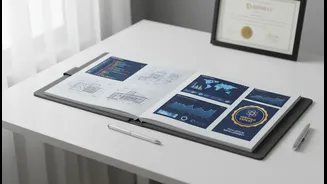
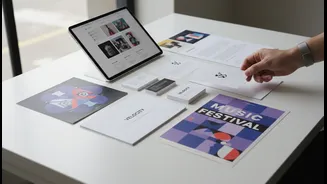
Alongside internships, a portfolio of personal projects is your secret weapon in the modern job market. These projects are tangible proof of your skills, initiative, and passion for your field. For a software developer, this could be a functional app on GitHub. For a writer, it could be a well-maintained blog. For a designer, a portfolio on Behance. These projects demonstrate that you are a self-starter who is willing to learn and build things outside of a formal curriculum. When an interviewer sees a project, they see evidence. It validates the skills you've listed on your resume and gives them something concrete to discuss. It shows you can take an idea from concept to completion, a skill that is universally valued by employers and can set you apart from hundreds of other applicants with similar degrees.
Building a Future-Proof Skill Set
While the focus is on practical application, the specific skills in demand are heavily influenced by technology. Across industries, there is a massive need for talent in areas like Artificial Intelligence (AI), Machine Learning, Data Science, and Cybersecurity. Graduates who can demonstrate capabilities in these domains are at a significant advantage. However, technical skills are only one part of the equation. Employers consistently report that soft skills—such as communication, teamwork, adaptability, and critical thinking—are just as crucial. The ideal candidate is someone who combines technical know-how with the ability to collaborate effectively and adapt to new challenges. Investing time in online courses, certifications, and workshops in these high-demand areas can provide a significant return.
How to Market Your Practical Experience
Having the experience is one thing; showcasing it effectively is another. Your resume needs to evolve beyond a simple list of degrees and duties. Create a dedicated section for 'Projects' or 'Portfolio'. For each entry, don't just state what you did; describe the problem you solved, the skills you used, and the outcome you achieved. Use quantifiable metrics whenever possible. Instead of saying "Worked on a marketing campaign," try "Contributed to a digital marketing campaign that increased lead generation by 15% over three months." This approach transforms your resume from a passive document into an active showcase of your accomplishments, making it far more compelling for a recruiter who is scanning for proven ability.