





The Power of Your Own Bodyweight
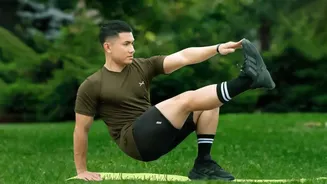
Bodyweight training, or calisthenics, is a highly effective method for building muscle, increasing cardiovascular endurance, and improving overall strength. The secret lies in using your own weight as resistance. By performing compound movements—exercises
that engage multiple joints and muscle groups at once—you get a more efficient and functional workout. Think of exercises like squats, push-ups, and lunges. These movements mimic everyday actions, improving your functional fitness for real-life activities. Research has even shown that bodyweight training can produce comparable improvements in muscle strength and body composition to traditional weight training. The key is progressive overload: consistently challenging your muscles by increasing reps, decreasing rest times, or performing more difficult variations. This approach ensures you keep getting stronger and fitter, without ever needing to buy a single dumbbell.
Foundation 1: The Ultimate Lower Body Burn
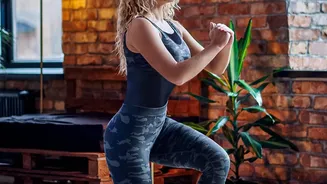
A strong lower body is the foundation of your overall fitness. These exercises require minimal space but deliver maximum impact on your quads, glutes, and hamstrings.Bodyweight Squats: This is the king of lower body exercises. Stand with your feet shoulder-width apart. Lower your hips back and down as if sitting in a chair, keeping your chest up and back straight. Go as low as you can comfortably, aiming for your thighs to be parallel to the floor, then drive back up through your heels to the starting position.Lunges: Perfect for training each leg independently, which helps correct strength imbalances. Step one foot forward or backward and lower your hips until both knees are bent at a 90-degree angle. Your front knee should be above your ankle, and your back knee should hover just off the floor. Push off the front foot to return to the start. Alternate legs.Glute Bridges: Lie on your back with your knees bent, feet flat on the floor close to your glutes. Drive through your heels to lift your hips off the floor until your body forms a straight line from your shoulders to your knees. Squeeze your glutes at the top before lowering back down.
Foundation 2: Upper Body and Core Strength
A strong core and upper body are crucial for posture, stability, and everyday strength. These moves are the gold standard for no-equipment upper-body training.Push-Ups: The classic push-up targets your chest, shoulders, triceps, and core all at once. Start in a high plank position. Lower your body until your chest nearly touches the floor, keeping your elbows tucked in slightly. Press back up to the starting position. If this is too challenging, perform them on your knees or against a wall.Plank: This is one of the most effective exercises for core stability. Hold a push-up position, either on your hands or forearms, keeping your body in a straight line from your head to your heels. Engage your core and glutes, and resist the urge to let your hips sag.Bear Crawls: A dynamic movement that challenges your entire body. Start on all fours with your knees hovering a few inches off the floor. Move one hand and the opposite foot forward a short distance, then repeat on the other side, keeping your back flat and core tight.
Foundation 3: The Cardio Burst
You don't need a treadmill to get your heart rate up. High-Intensity Interval Training (HIIT) involves short bursts of all-out effort followed by brief recovery periods, and it's perfect for small spaces. It’s an incredibly efficient way to burn calories and boost your metabolism.Burpees: The ultimate full-body cardio move. From a standing position, bend down and place your hands on the floor. Jump your feet back to a plank, lower your chest to the floor, and then push back up. Jump your feet in towards your hands and explode up into a jump.High Knees: Stand in place and run, driving your knees up toward your chest as high and as fast as you can. It’s a simple but effective way to elevate your heart rate quickly.Mountain Climbers: Start in a high plank position. Drive one knee toward your chest, then quickly switch legs, as if you're running in place against the floor. Keep your core engaged and your hips low.
Putting It All Together: Your Weekly Plan
The key to seeing results is consistency. Aim to perform a full-body workout 3-4 times per week. You can structure your workout as a circuit. Perform each exercise for 30-45 seconds, then rest for 15-30 seconds before moving to the next. After completing all the exercises in the circuit, rest for 1-2 minutes and then repeat the entire circuit 2-4 times.A sample circuit could look like this:1. Bodyweight Squats2. Push-Ups3. Alternating Lunges4. Plank5. High KneesThis combination ensures you are working your entire body, combining strength and cardio for a highly efficient session. You can mix and match exercises from the lists above to keep your routine interesting and continually challenge your body in new ways.