




The Main Event: A Sci-Fi Catch Becomes Reality
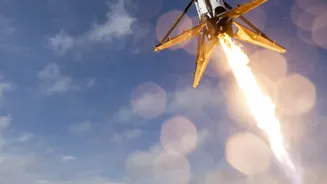
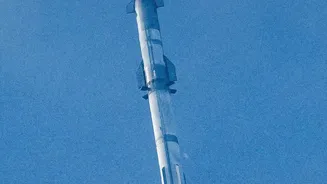
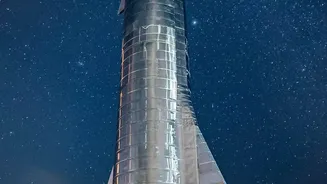
On Saturday, November 14, 2026, after a nearly 22-hour flight that completed 14 orbits of Earth, the Starship upper stage, known as Ship 42, descended through the Texas sky. Instead of landing on legs, it performed a precise, controlled hover before being
gripped and secured by a pair of giant arms on the launch tower, a system nicknamed 'Mechazilla'. This was the first time SpaceX had ever attempted, let alone succeeded, at catching the orbital spacecraft after its return from space. The manoeuvre, long a part of the company's futuristic vision, is a critical test of the ground systems needed to make rockets as reusable as airplanes. During its time in orbit, the spacecraft also successfully deployed 26 next-generation Starlink satellites.
What Exactly is 'Mechazilla'?
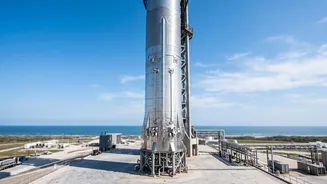
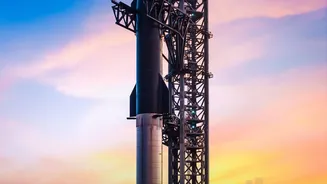
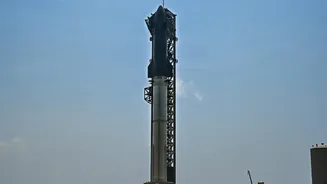
The launch tower at SpaceX's Starbase facility is more than just a platform; it's an active participant in the launch and recovery process. The 'Mechazilla' or 'chopstick' arms are a core part of this system. They are designed to lift and stack the massive Starship vehicle and its Super Heavy booster before launch. More importantly, they are designed to catch both components as they return from flight. By catching the rocket stages directly on the tower, SpaceX can eliminate the need for heavy and complex landing legs on the vehicles themselves. This saves weight, allowing the rocket to carry more payload, and places the hardware directly back on the launch mount, ready for inspection and preparation for its next flight.
The Setback: A Lost Super Heavy Booster
The mission, known as Flight 15, was not a complete success. While the Starship spacecraft went on to orbit and was eventually caught, the first stage did not share its fate. The plan was for the Super Heavy booster to perform its own powered descent and be caught by the same tower arms just minutes after Friday's liftoff. However, an issue occurred during its return burn. According to SpaceX, a low fuel mass alarm was triggered, and the booster's guidance system automatically aborted the landing attempt at the tower for safety reasons. It diverted its course and performed a splashdown in the Gulf of Mexico, where its flight termination system was activated.
Why This 'Holy Grail' of Reusability Matters
SpaceX's ultimate goal is full and rapid reusability, which founder Elon Musk sees as essential for reducing the cost of access to space and enabling ambitious goals like building a city on Mars. The successful catch of the Starship upper stage is a monumental step in that direction, described by a SpaceX commentator as the 'holy grail of spaceflight'. Recovering the upper stage, which travels faster and endures a much harsher reentry than the booster, was considered the more difficult part of the challenge. Having the vehicle intact allows engineers to inspect its heat shield and other systems after an orbital flight, providing invaluable data for future missions and refinements. While SpaceX has previously caught Super Heavy boosters on three separate occasions, this was the first recovery of the orbital ship itself.
Two Steps Forward, One Step Back
The mixed outcome of Flight 15 is characteristic of SpaceX's iterative development philosophy: test, learn from failures, and push forward. Losing a booster is a significant setback, as a fully reusable system requires both stages to return safely. However, proving that the incredibly complex tower catch of the orbital spacecraft is possible is arguably a greater leap forward. This success validates a core, and perhaps the riskiest, element of Starship's entire operational design. The achievement is a major boost for programs that depend on Starship, including NASA's Artemis program, which plans to use a version of the vehicle to land astronauts on the Moon.