




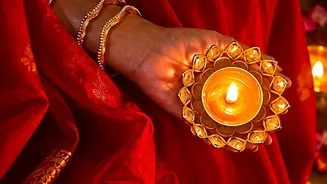
As diyas light up homes, Diwali also illuminates ancient commercial traditions. Beyond personal celebrations, the festival marks a sacred new year for businesses, steeped in rituals that blend faith, finance, and the hope for prosperity.
More Than a Festival of Lights
For countless
people across India, Diwali is a cherished time for family, food, and fireworks. It symbolizes the victory of light over darkness and good over evil. However, for the nation's vast community of merchants, traders, and business houses, the festival carries an additional, profound layer of significance. It is a spiritual and financial reset, a time to close old ledgers and ceremoniously usher in a new year of commerce. Deeply rooted in history, these commercial rituals are not just about seeking wealth but about embedding business practices in a framework of ethics, wisdom, and divine blessing. This connection dates back to ancient harvest festivals, which evolved to incorporate prayers for success in trade.
The Sanctity of Account Books
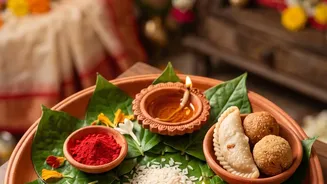
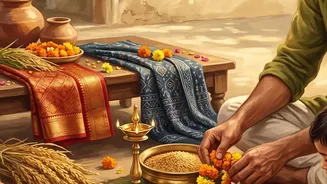
At the heart of Diwali's commercial observances is the worship of account books. Known as Chopda Pujan in Gujarat and Bahi-Khata Puja in North India, this ritual takes place on Diwali day. 'Chopda' refers to the traditional, red cloth-bound ledgers. Merchants will close their accounts for the past year and consecrate new books for the one ahead. These new ledgers are not merely tools of accounting; they are treated as sacred objects. They are placed before idols of Goddess Lakshmi (the deity of wealth) and Lord Ganesha (the remover of obstacles), and often Goddess Saraswati (the deity of knowledge). The first pages are marked with auspicious symbols like the Swastika and phrases like 'Shubh Labh' (Auspicious Profit), invoking blessings for a prosperous and ethical financial year. This act symbolizes a prayer for clarity, honesty, and success in all future dealings.
Sharda Pujan: The Worship of Wisdom
In many trading communities, particularly in Gujarat and Maharashtra, the worship of wealth is intrinsically linked to the reverence for wisdom. This is embodied in the ritual of Sharda Pujan, a ceremony dedicated to Goddess Saraswati, also known as Sharda. It acknowledges that true prosperity is unsustainable without knowledge, intellect, and sound judgment. During this puja, along with account books, instruments of learning and trade—such as pens, computers, and other tools—are worshipped. The Lekhani-Dawat (pen and inkpot) puja is a distinct but related tradition, where these writing implements are personified and worshipped, sometimes as a form of Goddess Kali, representing transformative power. The joining of Lakshmi and Saraswati worship is a powerful reminder that wealth should be acquired and managed with wisdom and discipline.
The Legacy of Merchant Guilds
Historically, these Diwali rituals were not just individual family affairs but were also practiced collectively by powerful merchant guilds or 'mahajans'. These guilds were central to the economic and social fabric of pre-modern India, setting trade rules, resolving disputes, and upholding a collective code of conduct. During Diwali, the mahajans would gather to perform collective worship, reinforcing community bonds and a shared commitment to ethical enterprise. These gatherings were a testament to the idea that commerce was a community endeavour, built on trust and mutual respect. While the formal guild system has faded, its spirit lives on in modern business associations and community networks that continue to observe these traditions, fostering a sense of shared identity and purpose among traders.
Ancient Rites in a Digital Age
One might wonder how these ancient rituals fare in an age of digital banking and cloud-based accounting. Remarkably, the traditions have adapted rather than disappeared. Many business owners now perform puja on their laptops, tablets, and even company servers, drawing the sacred Swastika on the hardware itself. The physical 'chopda' may have been replaced by a digital ledger, but the sentiment remains unchanged. The act is symbolic, representing a fresh start and a prayer for divine guidance in the fiscal year ahead. This seamless blend of the old and new demonstrates the enduring power of these rituals, proving that for many in India, faith and business are not mutually exclusive but are deeply and beautifully intertwined.